Bike Safety for Kids: Fun Rules for a Safe Ride
Bike Safety for Kids: Fun Rules for a Safe Ride
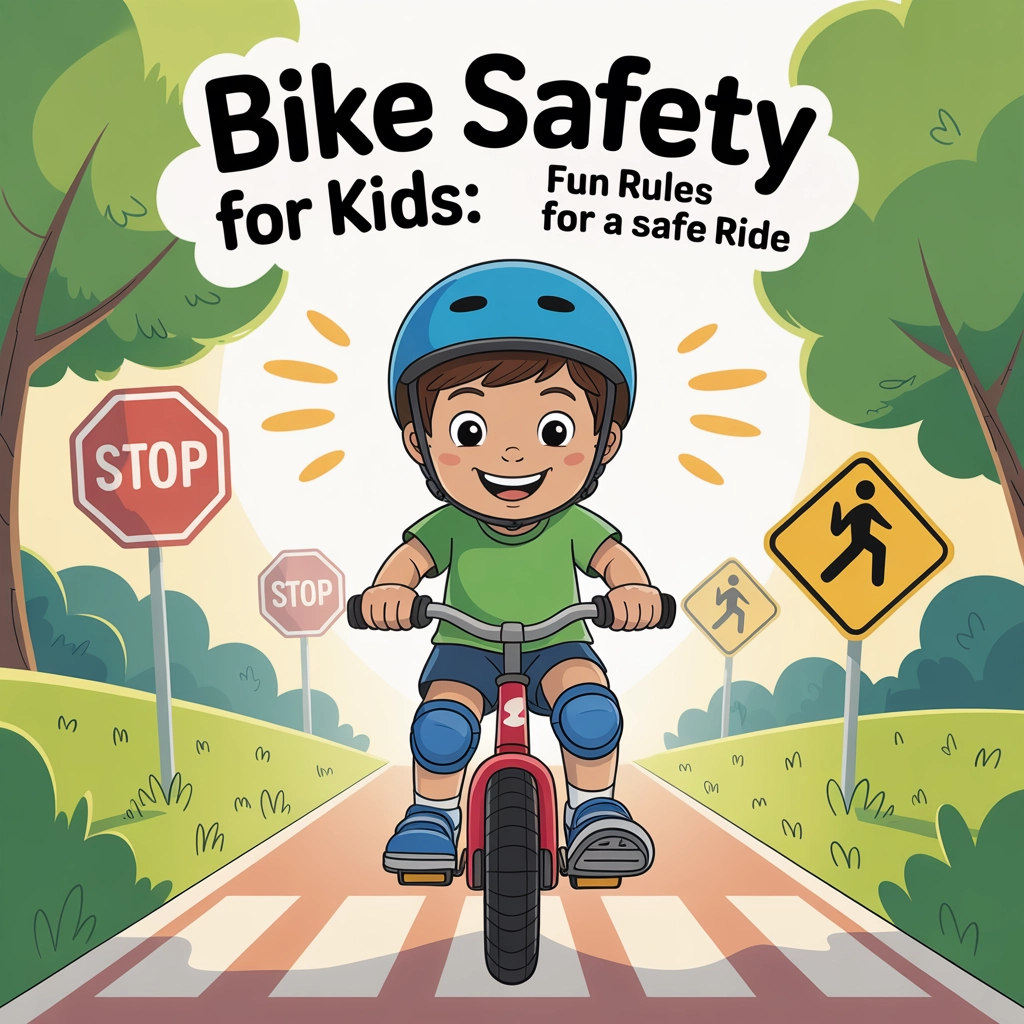
Hey there, safety-conscious families! As someone who's spent way too many Saturday mornings chasing after wobbly bike riders in the park, I can tell you that bike safety doesn't have to be a snooze-fest. In fact, some of my favorite childhood memories involve racing my little brother around the neighborhood (sorry, Mom!) while secretly practicing all the safety rules you taught us.
Today, let's dive into making bike riding both super fun AND super safe for our kids. Trust me, after watching my nephew face-plant into a bush last summer because he "forgot" to use his brakes, I've learned that the best safety lessons are the ones kids actually want to remember.
The Magic Helmet Rule (AKA Your Brain's Best Friend)
Let's start with the big one – helmets. I know, I know, kids think helmets mess up their hair or make them look "uncool." But here's the thing: I've seen what happens when kids don't wear them, and it's definitely not cool.
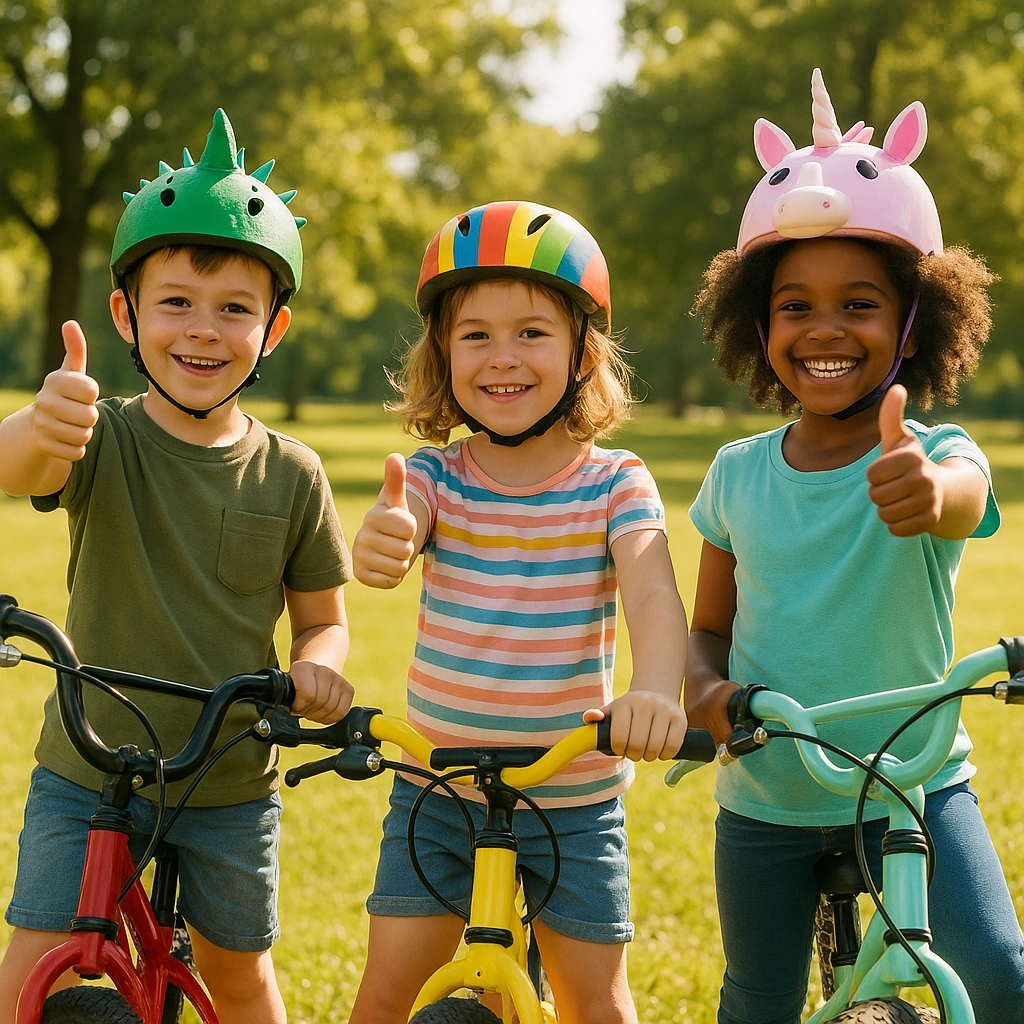
Make helmet-wearing fun by letting your kids pick out their own helmet design. Dinosaurs, unicorns, favorite colors – whatever gets them excited to put it on their head. My friend's daughter insists her rainbow helmet gives her "super speed powers," and honestly, if that's what it takes, I'm all for magical thinking!
The helmet should sit level on their head, not tilted back like a baseball cap. You should be able to fit about two fingers between their eyebrows and the helmet edge. And here's a pro tip from experience: if you can easily push the helmet off their head when it's buckled, it's too loose.
Dress for the Ride (Not the Fashion Show)
I learned this lesson the hard way when I showed up to a family bike ride wearing flip-flops. Let me tell you, trying to pedal in flip-flops is like trying to eat soup with a fork – technically possible, but definitely not recommended.
Closed-toe shoes are non-negotiable. Sneakers with good grip work best. Avoid sandals, flip-flops, or anything that might slip off or get caught in the bike chain. I once had to help a kid whose shoelace got tangled in their pedal, and it was quite the adventure getting them unstuck!
Bright, visible clothing is your friend, especially if you're riding anywhere near roads. Think of your kids as human traffic cones – the more visible, the better. Those neon green shirts they picked out that you secretly cringe at? Perfect for bike riding!
The "Look Both Ways" Dance
Teaching kids to be aware of their surroundings is like teaching them a choreographed dance routine. There's a rhythm to it, and once they get it down, it becomes second nature.
The basic moves: Look left, look right, look left again before entering any intersection or crossing any path. I like to make it into a game – "Who can spot the car coming from the left?" or "Can you see the jogger behind us?" Making observation into a fun challenge helps kids develop those crucial scanning habits.
For younger kids (and let's be real, some adults too), I recommend practicing this in your driveway or a safe area first. Have them ride to an imaginary intersection and perform the "look both ways dance" before continuing. The more they practice, the more automatic it becomes.
Age-Appropriate Adventures
Here's something that took me a while to accept as a safety advocate: not all kids are ready for the same level of bike independence at the same age. And that's totally okay!
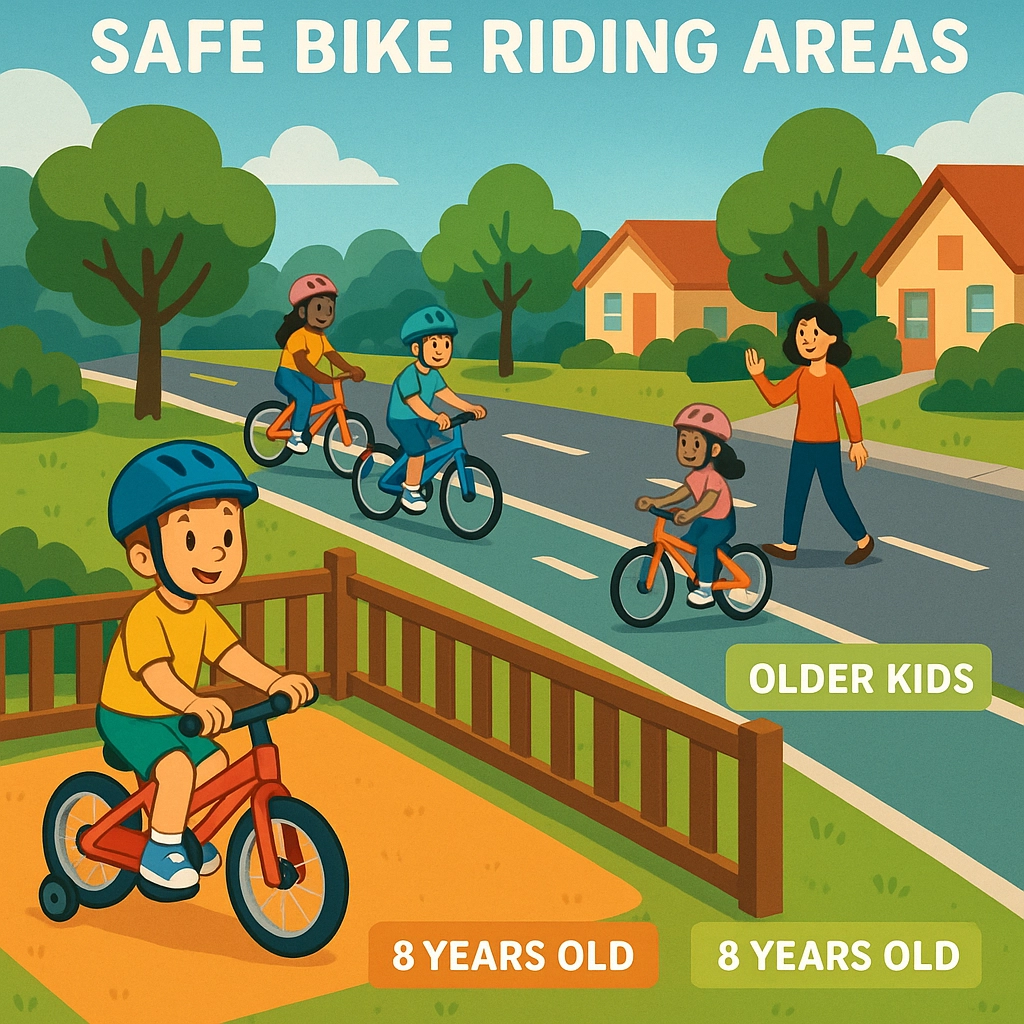
Kids under 10 should stick to sidewalks, bike paths, and parks. Their brains are still developing the ability to judge distances and speeds, which makes road riding potentially dangerous. I've watched 8-year-olds confidently ride straight into traffic because they simply couldn't accurately judge how far away that car was.
For our little adventurers under 5, keep them in safe, enclosed areas like empty parking lots or your backyard. They're still mastering the basics of balance and steering. Plus, at this age, they're more focused on "Look, I'm riding a bike!" than "Look, there's a stop sign."
Traffic Rules That Actually Stick
Teaching kids traffic rules doesn't have to feel like driver's ed for 6-year-olds. I've found that relating rules to things they already understand works way better than lecturing.
"Red means stop" – they already know this from walking. Same rule applies on bikes.
"Stay to the right" – just like walking in the hallway at school.
"Use your signals" – point where you're going, just like you point to show someone where you want to go.
Hand signals can be tricky for younger kids who are still working on bike balance. Don't stress if they can't master them right away. Focus on getting them comfortable with stopping and looking first.
The Pre-Ride Safety Check (Make It a Game!)
Before every ride, do a quick bike check. But instead of making it feel like homework, turn it into a treasure hunt or inspection game.
"Can you find anything wrong with the tires?" (Check for proper inflation and any objects stuck in the treads)
"Are the brakes working like a superhero's power?" (Squeeze them to make sure they engage properly)
"Is the chain happy and moving smoothly?" (Look for rust, proper tension, and lubrication)
My nephew calls this the "bike doctor checkup," and he takes his job as bike doctor very seriously. Whatever works!
Practice Makes... Safer
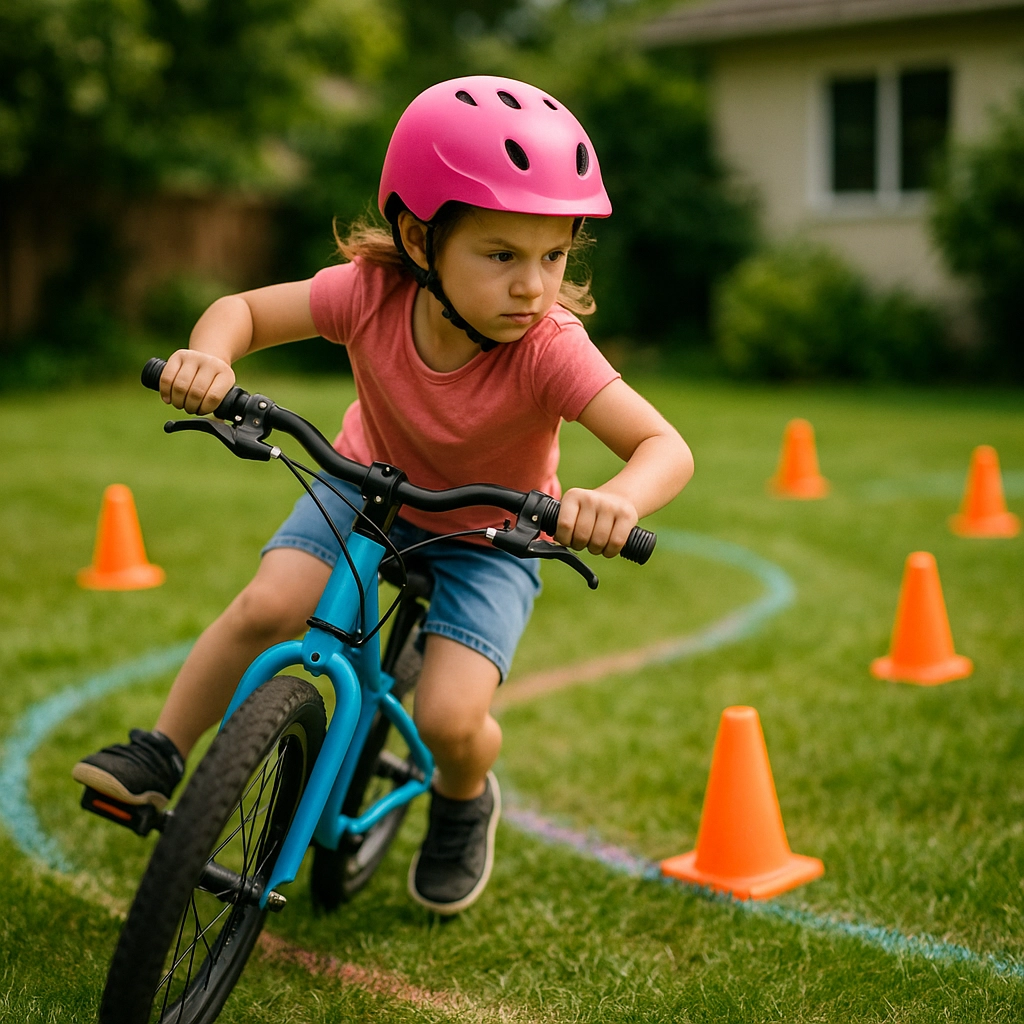
The best safety education happens through practice, not lectures. Set up little obstacle courses in safe areas using cones, chalk lines, or even stuffed animals. Practice starting, stopping, turning, and avoiding obstacles.
Make it competitive – who can stop closest to the line? Who can make the smoothest turn around the cone? Kids love challenges, and these games build the muscle memory that could keep them safe in real situations.
When Things Go Wrong (Because They Sometimes Do)
Even with all the safety measures in the world, accidents can happen. Teach kids what to do if they fall or get hurt while riding. Move to safety first, then assess if they need help. Having a plan reduces panic.
I always tell kids: if something feels wrong or scary while riding, it's okay to stop, get off the bike, and walk. There's no shame in choosing the safer option. Some of the bravest cyclists I know are the ones who aren't afraid to say "This doesn't feel safe right now."
Making Safety Social: Engagement Tips for Parents
Now, let's talk about getting your safety message out there on social media! When sharing bike safety content, here are some tried-and-true engagement boosters:
Hashtag Strategy:
- #BikeSquad #SafetyFirst #FamilyBikeRide
- #KidsOnBikes #BikeHelmetHeroes #CyclingFamily
- #SafeRiding #BikeSafetyTips #FamilyFun
- Location-specific tags like #[YourCity]Cycling
Visual Content Ideas:
- Before/after photos of your "bike doctor checkups"
- Kids proudly showing off their safety gear
- Action shots of proper riding techniques
- Fun helmet selfies
Interactive Questions:
- "What's your family's #1 bike safety rule?"
- "Share a photo of your little rider's favorite helmet!"
- "What age did your kids start riding independently?"
Engagement Timing:
Post on weekends when families are planning activities, or weekday evenings when parents are thinking about after-school plans.
Remember, authentic content always performs better than perfect content. Share your real experiences – the good, the wobbly, and the "oops, we forgot helmets" moments. Other parents connect with honesty way more than perfection.
The goal isn't just to create safe cyclists; it's to create kids who think safety is just as important as fun. And honestly? When you get that balance right, watching them ride off confidently (while following all the rules) is one of the best feelings in the world.
Stay safe out there, and remember – every expert cyclist started with training wheels and a lot of patience!


Comments
Post a Comment