Crossing Streets Safely: What Kids Need to Know
Crossing Streets Safely: What Kids Need to Know
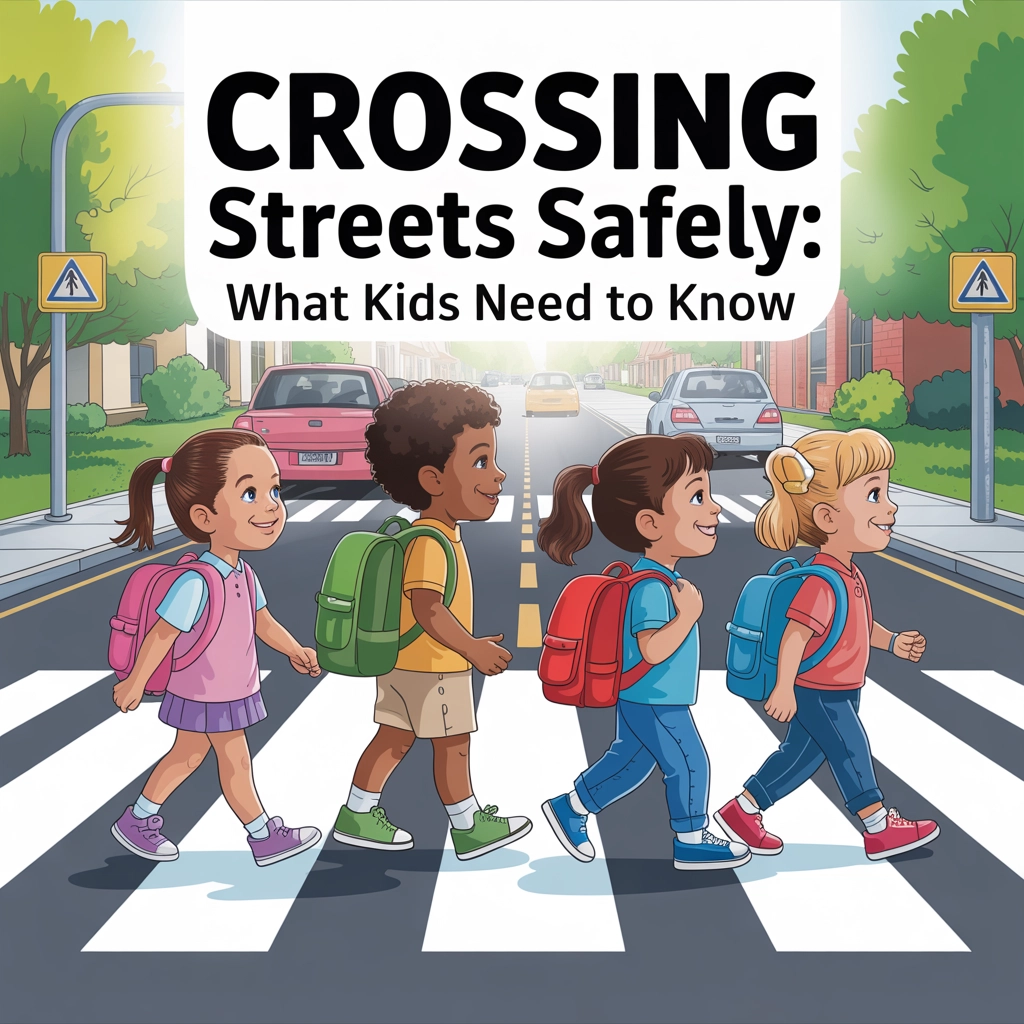
Picture this: you're walking to your friend's house, heading to school, or maybe going to the park with your family. At some point, you'll need to cross a street. It might seem simple, just walk from one side to the other, right? Well, there's actually a lot more to it than that! Learning how to cross streets safely is like having a superpower that keeps you protected wherever you go.
Every day, thousands of kids cross streets safely because they know the rules. Today, we're going to share those same rules with you, so you can become a street-crossing champion too!
The Golden Rules: Stop, Look, Listen
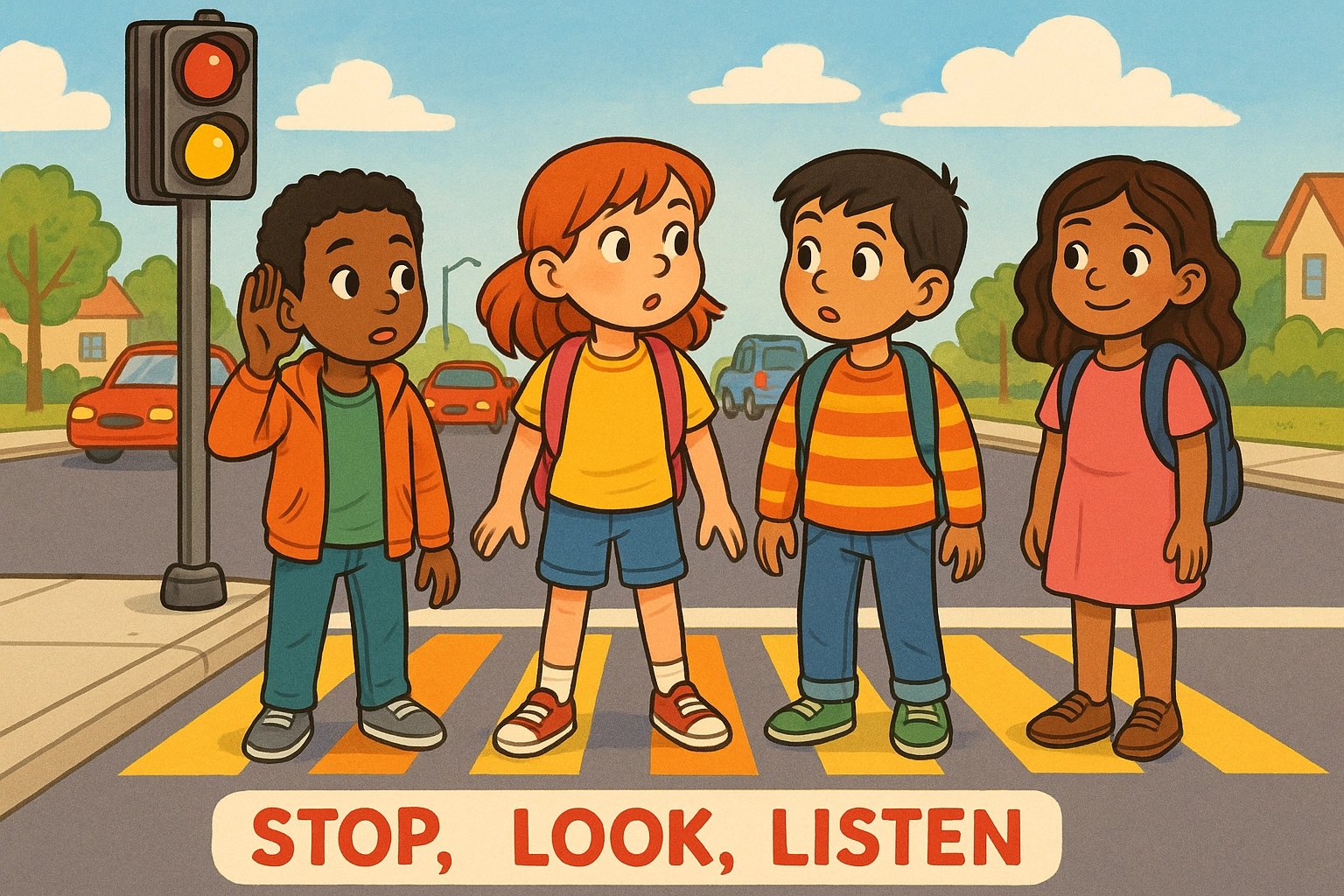
Think of these three words as your street-crossing superhero motto: Stop, Look, Listen. These aren't just random words: they're your safety shield!
Stop means coming to a complete stop at the curb or edge of the road. No tiptoeing into the street, no "almost stopping": we're talking about a full, complete stop. Your feet should be planted firmly on the sidewalk.
Look means turning your head left, then right, then left again. Why left first? Because that's where cars will be coming from first when you step into the street. It's like being a detective, scanning for any cars, trucks, motorcycles, or bicycles that might be heading your way.
Listen means using your ears as much as your eyes. Sometimes you can hear a car coming before you can see it, especially around corners or behind parked cars. Turn down that music, take out those earbuds for a moment, and really listen.
Age Matters: Different Rules for Different Ages
Just like you wouldn't expect a kindergartener to drive a car, different ages have different street-crossing rules. Here's the breakdown:
Little Kids (Under 10): If you're under 10, you should never cross a street by yourself. Always have a grown-up with you: a parent, older sibling, teacher, or trusted adult. Think of them as your crossing buddy who helps keep you safe.
Tweens and Teens: As you get older, you can start crossing streets independently, but only after you've practiced with adults and shown that you know the rules inside and out. Your parents will decide when you're ready based on how well you follow safety rules.
The cool thing is, even when you're older, there's no shame in asking for help or walking with someone else. Safety isn't about age: it's about being smart!
Your Step-by-Step Crossing Guide
Ready for your official street-crossing playbook? Here's exactly what to do:
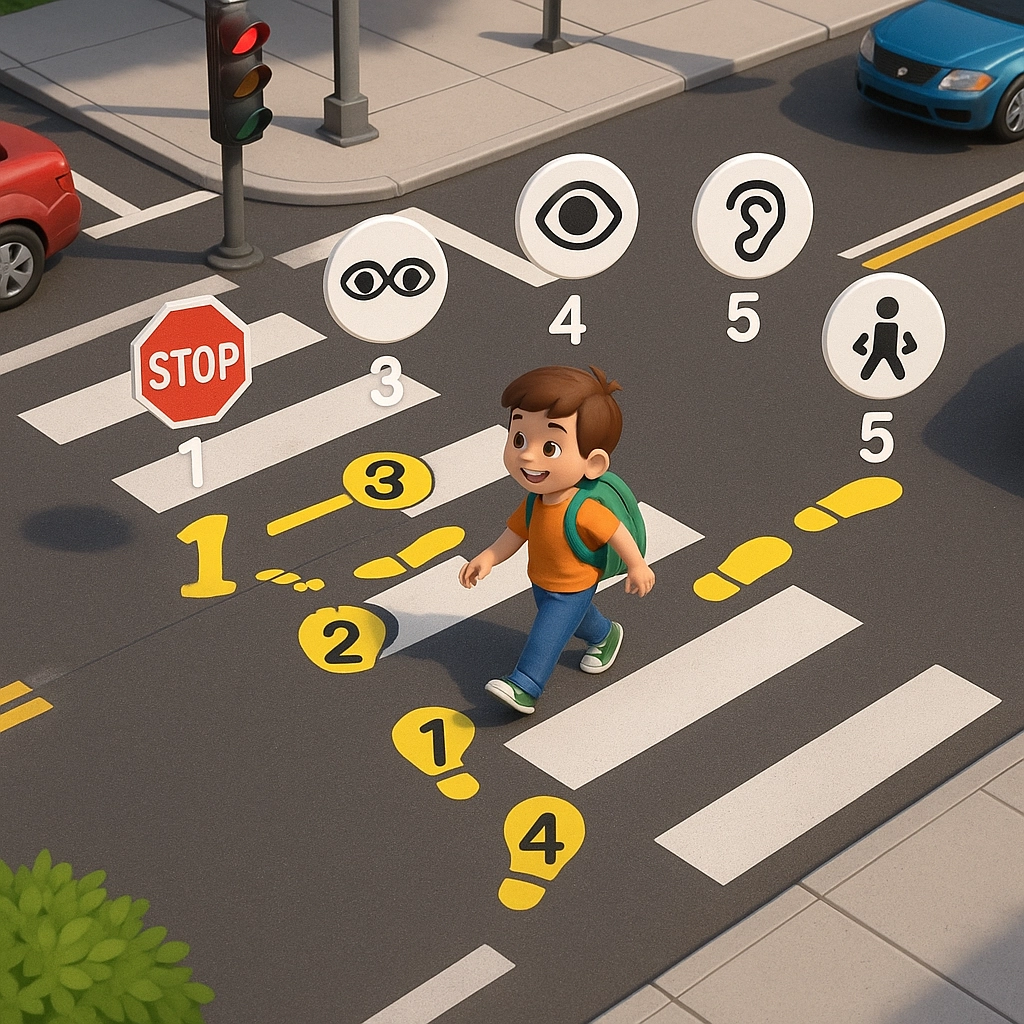
Step 1: Find the Right Spot
Always cross at crosswalks when they're available. These are like the "official crossing zones" marked with white stripes. If there's no crosswalk, find a spot where you can see clearly in both directions: no parked cars, bushes, or other things blocking your view.
Step 2: Approach the Curb
Walk up to the edge of the sidewalk, but don't step into the street yet. This is your "preparation zone."
Step 3: Stop, Look, Listen
Remember your superhero motto! Stop completely, look left-right-left, and listen for any vehicles.
Step 4: Make Eye Contact
If you see a driver coming, try to make eye contact with them. If they look directly at you, they've seen you. If they don't seem to notice you, wait until they do or until they've completely passed.
Step 5: Cross Smart
Walk across the street in a straight line: no zigzagging or detours to pet that cute dog on the other side! Keep looking and listening while you cross. Walk at a normal pace (don't run unless there's an emergency), and stay alert until you reach the other sidewalk safely.
Becoming Visible: Your Safety Spotlight
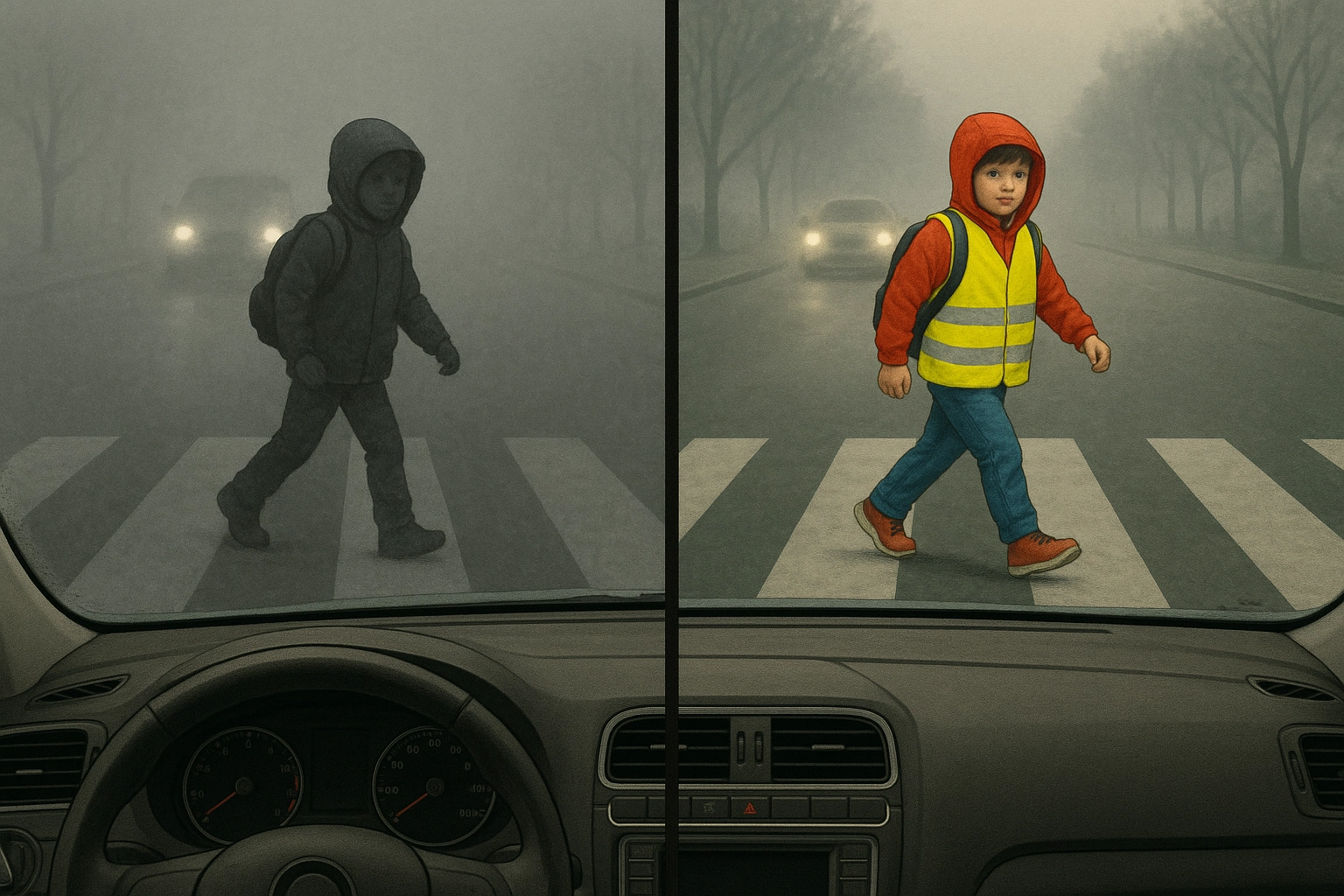
One of the biggest challenges is making sure drivers can see you. You might think you're super obvious, but to a driver going 30 mph while thinking about work, school pickup, or what's for dinner, pedestrians can sometimes blend into the background.
Bright Colors Are Your Friend: Wear bright, colorful clothes when possible. That neon yellow hoodie isn't just a fashion statement: it's a safety tool! If you're walking at dawn, dusk, or nighttime, light colors and reflective materials work even better.
Avoid Invisible Moments: Never cross between parked cars or behind large vehicles where drivers can't see you. It's like trying to cross while wearing an invisibility cloak: not the kind of magic trick you want to attempt!
Weather Awareness: Rainy, foggy, or snowy days make it harder for everyone to see. During bad weather, be extra careful, wear extra-bright clothing, and give yourself more time to cross safely.
Special Situations: When Things Get Tricky
Traffic Lights and Walk Signals: These are helpful, but they're not magic shields. Even when the walk signal says it's your turn, still do your stop-look-listen routine. Some drivers run red lights or make turns without paying attention to pedestrians.
Emergency Vehicles: When you hear sirens, stop what you're doing and wait. Emergency vehicles like ambulances, fire trucks, and police cars can come from any direction and often travel faster than regular traffic.
School Buses: These big yellow vehicles have special rules. If you need to cross near a school bus, walk at least 10 feet in front of it so the driver can see you clearly. Never cross behind a school bus!
Parking Lots: Believe it or not, parking lots can be just as tricky as streets. Cars back out of spaces, and drivers might be distracted looking for parking spots. Apply the same safety rules in parking lots as you would on streets.
Practice Makes Perfect
The best way to become a street-crossing expert is to practice with your family. Make it a game! Here are some fun ways to practice:
Family Safety Walks: Take walks around your neighborhood with your parents or guardians. Practice the stop-look-listen routine at every corner, even when no cars are coming.
Role-Playing: Take turns being the "safety instructor" and teach your younger siblings or friends the rules. Teaching others helps you remember the rules even better!
Safety Scavenger Hunt: Look for crosswalks, traffic lights, and safe crossing spots in your neighborhood. Make it a challenge to spot all the safety features designed to help pedestrians.
Building Confidence, One Safe Step at a Time
Learning to cross streets safely isn't just about following rules: it's about building confidence and independence. Every time you practice these skills, you're preparing yourself for more freedom and responsibility.
Remember, even adults sometimes make mistakes or need to be extra careful. The difference between safe pedestrians and unsafe ones isn't perfection: it's consistency in following safety rules and staying alert.
Your family, teachers, and community all want you to stay safe so you can enjoy all the amazing adventures waiting for you. Whether you're walking to school, visiting friends, or exploring your neighborhood, these street-crossing skills will keep you protected.
The next time you approach a street corner, remember: you've got the knowledge, you've got the skills, and you've got the power to cross safely. Stop, look, listen, and step forward with confidence: you've got this!
Every safe crossing is a victory, and every victory builds toward a lifetime of smart, safe choices. Now get out there and show the world what a street-crossing champion looks like!


Comments
Post a Comment