The Power of Saying "No": Assertiveness and Setting Boundaries
The Power of Saying "No": Assertiveness and Setting Boundaries
Have you ever found yourself agreeing to something you really didn't want to do? Maybe your friend asked you to skip lunch to help with their homework (again), or someone online requested personal information that made you uncomfortable. If you're nodding your head, you're definitely not alone! Learning to say "no" is like having a superpower, it protects your time, energy, and safety while helping you become more confident and authentic.
Why Saying "No" Is Actually Saying "Yes" to Yourself
When you say no to something that doesn't feel right, you're actually saying yes to something way more important, yourself! Think of it this way: your time and energy are like money in a bank account. Every time you say yes to something you don't want to do, you're spending that precious currency on someone else's priorities instead of your own.
Saying no isn't mean or selfish, it's smart self-care. It shows that you respect yourself enough to protect your boundaries and make choices that align with your values. Plus, when you do say yes to something, people know you really mean it because you're not just agreeing to avoid conflict.

Real-Life Scenarios Where "No" Is Your Best Friend
At School
- The Copy Cat: Your friend wants to copy your homework for the third time this week. Instead of enabling their habit, try: "I can't let you copy, but I'd be happy to study together tonight so you understand the material better."
- The Peer Pressure Push: Someone offers you something you know you shouldn't take. A simple "No thanks, I'm good" works perfectly. You don't owe anyone an explanation for protecting yourself.
Online and Social Media
- The Info Fisher: Someone you barely know asks for your address, phone number, or other personal details. Your response? "I don't share that information online." Period. End of conversation.
- The Drama Starter: A friend wants you to share mean gossip about someone else or participate in online bullying. "I'm not comfortable with that" is a complete sentence.
With Adults
- The Uncomfortable Request: If any adult asks you to keep secrets from your parents or makes you feel weird, trust that feeling. "I need to talk to my parents first" is always acceptable.
- The Overwhelming Commitment: A teacher or coach wants you to take on extra responsibilities when you're already stretched thin. Try: "I appreciate you thinking of me, but I can't take on anything else right now."
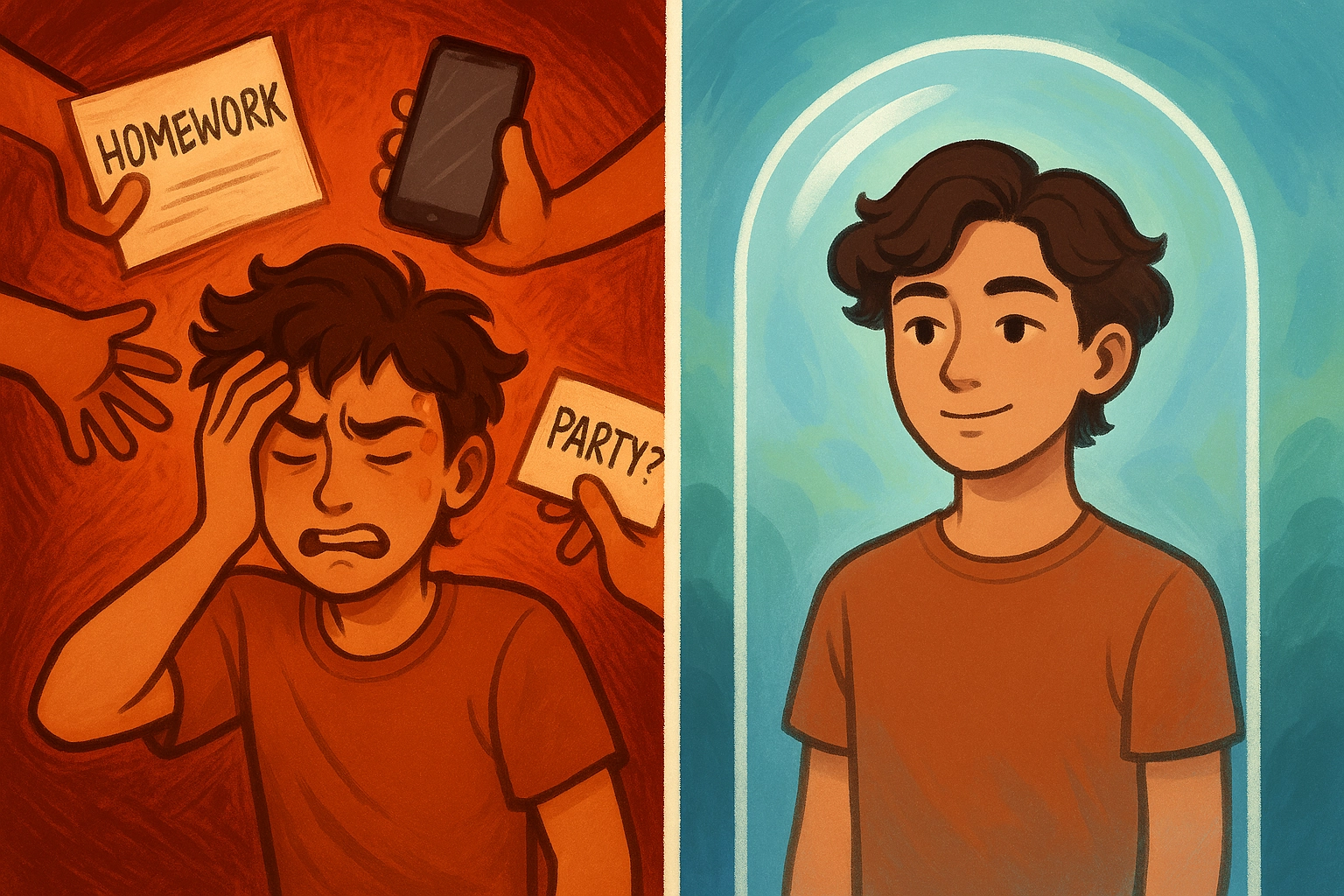
The Art of the Assertive "No"
Being assertive doesn't mean being aggressive or rude, it means being clear and confident about your limits. Here are some tried-and-true techniques:
The Simple No
Sometimes the best approach is the most straightforward: "No, I can't do that." You don't need to justify, explain, or apologize for having boundaries.
The Alternative Offer
"I can't help you cheat on the test, but I can help you study for it." This shows you care about the person while maintaining your values.
The Broken Record
If someone keeps pushing after you've said no, just repeat your boundary: "Like I said, I'm not comfortable with that." Keep repeating until they get the message.
The Compliment Sandwich
"You're such a good friend, but I can't lend you money. How about we find a fun free activity to do together instead?" This maintains the relationship while holding firm to your boundary.
Building Your Confidence Muscle
Like any skill, saying no gets easier with practice. Start small, maybe decline an invitation to hang out when you really need to study, or say no to an extra helping of dessert when you're already full. These little victories build up your confidence for bigger moments.
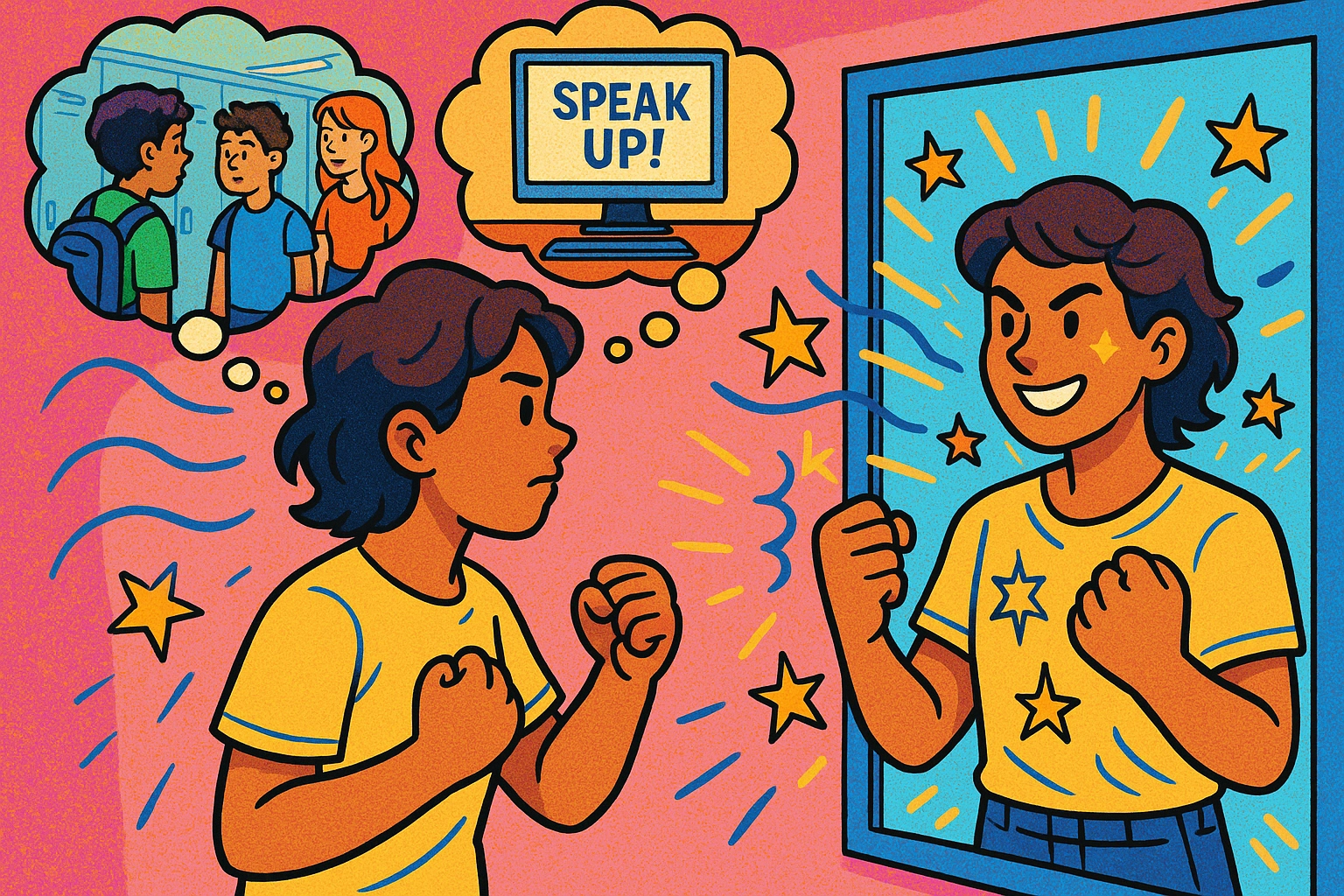
Practice Makes Perfect
Try these role-playing scenarios with a trusted friend or family member:
- Someone asks you to lie for them
- A friend wants you to skip class with them
- Someone online asks to meet you in person
- You're invited to a party where you know there will be trouble
The more you practice, the more natural it becomes to protect your boundaries.
What About the Guilt?
Feeling guilty after saying no is totally normal, especially if you're used to being a people-pleaser. But here's the thing: that guilty feeling usually means you made the right choice for yourself. The guilt comes from old habits of putting everyone else's needs before your own.
Remember: You're not responsible for managing other people's emotions or solving their problems. If someone gets upset because you set a boundary, that's their issue to work through, not yours to fix.
The Ripple Effect of Healthy Boundaries
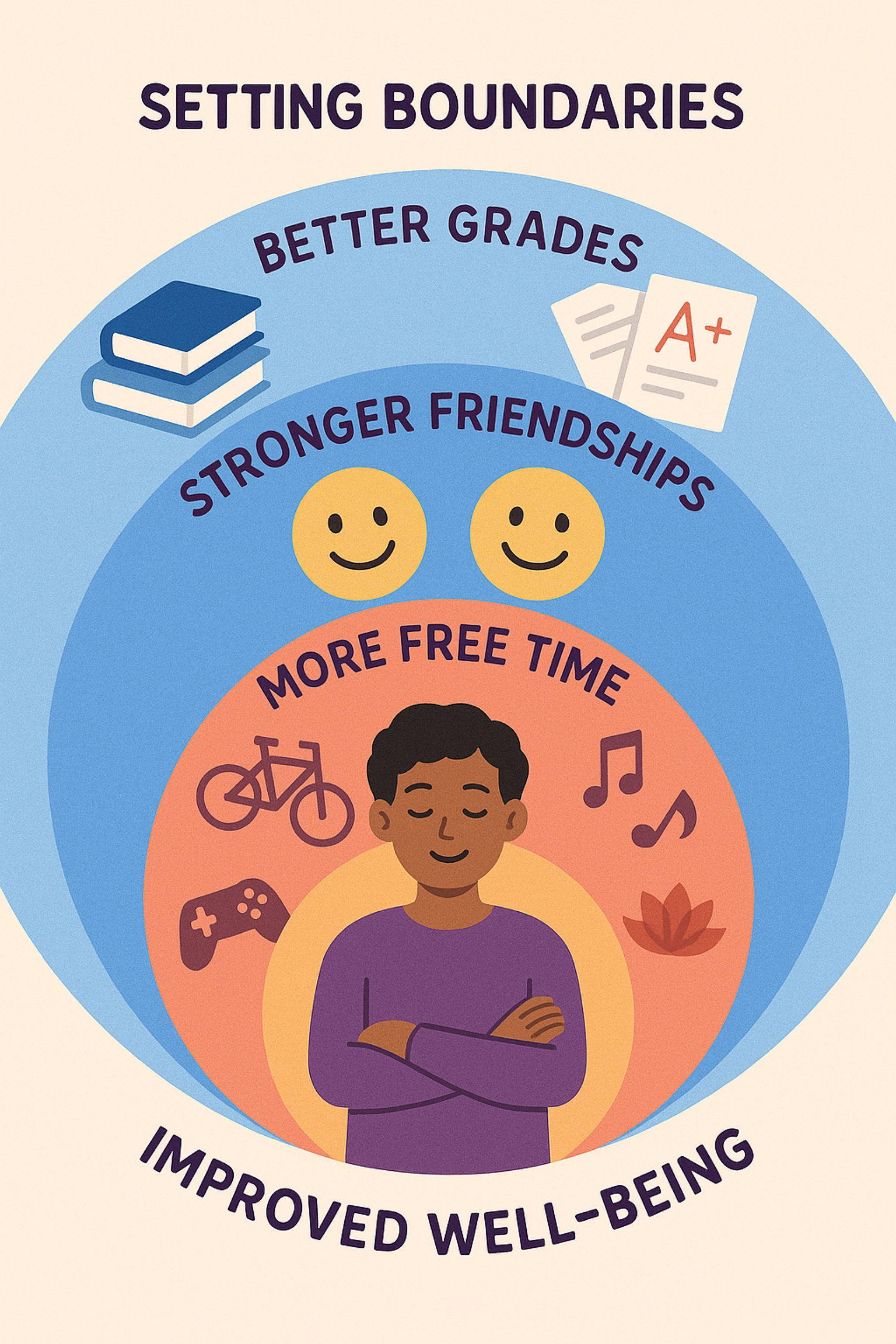
When you start saying no to things that don't serve you, amazing things happen:
- More time for what matters: You'll have energy for the people and activities you actually care about
- Stronger friendships: True friends respect your boundaries and don't pressure you to compromise your values
- Better grades and performance: When you're not overcommitted, you can focus on doing well in the areas that matter most
- Improved self-esteem: Standing up for yourself feels incredible and builds lasting confidence

Dealing with Pushback Like a Pro
Not everyone will be thrilled when you start setting boundaries. Some people might:
- Try to guilt-trip you ("I thought you were my friend!")
- Get angry or dismissive
- Keep asking the same thing hoping you'll change your mind
- Try to negotiate or bargain
Stay strong! These reactions often mean your boundary was really needed. People who truly care about you will respect your limits, even if they're initially disappointed.
When to Ask for Help
Sometimes the situations requiring a "no" are too big or scary to handle alone. If someone is pressuring you in ways that make you feel unsafe, threatened, or extremely uncomfortable, reach out to a trusted adult immediately. This could be:
- Parents or guardians
- Teachers or school counselors
- Coaches or club advisors
- Other family members you trust
Remember, asking for help isn't giving up: it's being smart about your safety.
Your "No" Toolkit
Keep these phrases handy for when you need them:
- "That doesn't work for me"
- "I'm not comfortable with that"
- "I need to think about it" (buying yourself time)
- "That's not something I do"
- "I have other plans" (even if your plan is just taking care of yourself)
The power of saying no isn't just about refusing things: it's about taking control of your life, protecting your well-being, and building the confidence to make choices that reflect who you really are. Every time you honor your boundaries, you're investing in a stronger, more authentic version of yourself.
Start small, be consistent, and remember that your needs matter just as much as everyone else's. The world needs people who stand up for their values and take care of themselves( that includes you!)


Comments
Post a Comment