DIY Home Safety Checks: Simple Things Families Can Do Together
DIY Home Safety Checks: Simple Things Families Can Do Together
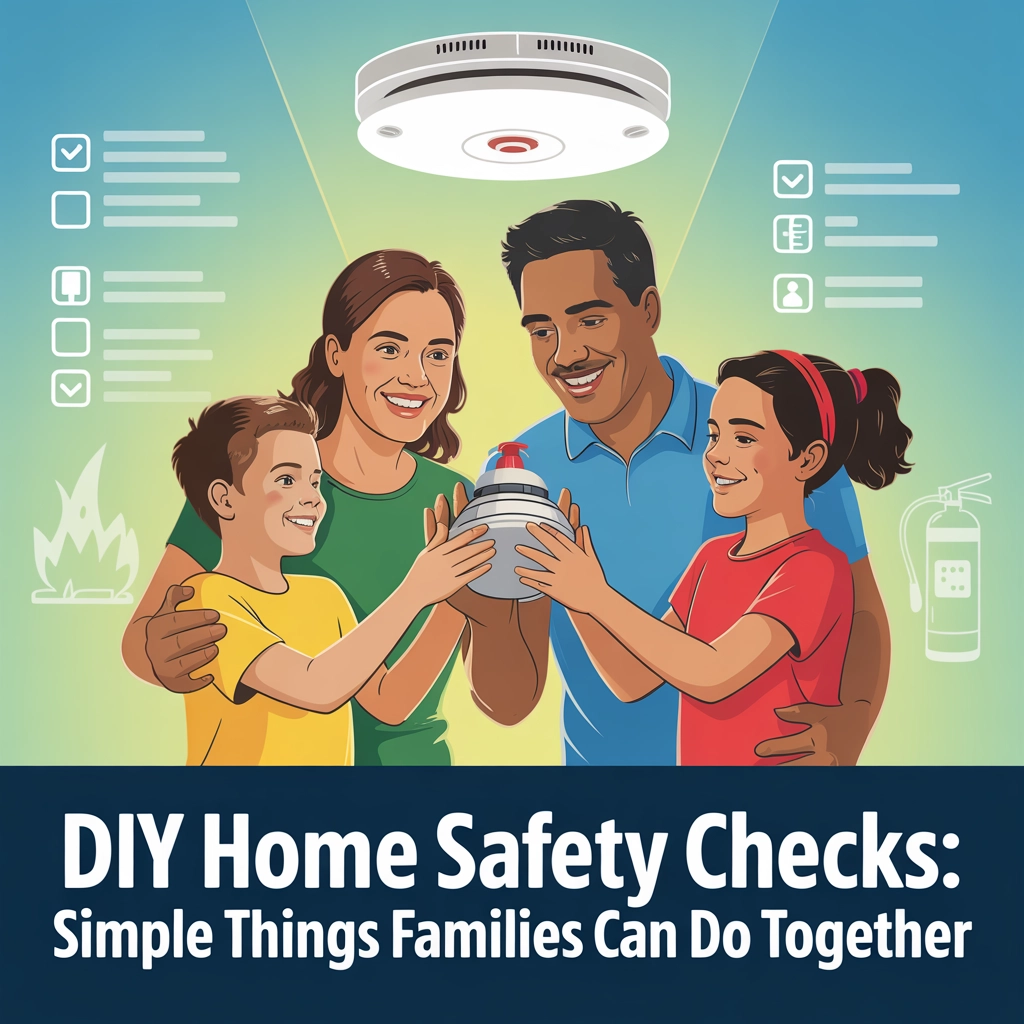
Turn your home into the safest place on the block with these fun family safety missions! Who says safety checks have to be boring? When everyone pitches in, you'll catch problems early, teach kids valuable life skills, and maybe even discover a few surprises along the way. Think of it as a treasure hunt where the treasure is peace of mind.
Mission #1: The Great Outdoor Adventure
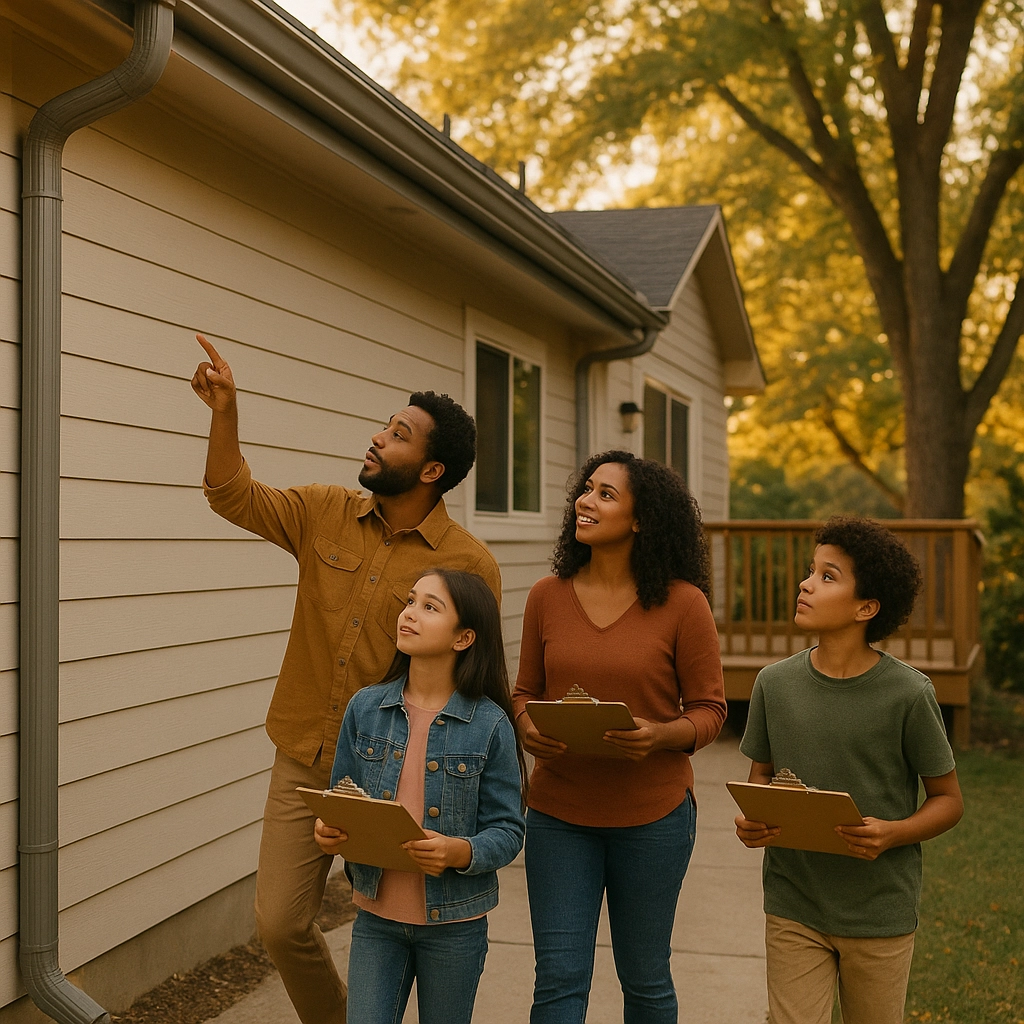
Start your family safety expedition outside with the "Detective Walk." Give everyone a clipboard (or use your phones) and assign different family members to be specialists. Mom might be the "Foundation Detective," Dad the "Stair Inspector," and kids can be "Trip Hazard Hunters."
The Foundation Detective Challenge:
Walk around your house's perimeter together and look for proper water drainage. Ask the kids, "Where should water go when it rains?" The answer: away from the house! Check that downspouts direct water at least three feet from your foundation. If you find standing water or improper drainage, mark it down for fixing.
Stair and Railing Safety Game:
Have everyone test railings by giving them a gentle shake (not hanging on them!). Kids love this part – just make sure adults supervise. Check that all outdoor steps are in good condition and free of moss or slippery surfaces. Make it fun by having kids count the steps and call out any cracks or loose boards they spot.
Tree Branch Scavenger Hunt:
Look up together and spot any tree branches touching your roof or hanging too close. These can damage your home during storms or give squirrels a highway to your attic. Kids are great at this because they naturally look up more than adults do!
Mission #2: The Indoor Safety Squad
Now for the indoor adventure! The "Outside-In, Top-Down" method makes this systematic and fun. Start at your front door and work your way through each room, then head upstairs and work down.
The Floor Safety Challenge:
Turn this into a game by having kids crawl around (safely) to spot trip hazards that adults might miss from their height. Look for:
- Loose throw rugs that need non-slip backing
- Electrical cords crossing walkways
- Toys or objects left in traffic areas
- Loose carpet edges
Create a "Floor Safety Checklist" and let kids check off each room as you go. They'll feel proud contributing to family safety!
Lighting Detective Mission:
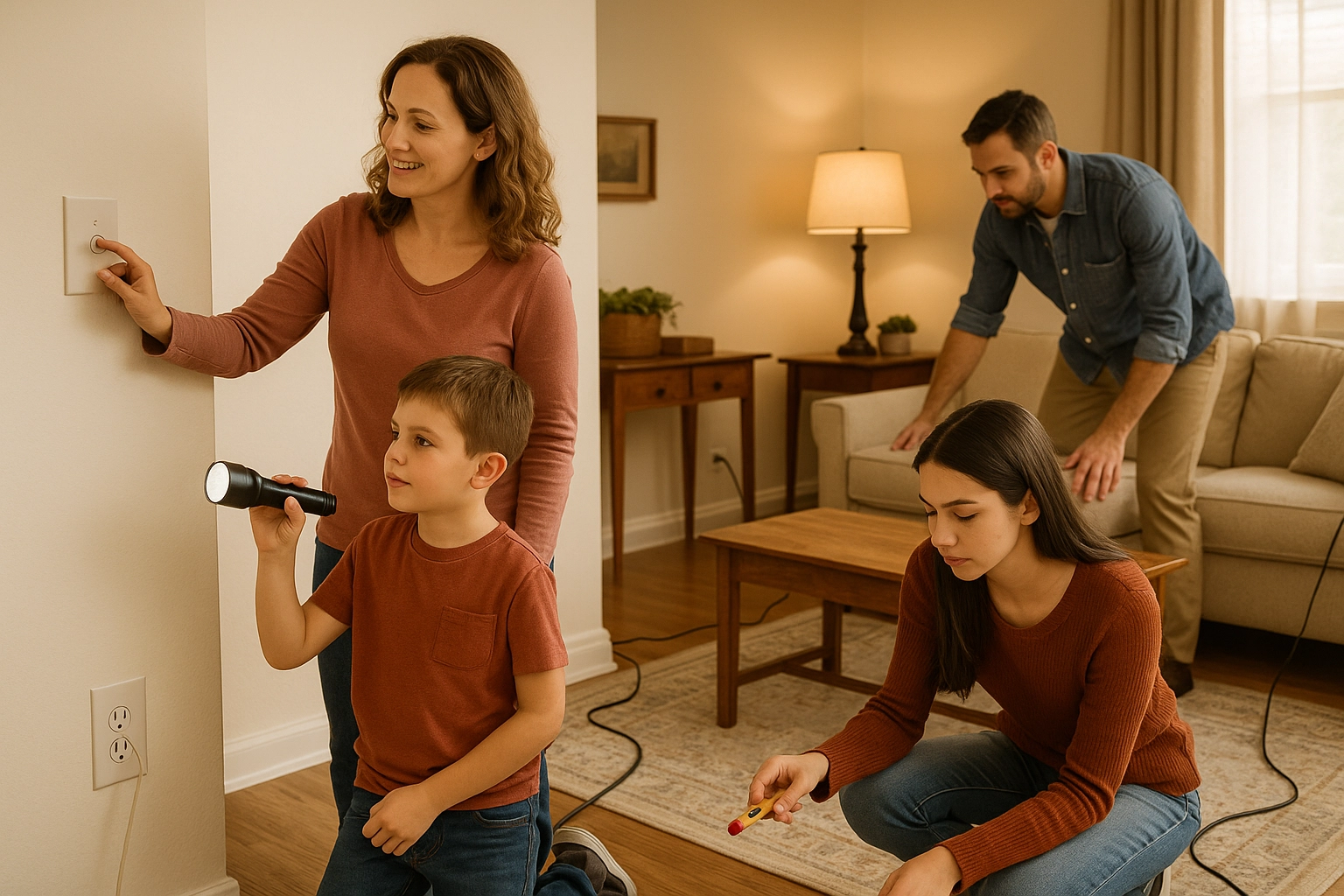
Hand out flashlights and have a "dark spot hunt." Check that all stairways have light switches at both the top and bottom. Test every switch to make sure it works. Kids love using flashlights, so let them lead the way while adults follow and take notes.
Furniture Stability Test:
Teach older kids how to safely check if furniture is wobbly. Show them how to give a gentle push (never climbing or hanging) to see if bookshelves, TV stands, or dressers move. This is also a perfect time to check if tall furniture is properly anchored to walls – especially important for families with young climbers!
Mission #3: Electrical Safety Detectives
Make electrical safety engaging with the "Socket Inspector" game. Give each family member a small flashlight and assign different rooms.
The Great Socket Search:
Look for missing or cracked outlet covers and switch plates. Kids are naturally drawn to electrical outlets, so teaching them proper safety while checking makes this educational. Count how many outlets don't have safety plugs if you have small children in the house.
Create a simple scoring system: 1 point for each safe outlet found, 2 points for each problem spotted, 3 points for each solution suggested. Kids love earning points!
Extension Cord Expedition:
Follow extension cords throughout your house. Are any running under rugs, across doorways, or plugged into power strips that are already full? Make this a "follow the cord" adventure where kids trace each one while adults assess safety.
Mission #4: Fire Safety Heroes
Transform fire safety checks into superhero training! Everyone gets to be a "Fire Safety Hero" with different specialties.
Smoke Detector Symphony:
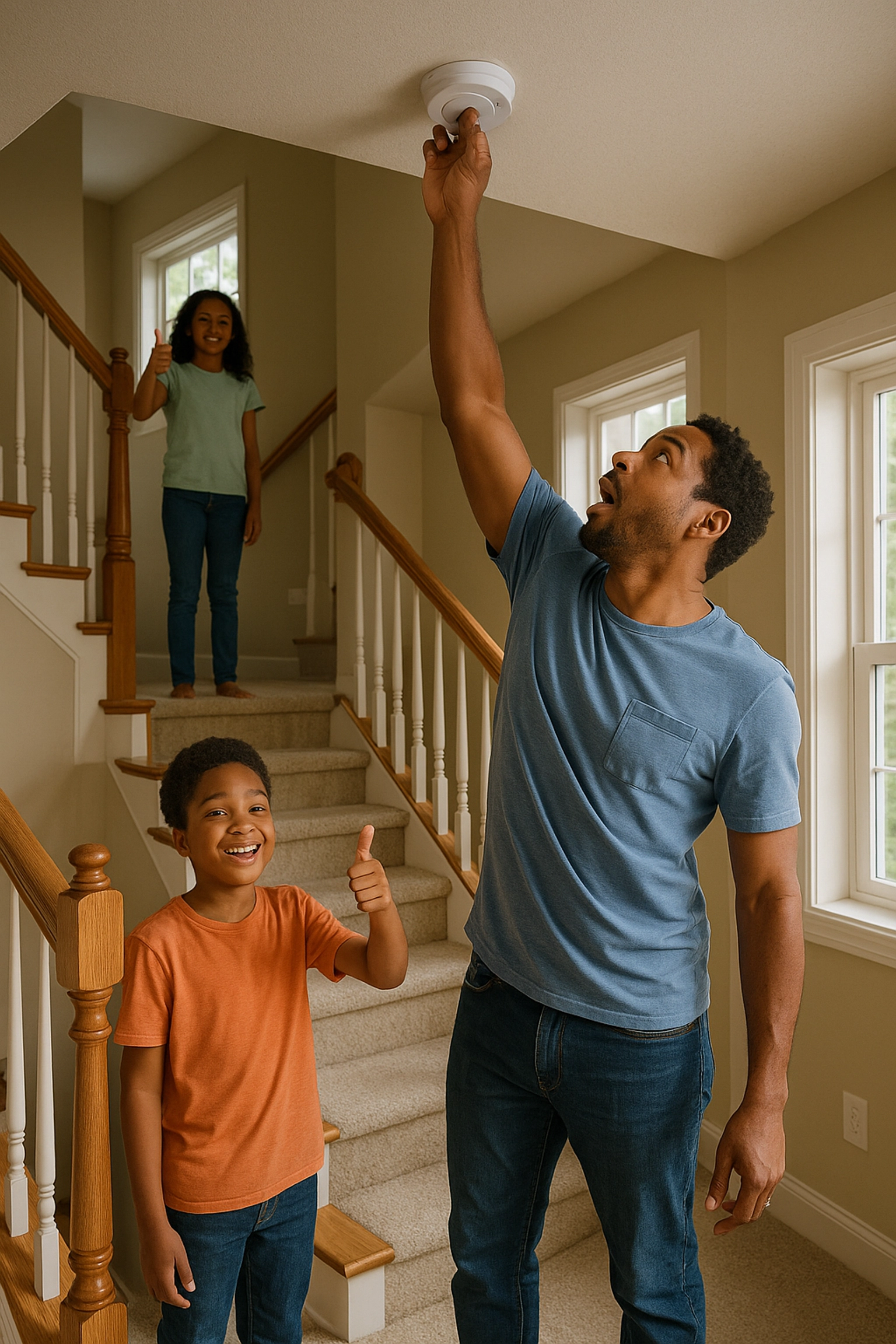
Test every smoke detector in your house, but make it musical! Have kids stand in different rooms and listen as you test each one. They can give thumbs up when they hear it clearly from their location. Replace batteries in any that are weak – and teach kids to recognize that annoying chirping sound that means "feed me batteries!"
Fireplace and Heater Inspection:
If you have a fireplace, check that the screen is in place and the area is clear of decorations or toys. For space heaters, measure three feet from all sides to ensure nothing flammable is nearby. Kids can help by being the "measurers" with a yardstick.
Kitchen Fire Safety Check:
Examine your kitchen together. Are pot handles turned inward? Is the area around the stove clear? Check that your fire extinguisher is easily accessible and not expired. Teach older kids where it's located and when to call adults versus when to evacuate.
Mission #5: Emergency Preparedness Academy
Turn emergency planning into an engaging family activity that builds confidence rather than fear.
Contact Information Game:
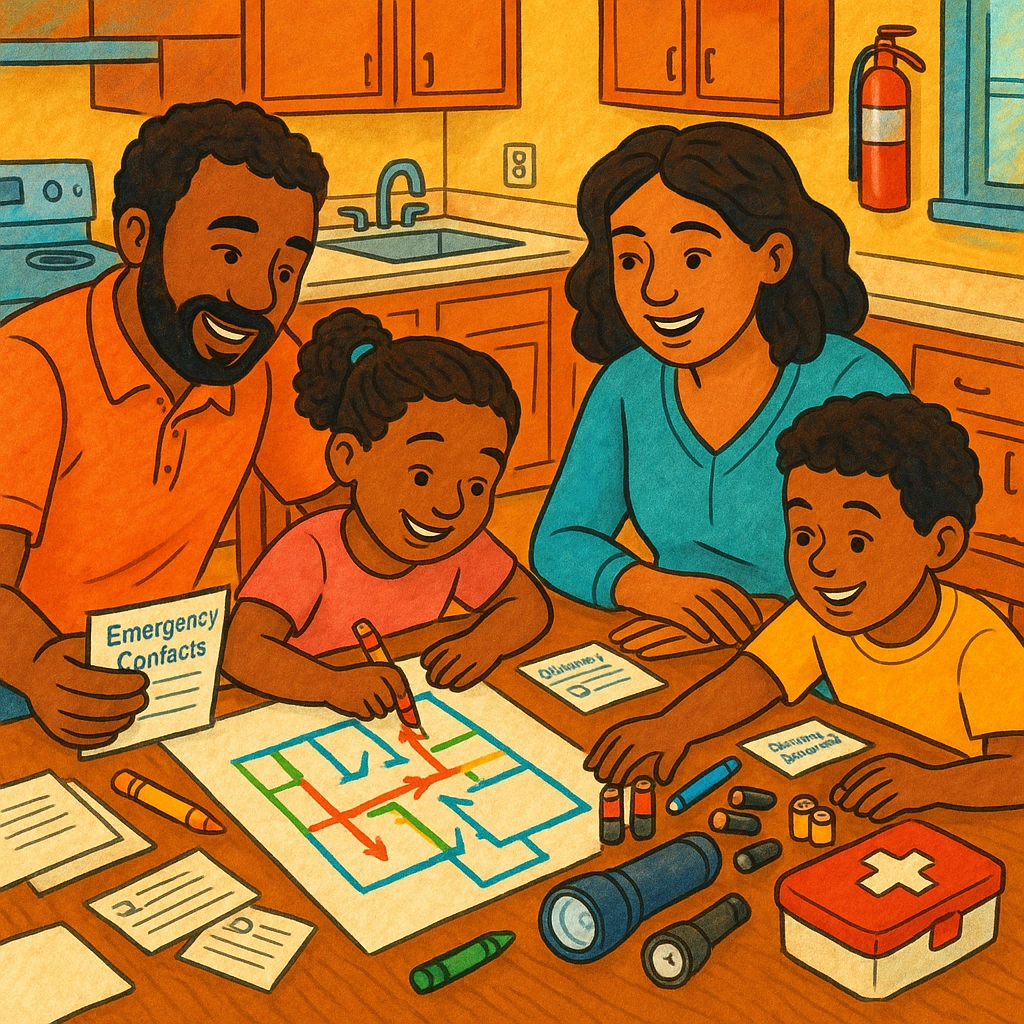
Quiz kids on important numbers while making it fun. Can they recite their address, parents' phone numbers, and know how to call 911? Practice with toy phones or old cell phones. Make it a weekly game until everyone (including adults!) can recite emergency information quickly.
Escape Route Mapping:
Create a family escape plan by drawing your house layout on paper. Let kids color it and mark all the exits. Practice your escape routes during different times of day – even in the dark with flashlights. Make it an adventure, not something scary.
Emergency Kit Building:
Assemble or check your emergency kit together. Let kids help gather supplies and understand what each item is for. Create a "Emergency Kit Bingo" where family members find items like flashlights, batteries, first aid supplies, and important documents.
Mission #6: The Documentation Team
Make paperwork fun with the "Family Inventory Game."
Photo Safari:
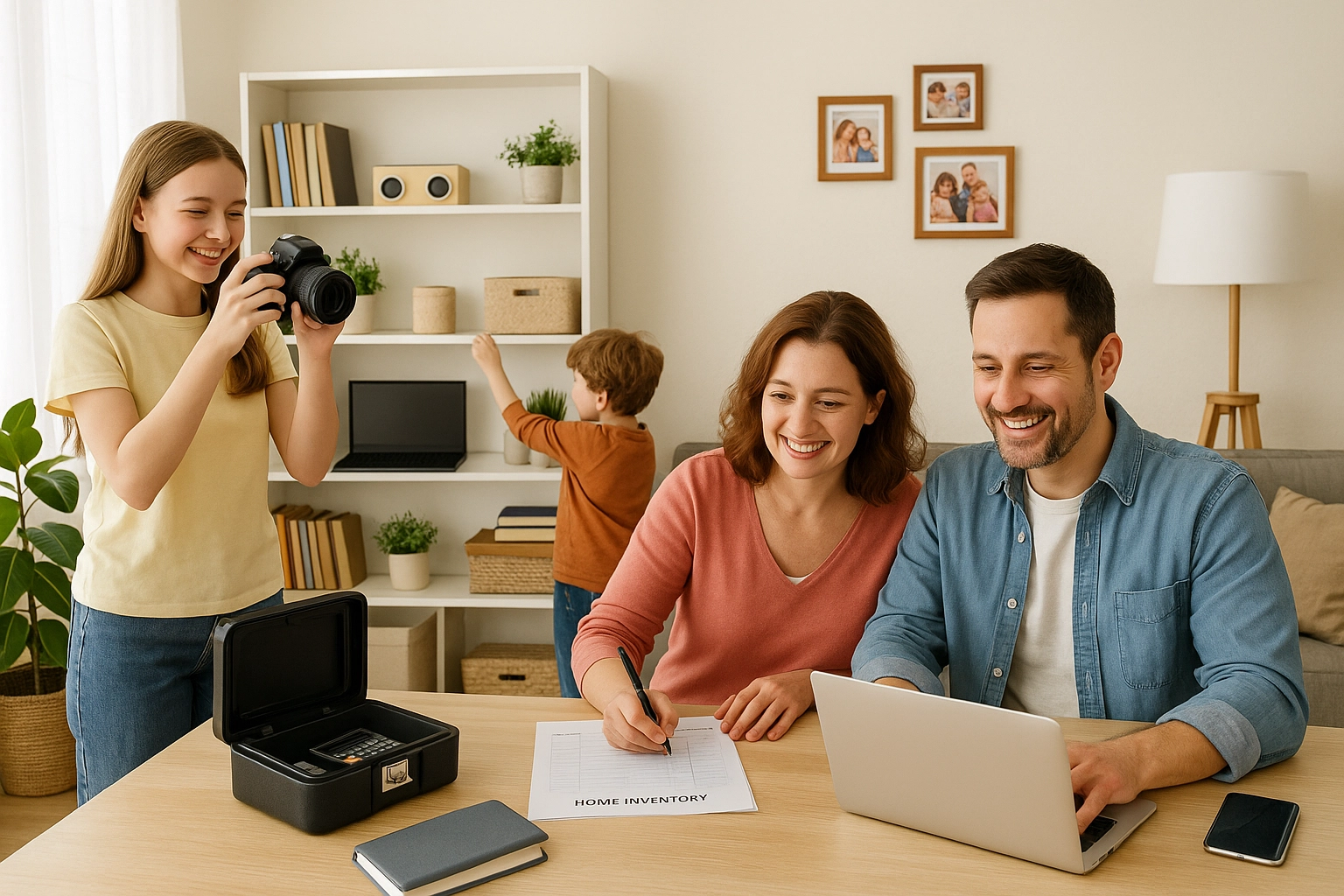
Turn creating a home inventory into a photography expedition. Assign different rooms to family members and have them photograph belongings. Older kids can help catalog items while younger ones can be the "photographers" with supervision.
Important Paper Hunt:
Gather important documents together – birth certificates, insurance papers, medical information. Show kids where these are kept and why they matter. Consider getting a fireproof safe and let kids help organize documents into folders.
Creating Safety Traditions
Make these checks regular family traditions by scheduling them seasonally. Spring safety checks can coincide with changing smoke detector batteries when clocks "spring forward." Fall checks work perfectly with preparing for winter weather and holiday decorations.
Reward System:
Create a family safety certificate that everyone signs after completing checks. Consider small rewards like choosing the next family movie night film or picking a special dinner when all safety missions are complete.
Teaching Moments:
Use these activities to discuss why safety matters without creating anxiety. Explain that just like wearing seatbelts in the car, these checks help keep everyone healthy and happy at home.
Age-Appropriate Involvement:
Toddlers can help by putting toys away from walkways. School-age kids can use checklists and flashlights. Teenagers can help with more complex tasks like testing electrical outlets and planning escape routes. Everyone contributes at their level.
The Safety Sense Difference
Regular family safety checks create lasting habits and teach children that safety is everyone's responsibility. When kids participate in keeping their home safe, they develop awareness skills that will protect them throughout their lives.
These DIY checks aren't just about finding problems – they're about building family teamwork, teaching responsibility, and creating a culture where safety is naturally woven into your daily life. Plus, you'll sleep better knowing your home is as safe as possible for everyone you love.
Remember, if you discover any major electrical, structural, or mechanical issues during your family safety missions, don't hesitate to call professionals. The goal is to catch small problems before they become big ones, and to teach your family that safety is always the top priority.
Start your first family safety mission this weekend – you might be surprised how much fun keeping everyone safe can actually be!


Comments
Post a Comment