Stranger Safety for Kids: Smart Ways to Stay Alert
Stranger Safety for Kids: Smart Ways to Stay Alert
Teaching kids about stranger safety doesn't have to be scary or overwhelming. It's actually one of the most empowering gifts we can give our children – the confidence to navigate their world while staying safe and alert. Let's dive into some smart, practical ways to help kids develop their safety superpowers!
What Makes Someone a "Stranger" Anyway?
Here's something that might surprise you: a stranger isn't just someone your child has never met before. It's anyone they don't know well enough to trust completely. This includes that friendly neighbor who waves from across the street, the delivery person who comes to your door, or even distant relatives they rarely see.
Think of it like this – if your child couldn't tell you three things about that person (like where they work, their favorite hobby, or their pet's name), then that person falls into the "stranger" category. This broader understanding helps kids maintain healthy boundaries with people who might seem familiar but aren't truly in their trusted circle.
Trusting That Inner Voice
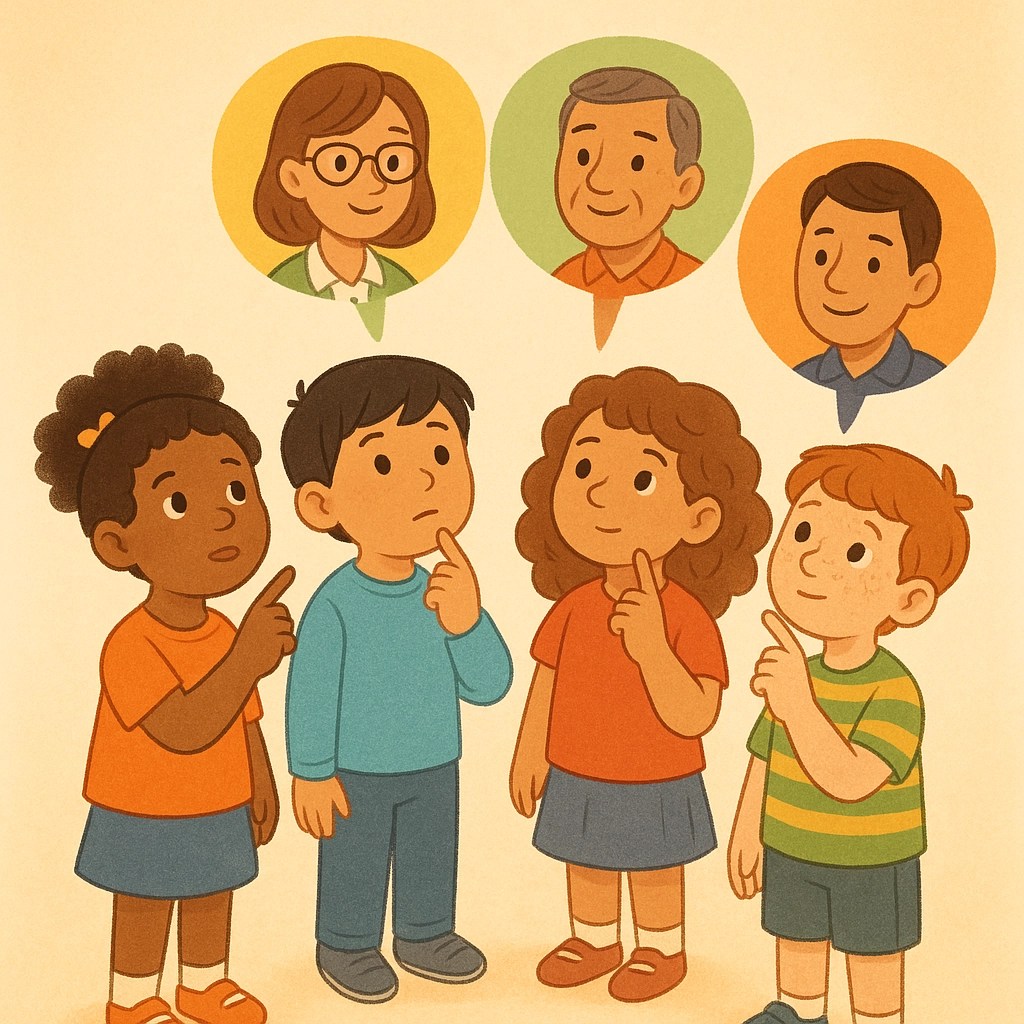
Kids have amazing instincts – they just need to learn how to listen to them! That little voice inside saying "something feels weird" or "this doesn't seem right" is incredibly powerful. When children learn to trust their gut feelings, they develop an internal alarm system that can keep them safe.
Encourage your kids to pay attention to how they feel around different people. Do they feel comfortable and happy, or do they feel nervous and want to leave? There's no such thing as being "too sensitive" when it comes to safety. If something feels off, it probably is.
The Magic Safety Distance Rule
One of the easiest rules to remember is the "two arm's length" rule. Kids should stay at least two arm's lengths away from people they don't know well. This gives them plenty of space to step back or run away if they need to. It's like having an invisible safety bubble around them!
This distance rule applies to all interactions – whether someone is asking for directions, offering help, or trying to start a conversation. Staying back gives kids time to think and react if needed.
Building Your Child's Safety Toolkit
The NO-GO-TELL System
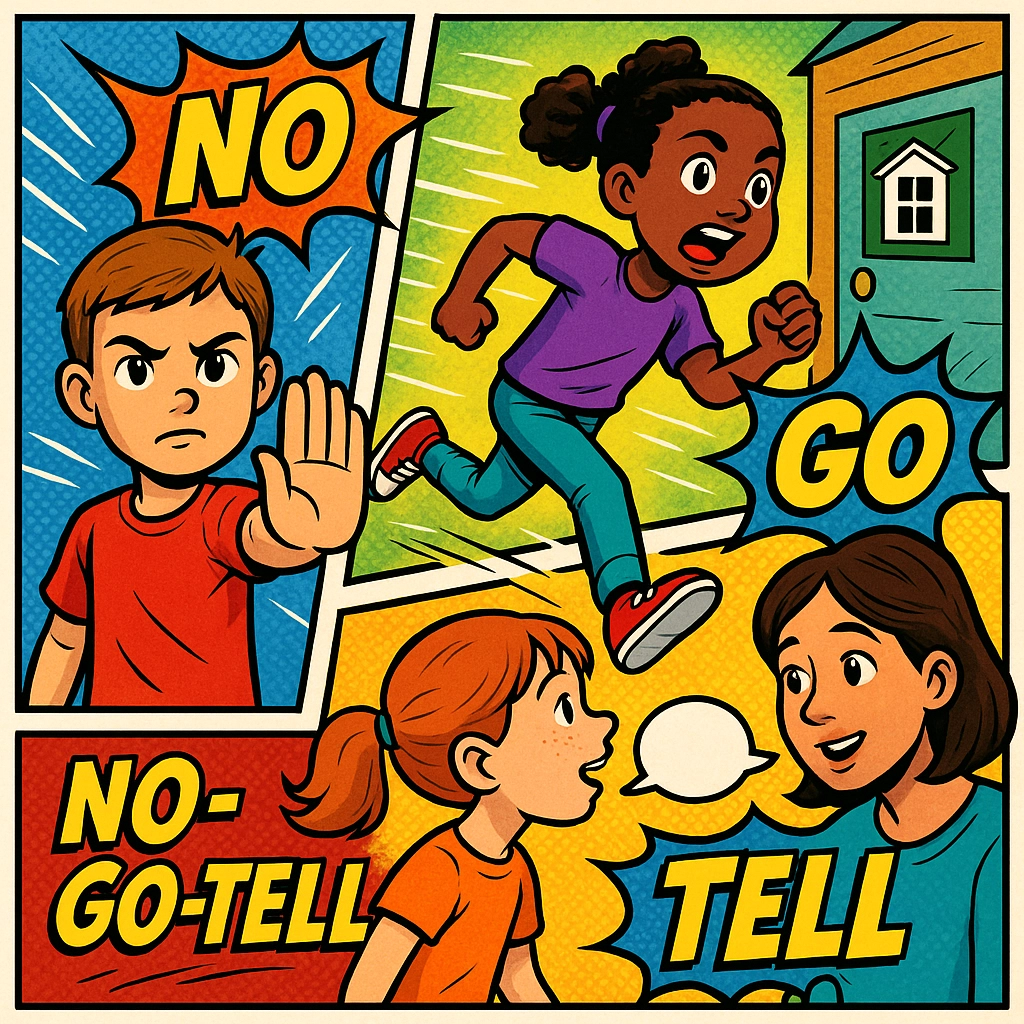
This three-step system is like a superhero action plan for kids:
NO – Say it loud and clear! Kids should never worry about being polite to someone who makes them uncomfortable. A firm "NO!" is always okay when someone tries to touch them inappropriately, asks them to go somewhere, or makes them feel scared.
GO – Get out of there fast! Whether it's running to a safe place, going inside a store, or heading toward other people, the key is to move away from the uncomfortable situation quickly.
TELL – Share what happened with a trusted adult right away. This isn't tattling – it's staying safe! Kids should know they'll never get in trouble for reporting something that made them feel unsafe.

The Three W's Communication System
Before kids go anywhere without parents, they need to master the Three W's:
- WHO they're going with
- WHERE they'll be
- WHEN they'll be back
And here's the important part – if any of these change, kids need to check in again. Plans change, and that's okay, but keeping parents in the loop is non-negotiable.
Creating a Safety Network
Identifying Trusted Adults
Help your child create a mental map of trusted adults in their world. These might include:
- Teachers and school staff
- Police officers and firefighters
- Store employees (especially those wearing name tags or uniforms)
- Other parents with children nearby
- Family friends your child knows well
Practice pointing out these trusted adults when you're out together. Make it a fun game – "Can you spot three people we could ask for help if we needed it?"
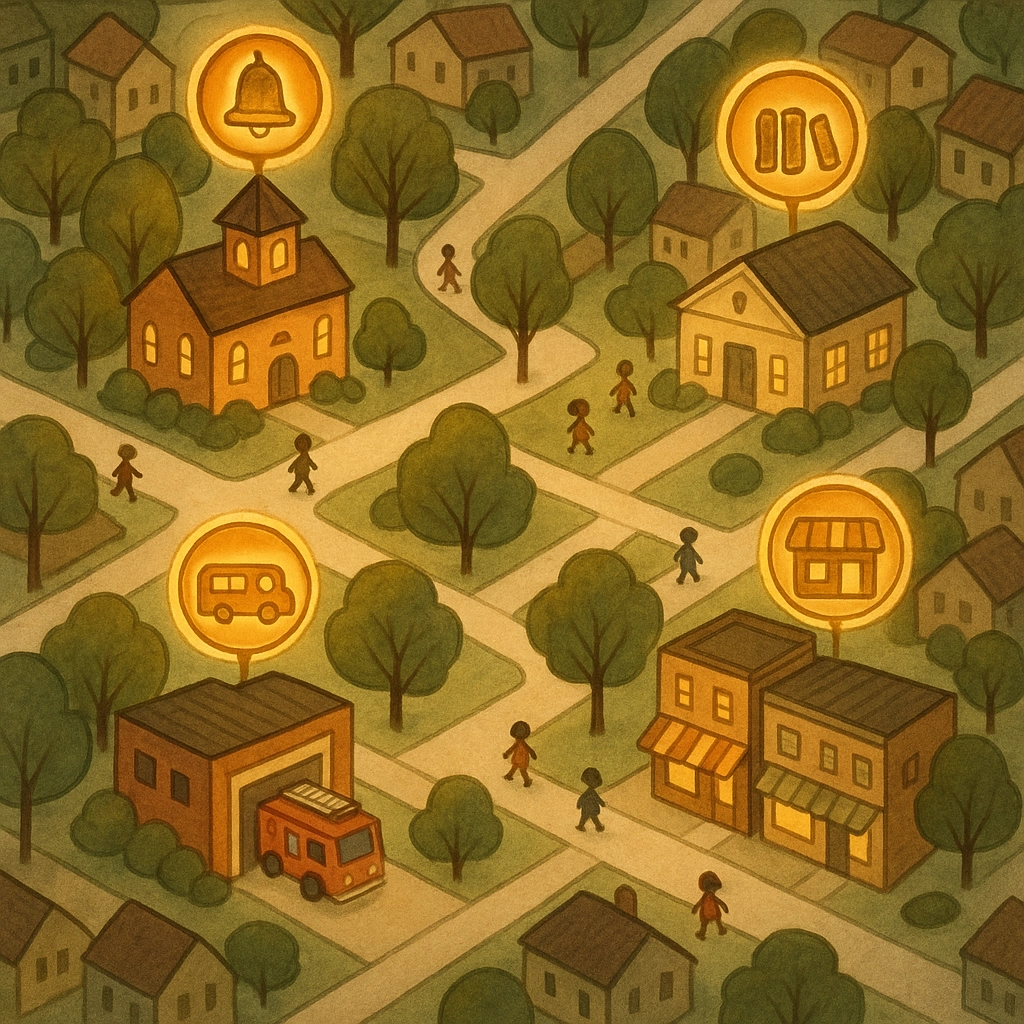
Safe Places to Remember
Kids should know about safe places they can go if they ever feel scared or lost:
- Schools and libraries
- Stores and restaurants (especially ones with employees who can help)
- Fire stations and police stations
- Churches or community centers
- Homes of trusted neighbors or friends
Everyday Safety Habits
The Buddy System Works
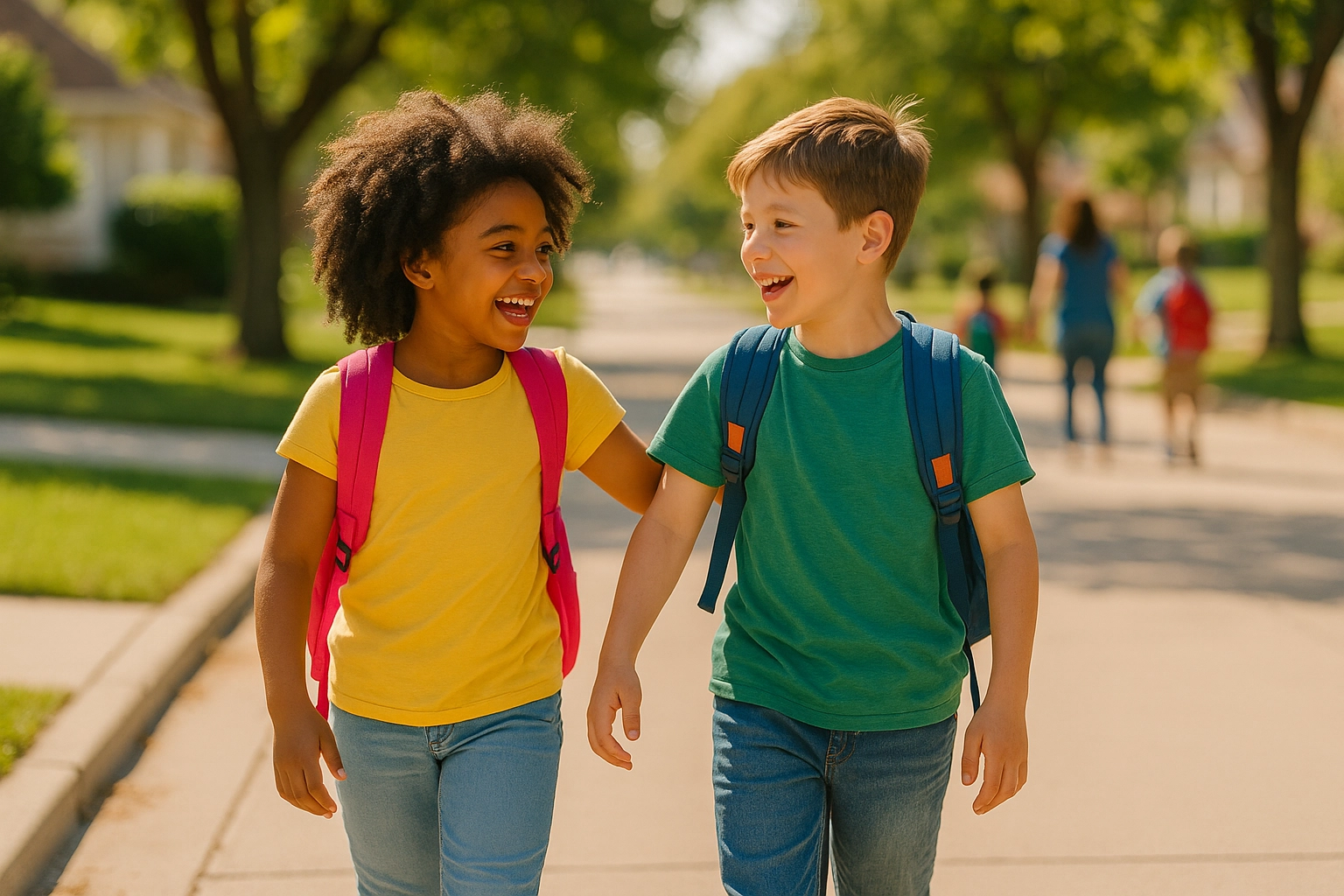
There really is safety in numbers! Encourage kids to walk with friends whenever possible. Whether it's going to the playground, walking to school, or exploring the neighborhood, having a buddy makes everything safer and more fun.
On buses or trains, kids should sit near families with other children when possible. And in elevators, it's perfectly okay to wait for the next one if they feel uncomfortable about someone else inside.
Staying Alert and Aware
Kids can develop their "safety radar" by paying attention to what's happening around them. This doesn't mean being paranoid – it means being aware! They should notice:
- Who's nearby and what they're doing
- Where the exits are in buildings
- Which direction leads back home or to safety
- Any people or cars that seem to be following them
What to Do When Lost
If kids get separated from parents or caregivers, they should:
- Stay where they are (if it feels safe) or move to the nearest safe place
- Look for a trusted adult to help them
- Never leave the area with someone they don't know
- Remember that it's okay to make noise and attract attention if needed
Age-Appropriate Safety Skills
For Younger Kids (Ages 4-7)
Little ones need simple, clear rules:
- Learn their full name, address, and phone number by heart
- Understand "stranger" vs. "trusted adult"
- Practice the NO-GO-TELL system through fun role-playing
- Know that it's never their fault if someone makes them uncomfortable
For Older Kids (Ages 8-12)
Older children can handle more detailed safety concepts:
- Understand different types of unsafe situations
- Learn to identify and avoid risky places
- Practice confident body language and assertive responses
- Develop better judgment about when to help others vs. when to get help
Making Safety Fun, Not Scary
The goal isn't to make kids afraid of the world – it's to help them feel confident and capable! Turn safety lessons into games:
- Practice the "safety distance" by measuring with arms outstretched
- Play "spot the trusted adult" when you're out together
- Role-play different scenarios in a fun, non-threatening way
- Celebrate when kids use good safety judgment
When Safety Plans Work
Remember, most adults in the world are good people who want to help keep kids safe. The goal of stranger safety isn't to make children suspicious of everyone – it's to give them the tools they need to recognize and respond to the small percentage of people who might not have good intentions.
By teaching these smart safety strategies, we're giving kids the confidence to explore their world while staying alert and aware. They'll know how to trust their instincts, maintain safe boundaries, and get help when they need it.
The best part? These safety skills become second nature over time. Kids who learn these strategies early develop into confident, aware teenagers and adults who can navigate any situation with wisdom and caution.
Remember, every child is different, and what works for one might need adjusting for another. The key is starting these conversations early, keeping them age-appropriate, and practicing these skills regularly in a supportive, encouraging environment. When kids feel empowered rather than frightened, they're much more likely to make smart safety choices throughout their lives.


Comments
Post a Comment