Water Safety Basics: Making Pools, Lakes & Beaches Kid-Friendly
Water Safety Basics: Making Pools, Lakes & Beaches Kid-Friendly
Summer adventures mean splash time! Whether you're planning pool parties, lake camping trips, or beach vacations, water activities create some of our best family memories. But here's the thing – water can be tricky. It looks innocent and fun (and it totally is!), but it demands respect and smart planning to keep everyone safe.
The good news? Water safety doesn't have to be scary or complicated. With the right knowledge and preparation, you can turn any water environment into a safe playground where kids can build confidence, have blast, and parents can actually relax. Let's dive into making every water adventure both fun AND safe.
The Super Important Rule: Eyes On, Always
Before we talk about specific places, let's get the biggest rule straight: someone needs to be watching the water at all times when kids are around. Not checking their phone, not reading a book, not chatting with friends – actively watching.
Here's why this matters so much: drowning happens fast and silently. Unlike what we see in movies, people who are drowning often can't call for help or splash dramatically. They just slip under quietly, sometimes in less than 30 seconds.
For family gatherings, pick a "Water Watcher" – one adult whose only job is monitoring the kids in the water. When they need a break, they officially pass the responsibility to another adult. Think of it like a relay race, but for safety!
Age-specific watching rules:
- Kids under 5: You need to be able to reach them instantly
- Kids under 10: Keep them in sight at all times
- All kids: Only swim where there's a lifeguard or designated adult watcher
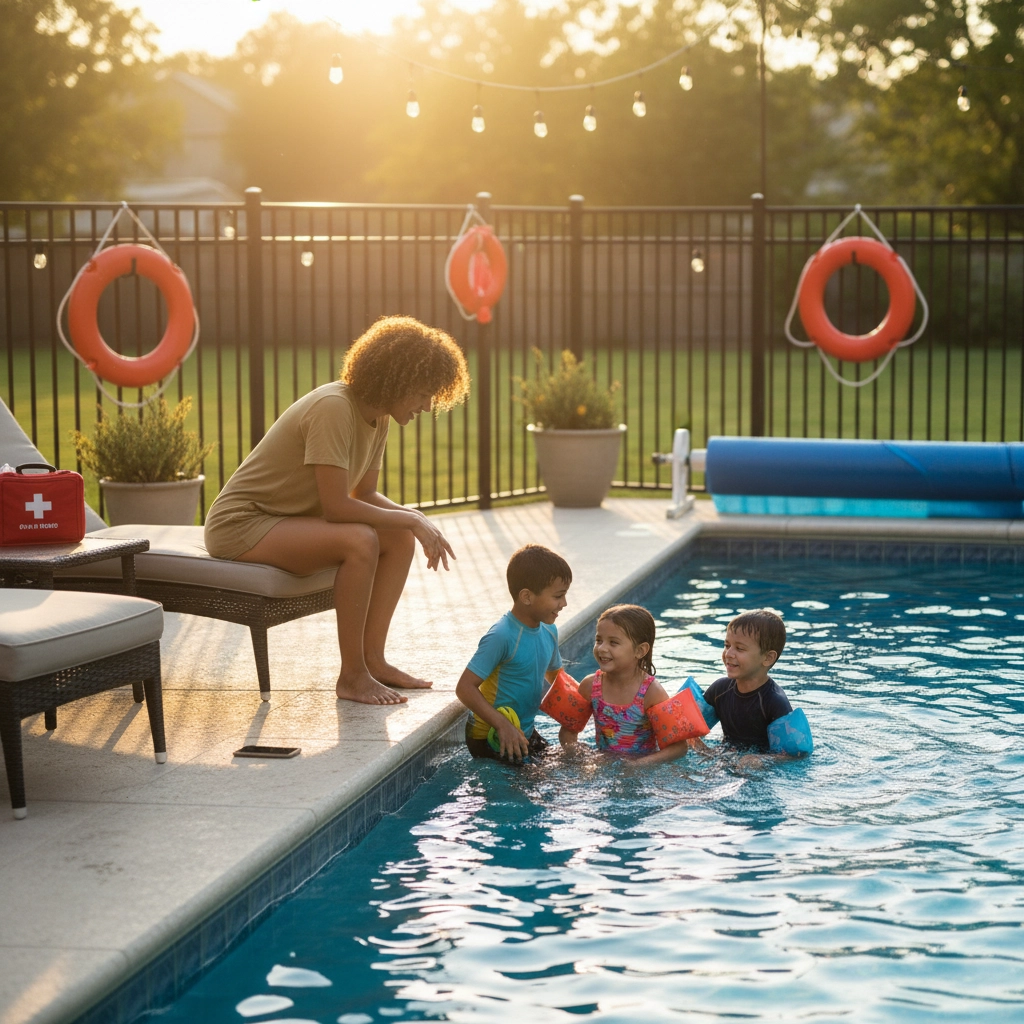
Pool Safety: Your Backyard Oasis
Pools are amazing for building swimming skills and having fun close to home, but they come with their own safety checklist.
Building the Right Barriers
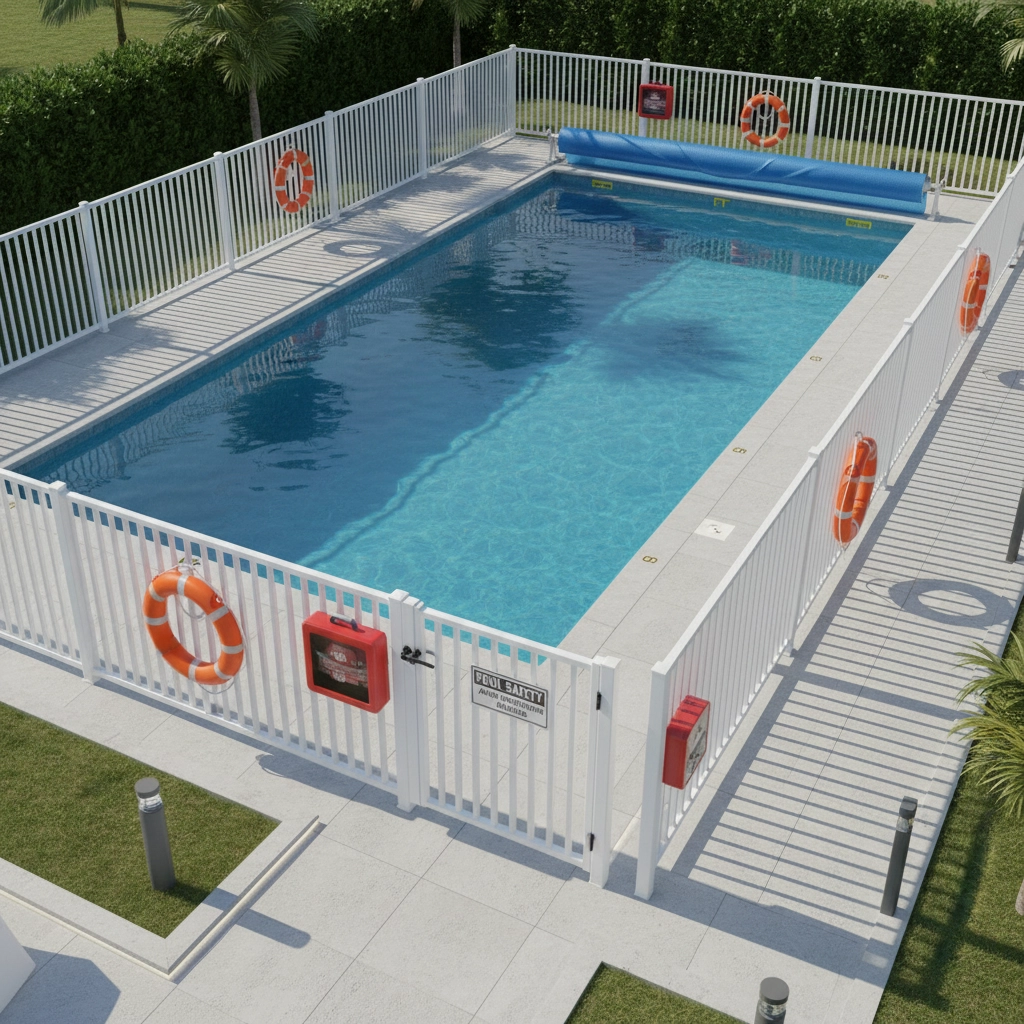
If you have a home pool, think of safety barriers as your first line of defense. Install a fence at least four feet high all around the pool area – not just three sides. That gate needs to latch and close by itself, because even the most careful adults sometimes forget to close doors.
Pool covers add extra protection, but never trust them completely. Kids might think a covered pool is safe to walk on, but covers can create dangerous air pockets or become traps themselves.
Pool-Specific Dangers to Watch For
Slippery surfaces: Pool decks get slick! Teach kids to walk, not run, around pools. Make it a fun rule: "Walk like a robot around the pool!"
Shallow ends: Always enter feet-first unless you're in a clearly marked diving area and know proper diving techniques. Even then, diving should only happen after kids have learned the right way to do it safely.
Pool drains: These might look harmless, but broken or uncovered drains can trap hair, clothing, or even body parts. Teach kids to stay away from all drains – it's a simple rule that eliminates the risk entirely.
Empty everything after use: Kiddie pools, buckets, even large tubs need to be emptied completely when done. Toddlers can drown in just a few inches of water.
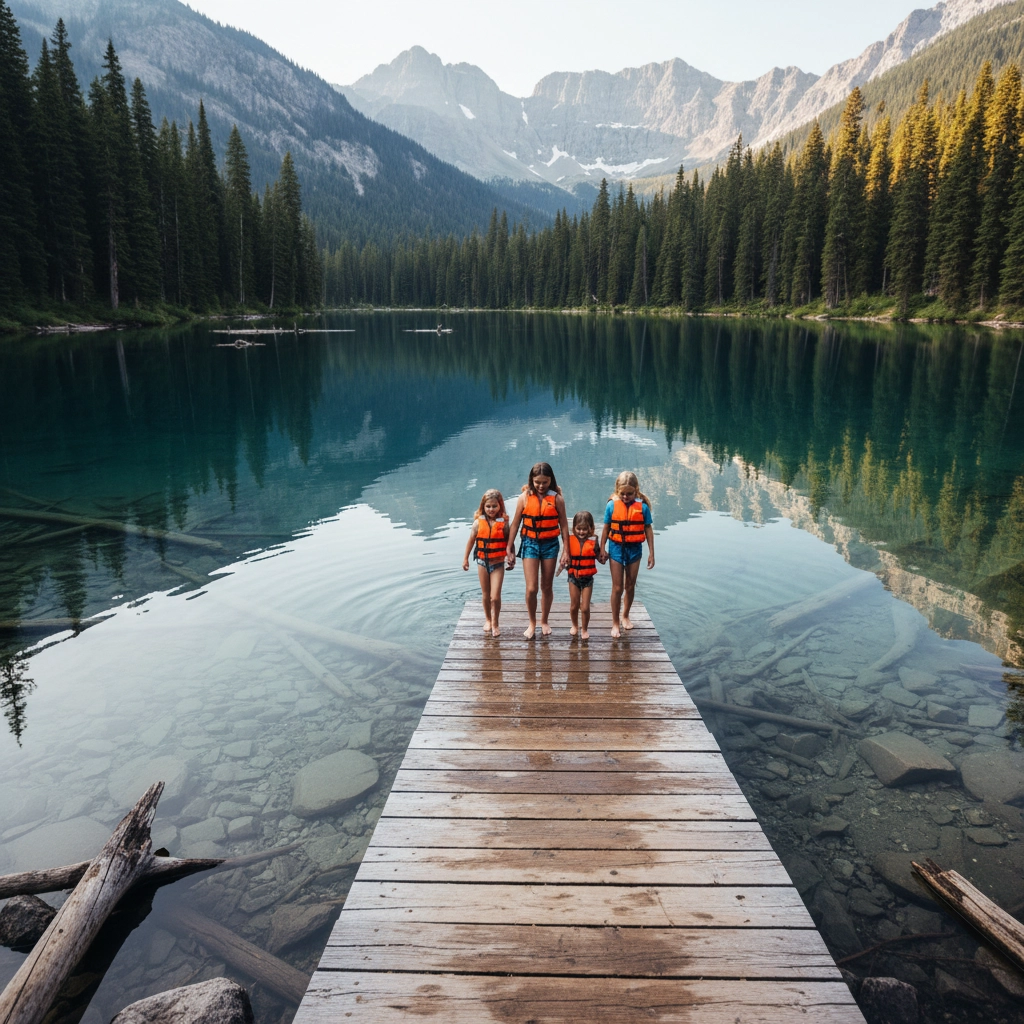
Lake and River Adventures: Nature's Swimming Holes
Natural water bodies are exciting because they're, well, natural! But that also means they're unpredictable and require extra caution.
Hidden Dangers Below
Unlike crystal-clear pools, lakes and rivers often have murky water where you can't see what's underneath. There might be:
- Sudden drop-offs where shallow water becomes deep instantly
- Fallen trees or branches creating underwater obstacles
- Rocks, trash, or other debris
- Strong currents that can surprise even good swimmers
The golden rule for natural water: Always enter slowly and feet-first. Test the depth and feel for obstacles before moving into deeper areas.
Current Awareness
Rivers and some lakes have currents – water that's moving and can push swimmers around. Teach kids to notice if the water is trying to move them and to swim only in designated safe areas when available. If there's any doubt about water conditions, it's better to find a different spot or wait for another day.
Beach and Ocean Safety: Riding the Waves Safely
Ocean swimming is incredibly fun, but it's also the most complex water environment. Oceans are powerful, constantly changing, and full of surprises.
Understanding Beach Conditions
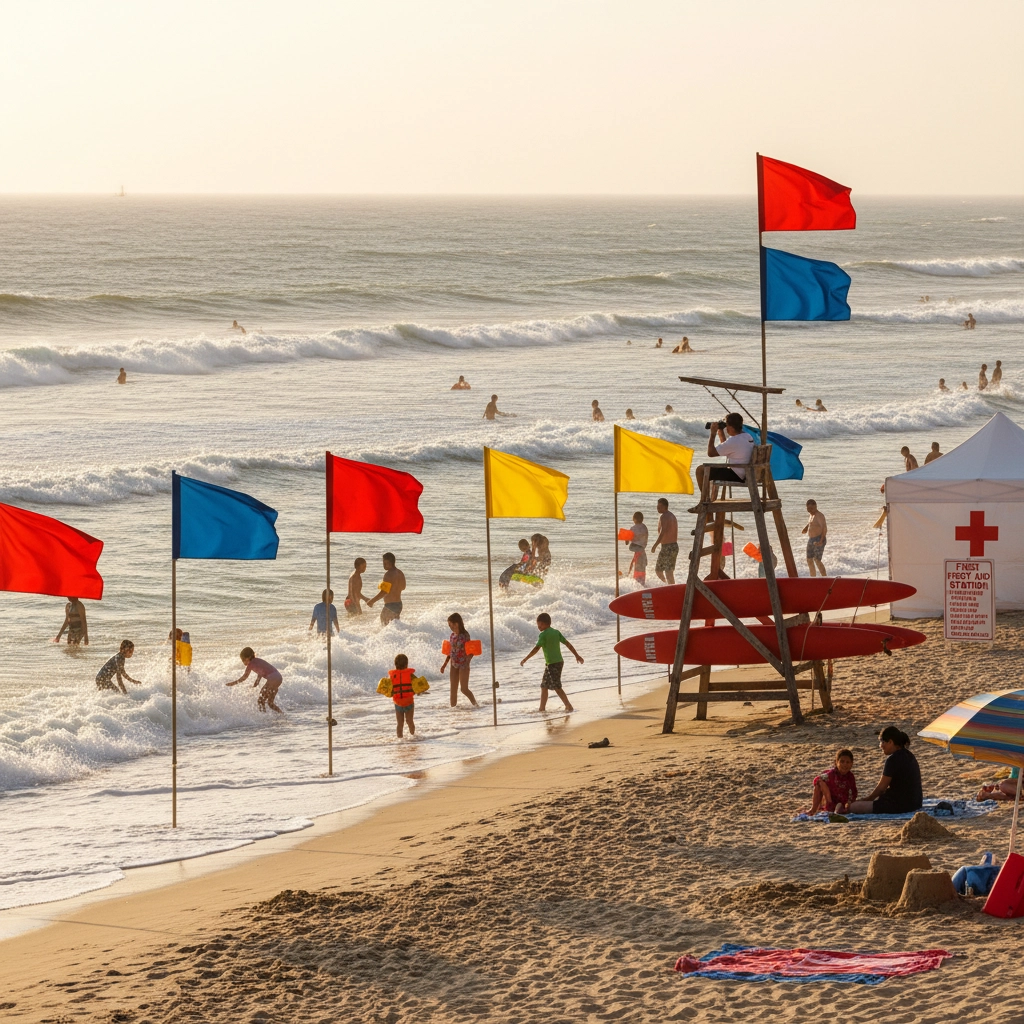
Before anyone gets in the water, check the beach flag system:
- Green flags usually mean calm conditions
- Yellow flags indicate moderate surf or currents
- Red flags mean dangerous conditions – stay out of the water
Wave awareness: Teach kids to never turn their backs on the ocean. Waves can come in sets, with some much larger than others. Watch for several minutes before entering to get a feel for the wave patterns.
Rip Current Safety
Rip currents are like underwater rivers flowing away from shore. They can overpower even experienced swimmers. If someone gets caught in a rip current, the key is not to fight directly against it. Instead, swim parallel to the shore until you're out of the current, then swim back to land.
Beach safety zones: Always swim in lifeguarded areas when possible. Lifeguards choose these spots because they're typically the safest sections of beach, and they're trained to handle emergencies.
Essential Safety Gear: Your Water Safety Toolkit
Life Jackets: Not Just for Boats
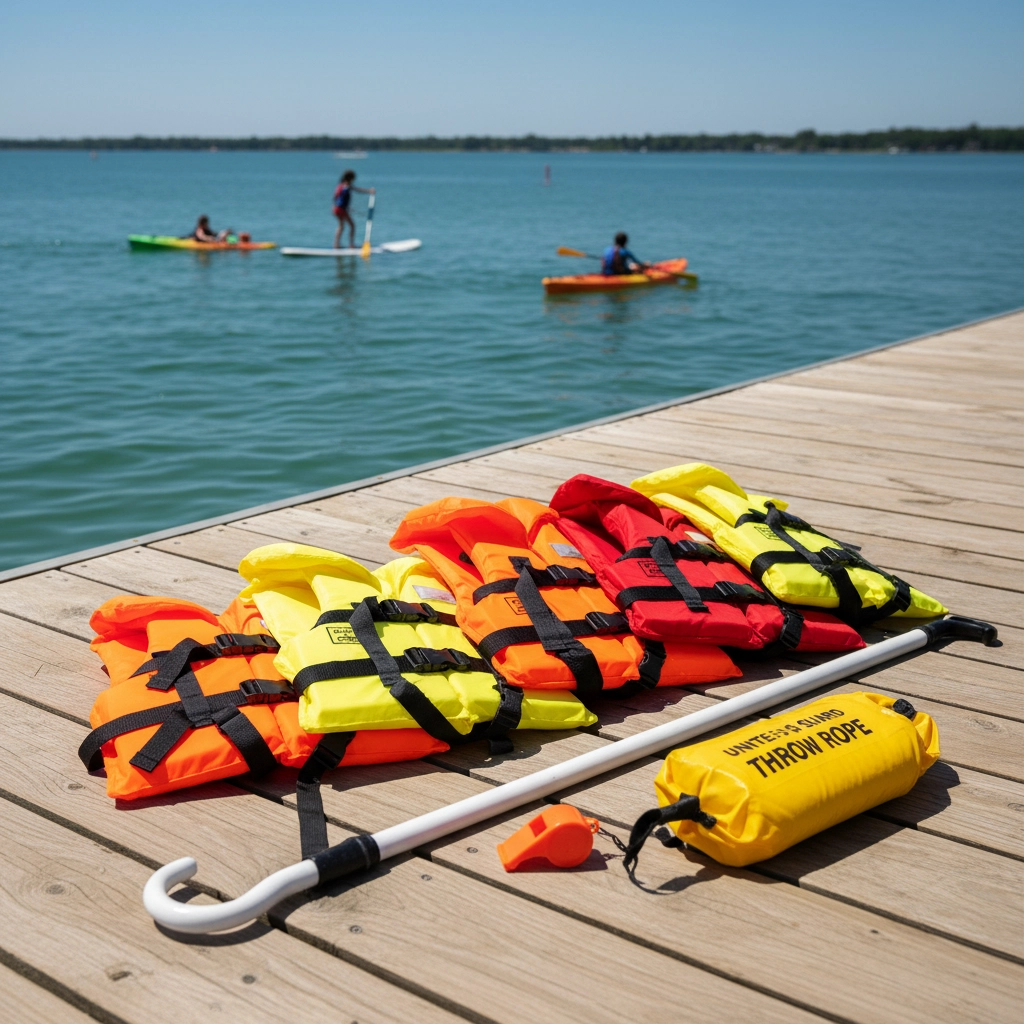
Coast Guard-approved life jackets are essential for non-swimmers and should be used by anyone doing water activities like boating, kayaking, or trying new water sports. The key word here is "approved" – pool noodles, water wings, and inflatable toys are fun, but they're not safety equipment.
Proper fit matters: Life jackets should be snug but comfortable. If a child can slip out of it easily, it's too big and won't do its job in an emergency.
Emergency Skills Everyone Should Know
CPR training: Learning CPR for adults, children, and infants can literally save lives. Many community centers and organizations offer classes, and it's knowledge that extends far beyond water safety.
"Reach, Throw, Don't Go": If someone is struggling in the water, use a long object (like a pole or rope) to reach them, or throw them something that floats. Don't jump in yourself – even strong swimmers can be pulled under by panicked individuals.
Teaching Kids to Be Water Smart
Building Swimming Skills
Swimming lessons are incredibly valuable and can start as early as age one for most children. But remember – swimming lessons don't make kids "drown-proof." Supervision remains essential regardless of swimming ability.
Focus on practical skills: Floating, treading water, and getting to the edge or shore safely are more important than perfect swim strokes for safety purposes.
Creating Good Water Habits
Ask before entering: Teach kids to always check with a parent or caregiver before getting in any water. This simple habit ensures proper supervision and gives adults a chance to assess conditions.
Weather awareness: Storms can change water conditions quickly. If you hear thunder, see lightning, or notice dark clouds moving in, it's time to get out of the water immediately and head for shelter.
No breath-holding games: These might seem fun, but they can lead to dangerous situations and should be avoided entirely.
Making Safety Fun, Not Scary
The goal isn't to make kids afraid of water – it's to help them develop healthy respect and smart habits. Frame safety rules positively:
Instead of "Don't do that!" try "Here's the safe way to have fun!"
Instead of focusing on what could go wrong, emphasize how following safety rules lets everyone enjoy water activities worry-free.
Create safety traditions: Maybe everyone gets to pick their favorite life jacket color, or you have a special pre-swim safety check routine. Making safety part of the fun routine helps kids remember and follow the rules naturally.
Water adventures should be about joy, confidence-building, and family bonding. With proper preparation, clear rules, and active supervision, every splash can be both thrilling and safe. The key is planning ahead, staying alert, and remembering that the best water activities are the ones where everyone goes home with great memories and big smiles.
Remember: good water safety isn't about limiting fun – it's about making sure the fun can continue for years to come!


Comments
Post a Comment