Playground Safety: What Parents and Kids Should Watch For
Playground Safety: What Parents and Kids Should Watch For
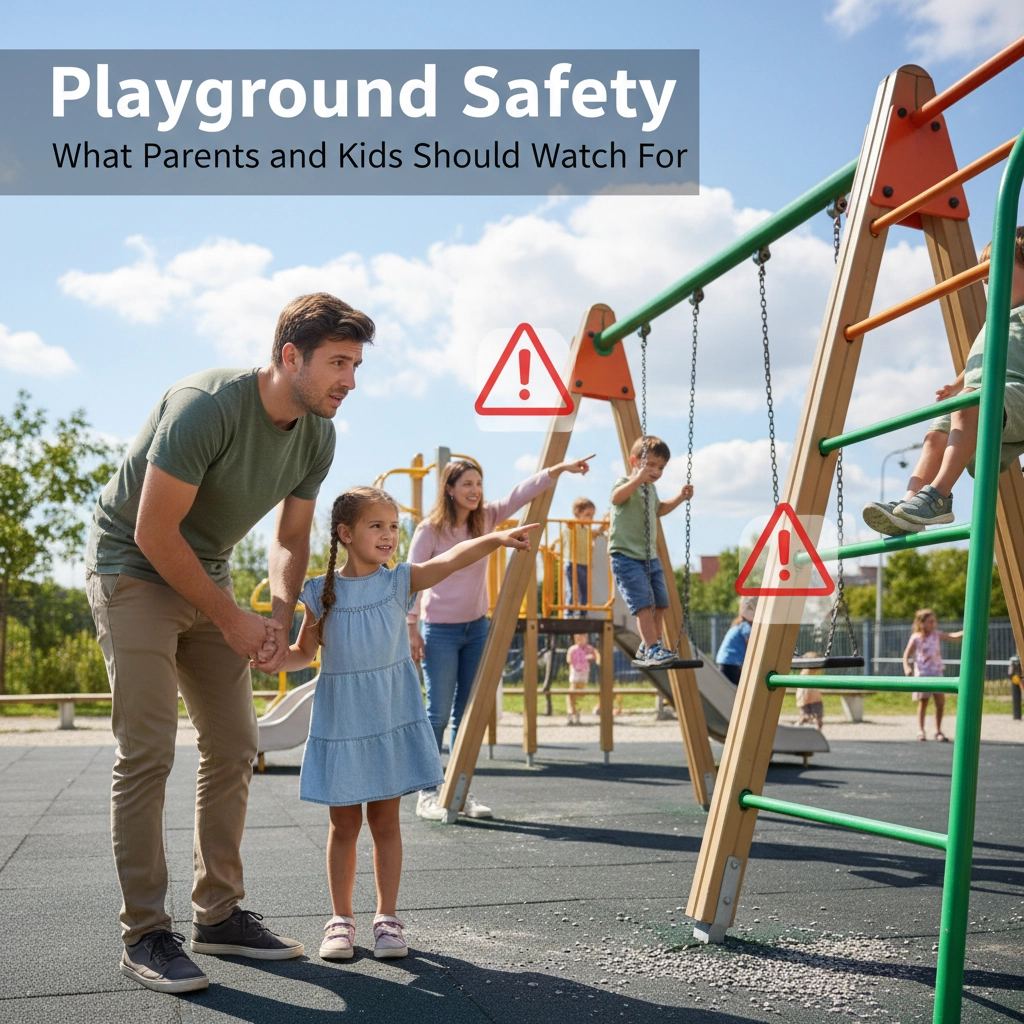
Picture this: it's a beautiful Saturday afternoon, and you're at the local playground with your kids. They're running around with huge smiles, climbing monkey bars, and going down slides. But as a parent, you know that fun and safety need to go hand in hand. With thousands of playground-related injuries happening each year, knowing what to watch for can make all the difference between a perfect day and an emergency room visit.
Don't worry, we're not here to scare you away from playgrounds! Instead, let's talk about simple ways to keep our little adventurers safe while they explore, climb, and play to their hearts' content.
The Equipment Detective: What to Look For
Before your kids dive into playground fun, take a few minutes to be a safety detective. About one in three playgrounds have equipment issues that could lead to injuries, so your quick inspection really matters.
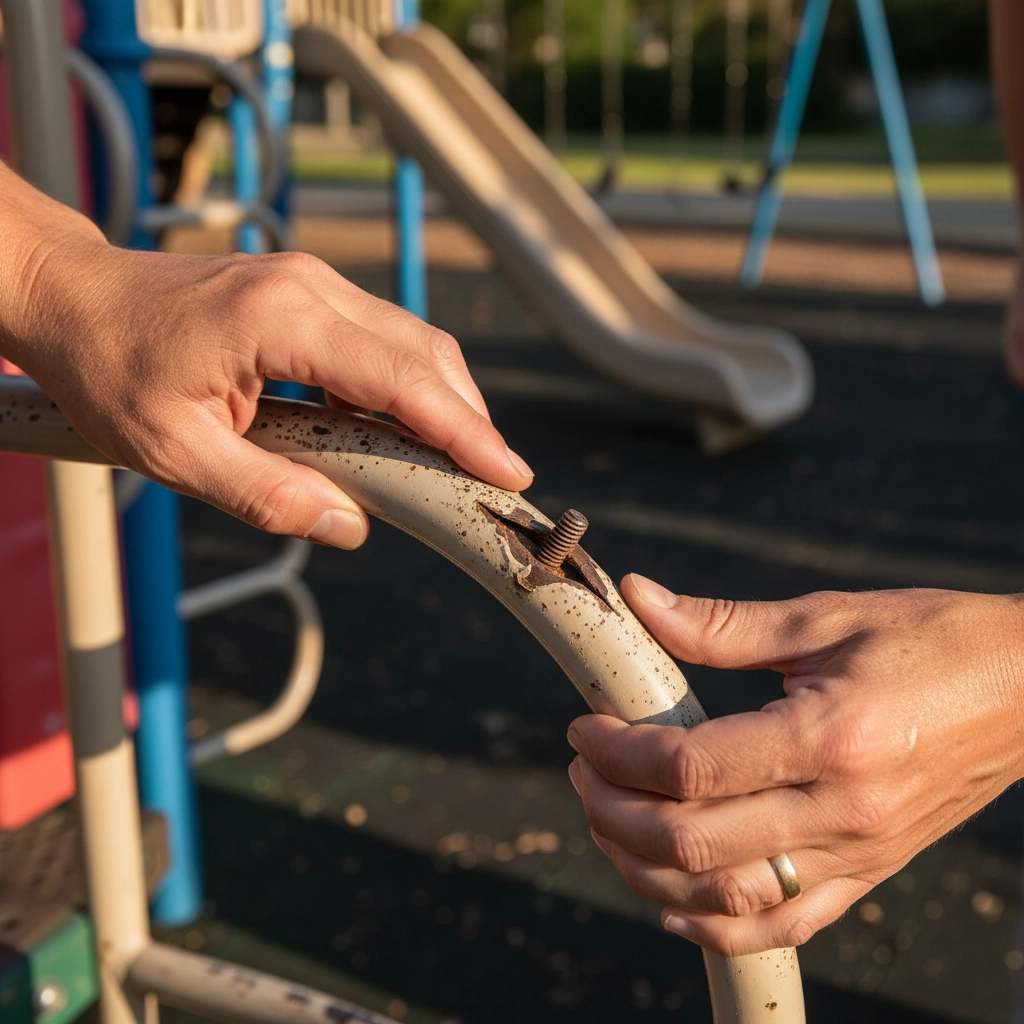
Start by checking for sharp edges, broken parts, and rough surfaces. Run your hands along railings and edges, they should be smooth, not sharp or splintered. If you spot any exposed screws, bolts, or metal pieces sticking out, that's a red flag. These might seem small, but they can cause serious cuts or catch on clothing.
Here's something super important that many parents don't know about: head entrapment hazards. Any opening between 3.5 and 9 inches is dangerous because a child's body might fit through, but their head could get stuck. This is especially risky if your child is wearing a helmet (more on that later). Check playground openings in railings, between ladder rungs, and in any decorative elements.
Moving parts need special attention too. Swings, merry-go-rounds, and spring riders should move smoothly without any grinding or catching. Look for open "S" hooks on swings, these should be closed completely or replaced with welded links. And watch out for any parts that could pinch little fingers or catch loose clothing.
Ground Rules: Surface Safety Matters
Falls cause most playground injuries, which makes the ground surface incredibly important. The good news? There are lots of safe options that make falling much less scary.
Safe surfaces include wood chips, sand, shredded rubber, and rubber mats. These materials cushion falls and give kids a softer landing. The safer surfaces should extend at least 6 feet in all directions from equipment, and even further for swings and slides.
Dangerous surfaces to avoid include concrete, asphalt, grass, and packed dirt. These hard surfaces don't provide any cushioning and can turn a simple tumble into a serious injury.
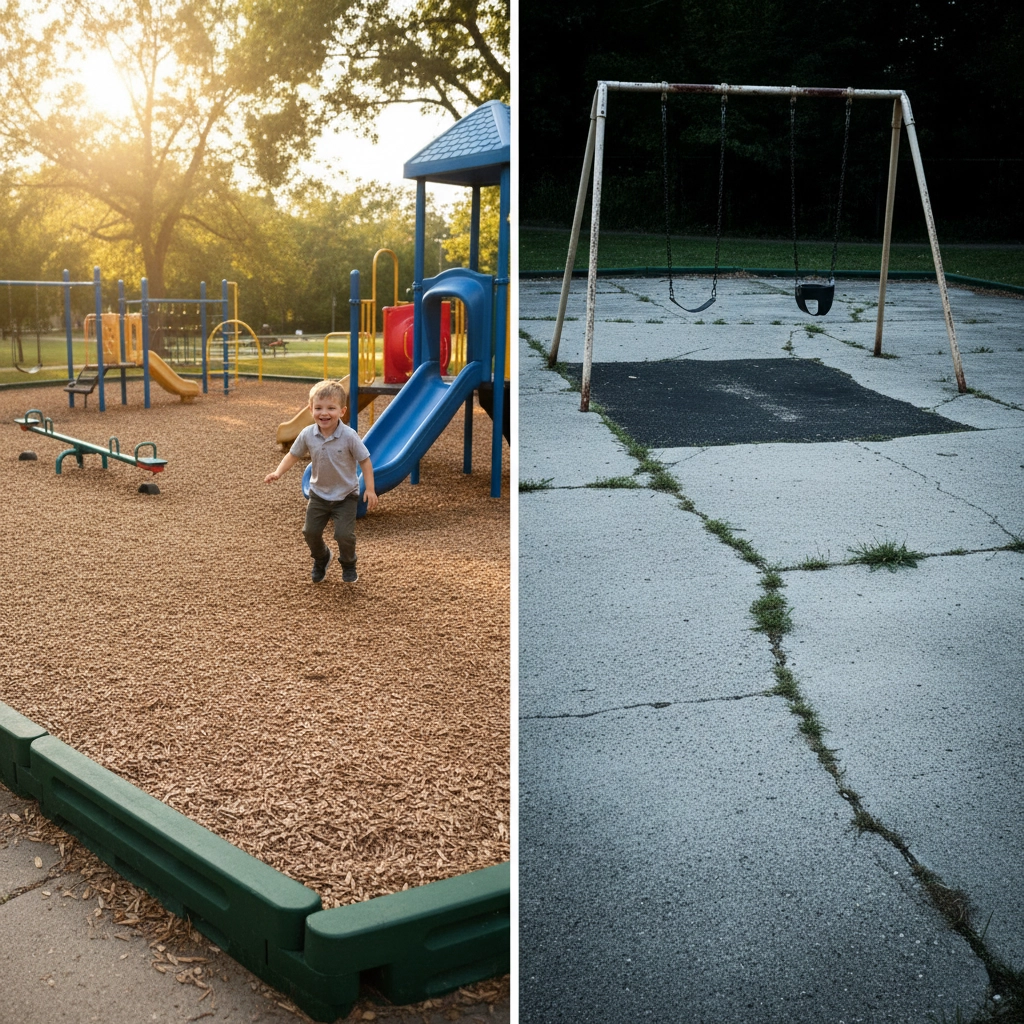
Pro tip: kick the surface material around with your foot. It should be loose and deep enough (usually 9-12 inches) to provide good cushioning. If you can see or feel hard ground underneath, the protective material needs to be refreshed.
Dress for Success: Playground Fashion Safety
What your kids wear to the playground is more important than you might think. Some clothing choices can actually create safety hazards.
Remove these items before playground time:
- Necklaces and jewelry
- Scarves or anything around the neck
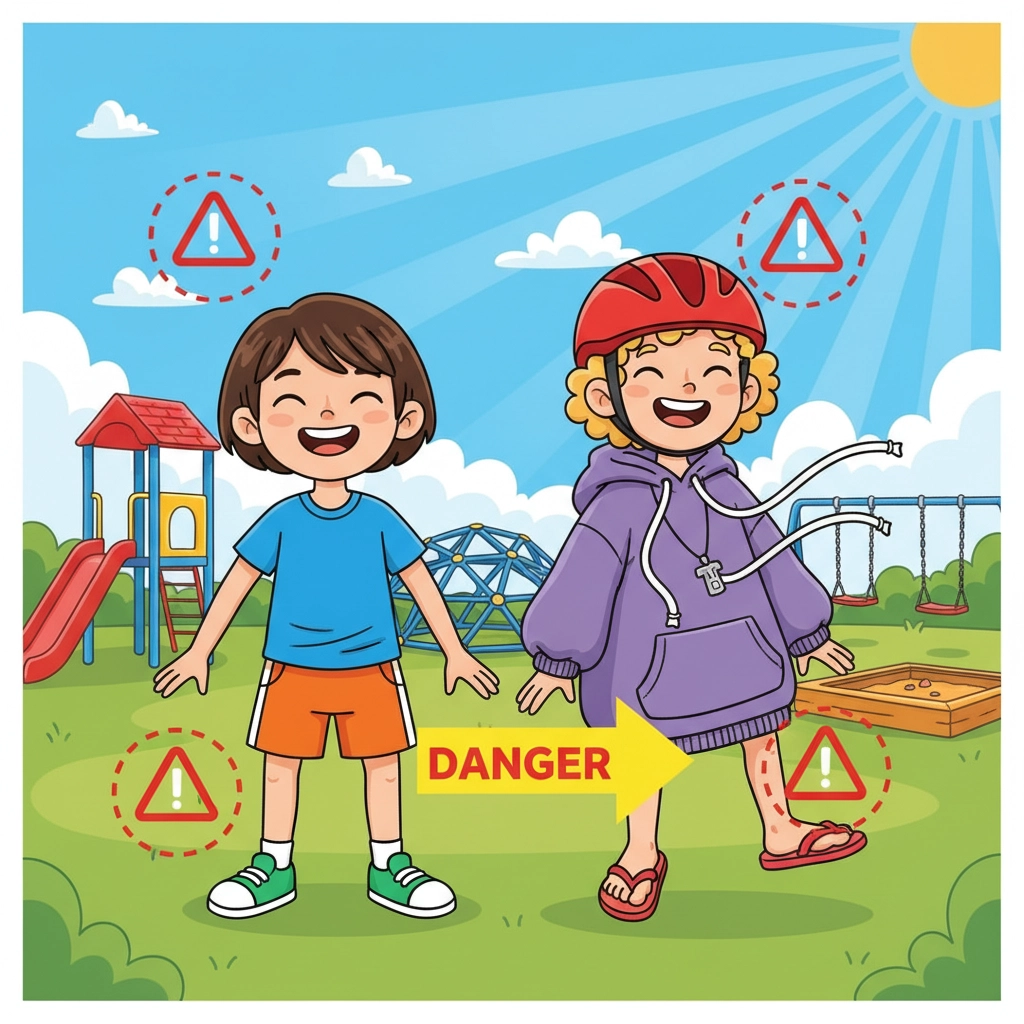
- Clothing with drawstrings
- Purses or bags with long straps
- Bicycle helmets (yes, really!)
This might surprise you, but bicycle helmets can actually be dangerous on playground equipment. They can get caught in openings that would normally be safe for a child's head, creating an entrapment situation. Save helmets for bike riding, not playground climbing.
Instead, dress kids in fitted clothing that won't get caught on equipment. Closed-toe shoes with good grip are perfect: sandals and flip-flops can lead to trips and falls.
Age Matters: Right Equipment for the Right Kids
Playgrounds often have equipment designed for different age groups, and there's a good reason for this. What's perfect for a 10-year-old can be dangerous for a 3-year-old.
For toddlers (ages 2-5):
- Look for equipment with platforms no higher than 32 inches
- Choose areas with complete guardrails and smaller openings
- Bucket swings are great for little ones who can sit up well
- Shorter slides with gentle slopes work best
For school-age kids (5-12):
- Equipment can be taller and more challenging
- Regular swings are appropriate
- Monkey bars and climbing equipment are perfect for developing coordination
Keep different age groups in separate play areas when possible. Big kids playing near little ones can accidentally cause collisions or encourage younger children to try equipment they're not ready for.
Super Supervision: Your Most Important Job
Even the safest playground needs active adult supervision. This doesn't mean hovering over every move, but it does mean staying alert and engaged.
What good supervision looks like:
- Stay close enough to help quickly if needed
- Keep eyes on your children, not your phone
- Watch for risky behavior like climbing up slides or standing on swings
- Be ready to remind kids about taking turns and being gentle with others
Teach your kids that pushing, shoving, and crowding around equipment can be dangerous. The playground is more fun when everyone follows the rules and looks out for each other.
Environmental Awareness: Beyond the Equipment
Safety isn't just about the playground equipment itself. The environment around the playground matters too.
Watch out for these environmental hazards:
- Sticks, stones, or debris on play surfaces
- Tree roots that could cause trips
- Standing water or slippery surfaces
- Overcrowded areas where kids might collide
- Weather-related issues like wet slides or hot metal equipment
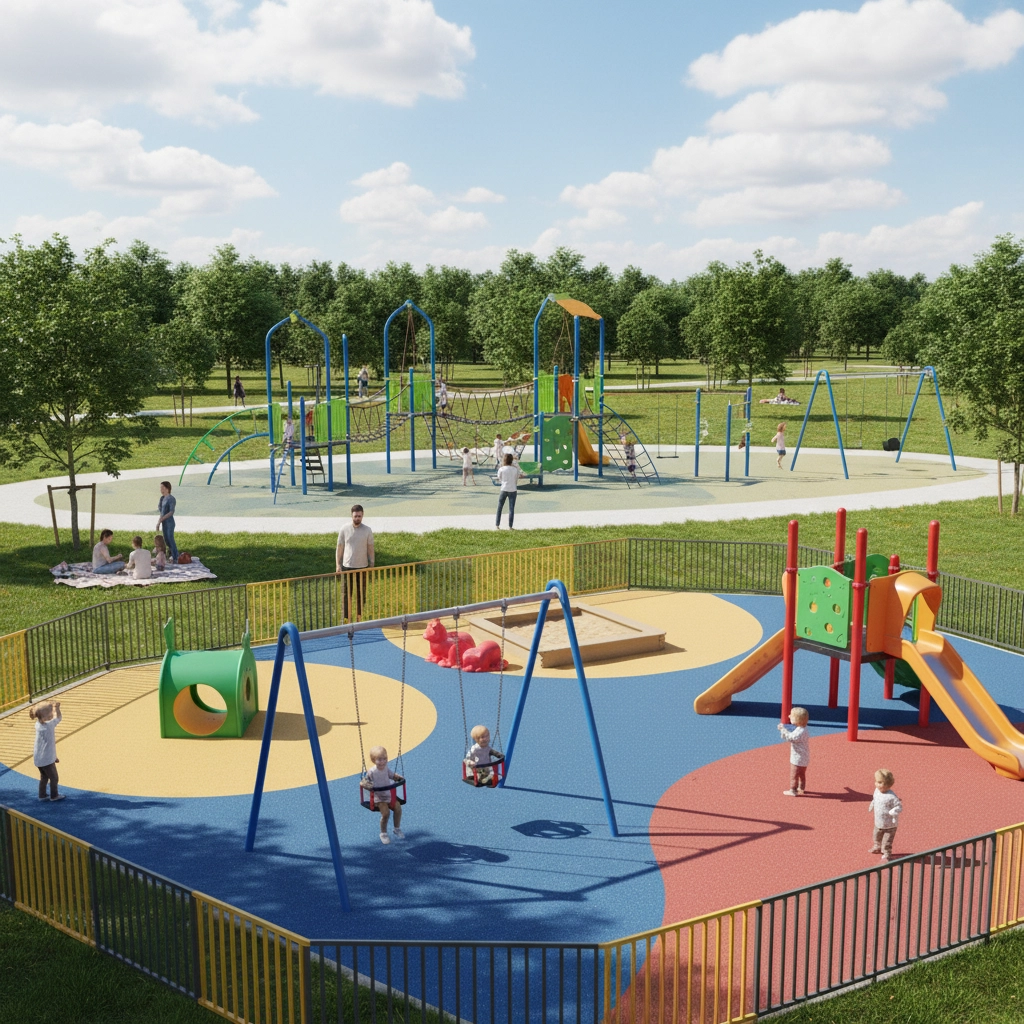
Check metal equipment with your hand before letting kids play: it can get surprisingly hot in the sun and cause burns. In wet weather, slides and other surfaces become slippery and more dangerous.
Making It Fun: Teaching Kids to Be Safety Smart
The best safety happens when kids understand why rules exist and want to follow them. Make safety discussions positive and empowering rather than scary.
Teach kids to:
- Look around before jumping or climbing down
- Wait their turn and give others space
- Tell an adult if they see broken equipment
- Use equipment the way it was designed (no climbing up slides!)
- Be kind and gentle with other children
You can even make it a game: have kids be "safety helpers" who spot potential problems or remind friends about playground rules.
When to Speak Up
If you notice equipment problems, don't just avoid them: report them! Contact the organization responsible for the playground (usually the city parks department, school, or property management). Taking photos can help maintenance crews understand exactly what needs attention.
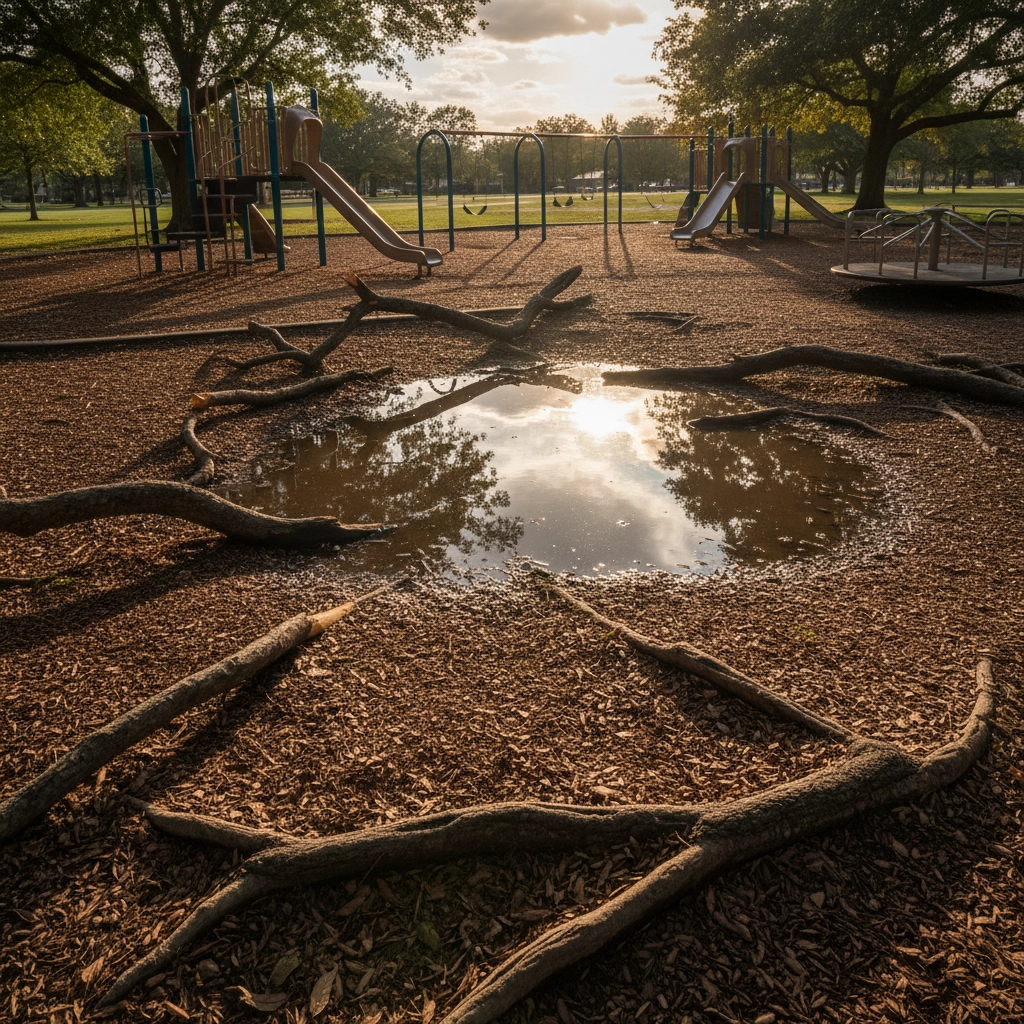
Remember, you're not being picky or overly cautious. You're helping keep all the kids in your community safe.
The Bottom Line
Playgrounds should be places of joy, laughter, and adventure. With a little knowledge and attention, we can make sure they stay that way. By checking equipment, choosing appropriate clothing, supervising actively, and teaching our kids to be safety-aware, we're setting them up for years of happy playground memories.
Your quick safety check before play begins and your watchful presence during play time are simple but powerful ways to protect the kids you love. After all, the best playground days are the ones where everyone goes home happy, healthy, and excited to come back tomorrow.


Comments
Post a Comment