School Bus Safety: Must-Know Tips for Kids and Parents
School Bus Safety: Must-Know Tips for Kids and Parents
That big yellow bus rolling up to your house or bus stop is like a moving safety zone: but only when everyone follows the rules. Whether you're a first-time bus rider or a parent sending your kid off for another school year, knowing the ins and outs of bus safety can make all the difference between a smooth ride and a scary situation.
Here's the thing: school buses are actually the safest way for kids to get to school (they're about 70 times safer than riding in a family car!), but that safety record depends on everyone doing their part. Let's break down everything you need to know to keep bus time safe and stress-free.
The Bus Stop Waiting Game
Getting to the bus stop is just the beginning. What happens while you're waiting can set the tone for the entire ride.
For Kids:
- Arrive at your bus stop at least 5 minutes early (better to wait than to chase a bus!)
- Stand at least 6 feet back from where the bus will stop: that's about three giant steps
- Keep your backpack zipped and straps secure so nothing falls out into traffic
- Stay alert and avoid playing games that might distract you from the approaching bus
- Never retrieve anything that falls near or under the bus
For Parents:
- Walk younger children (especially those under 10) to the bus stop and stay until the bus arrives
- Choose clothing without drawstrings or loose parts that could get caught
- Make sure your child knows their bus number and driver's name
- Teach them to make eye contact with the bus driver before crossing in front of the bus
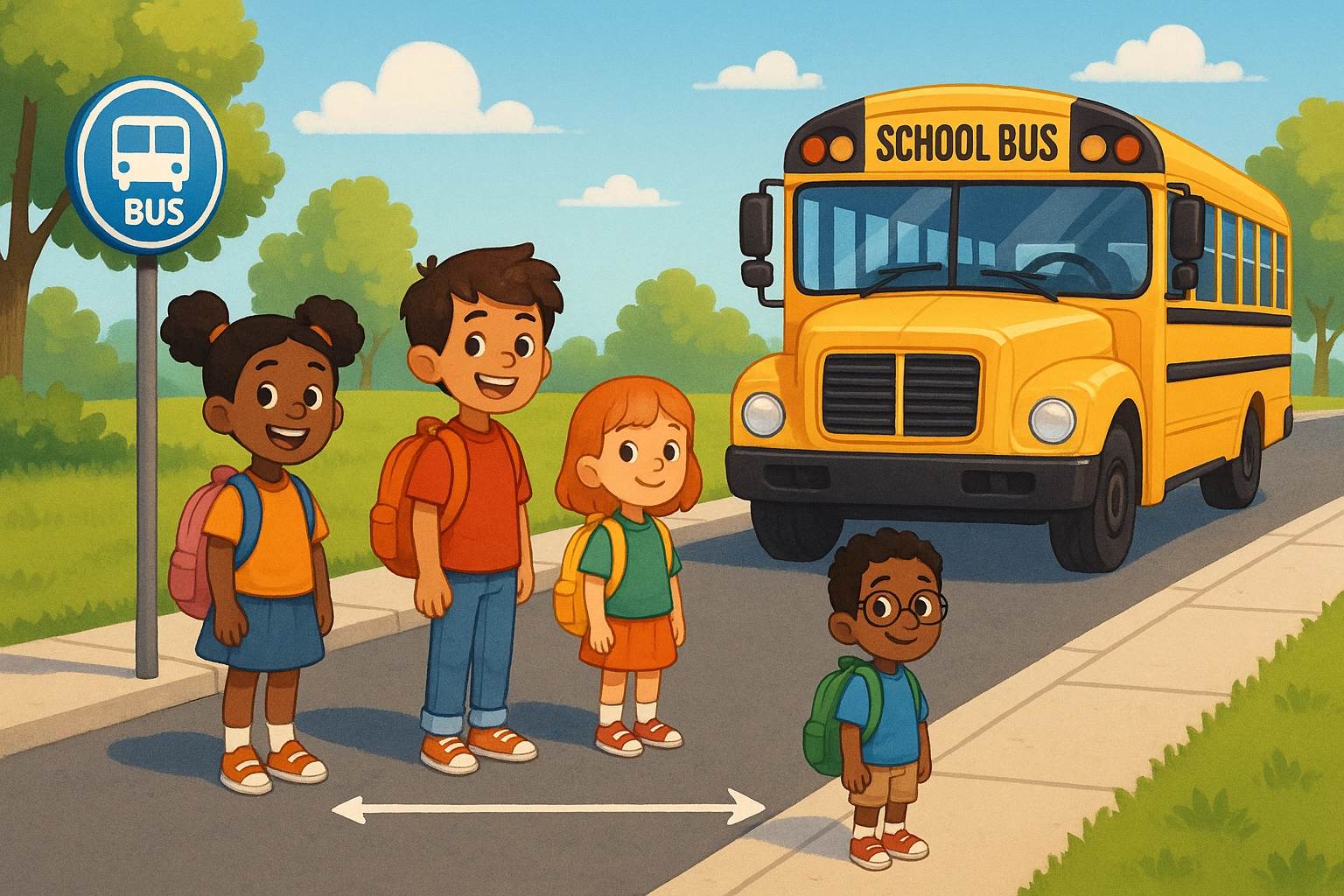
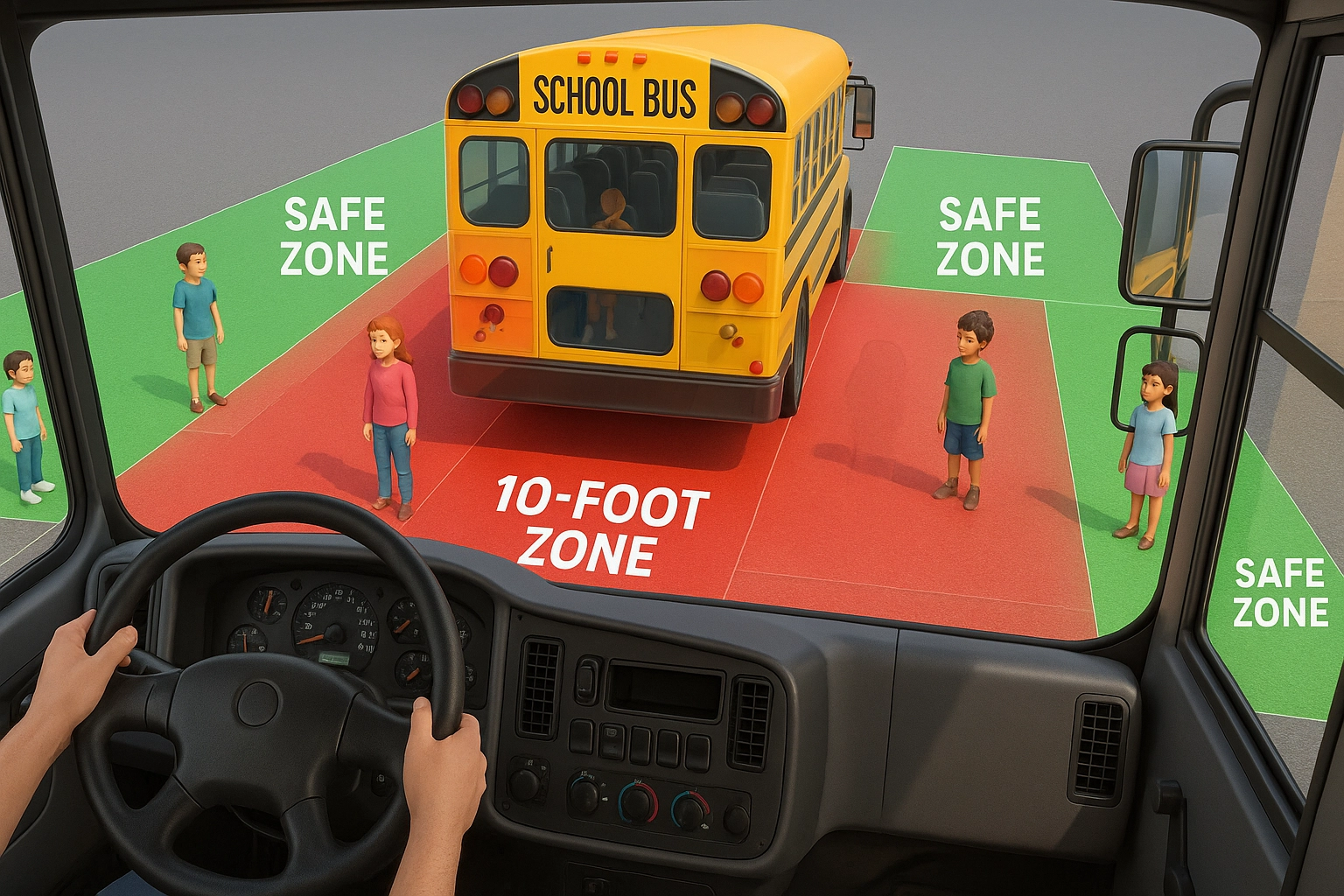
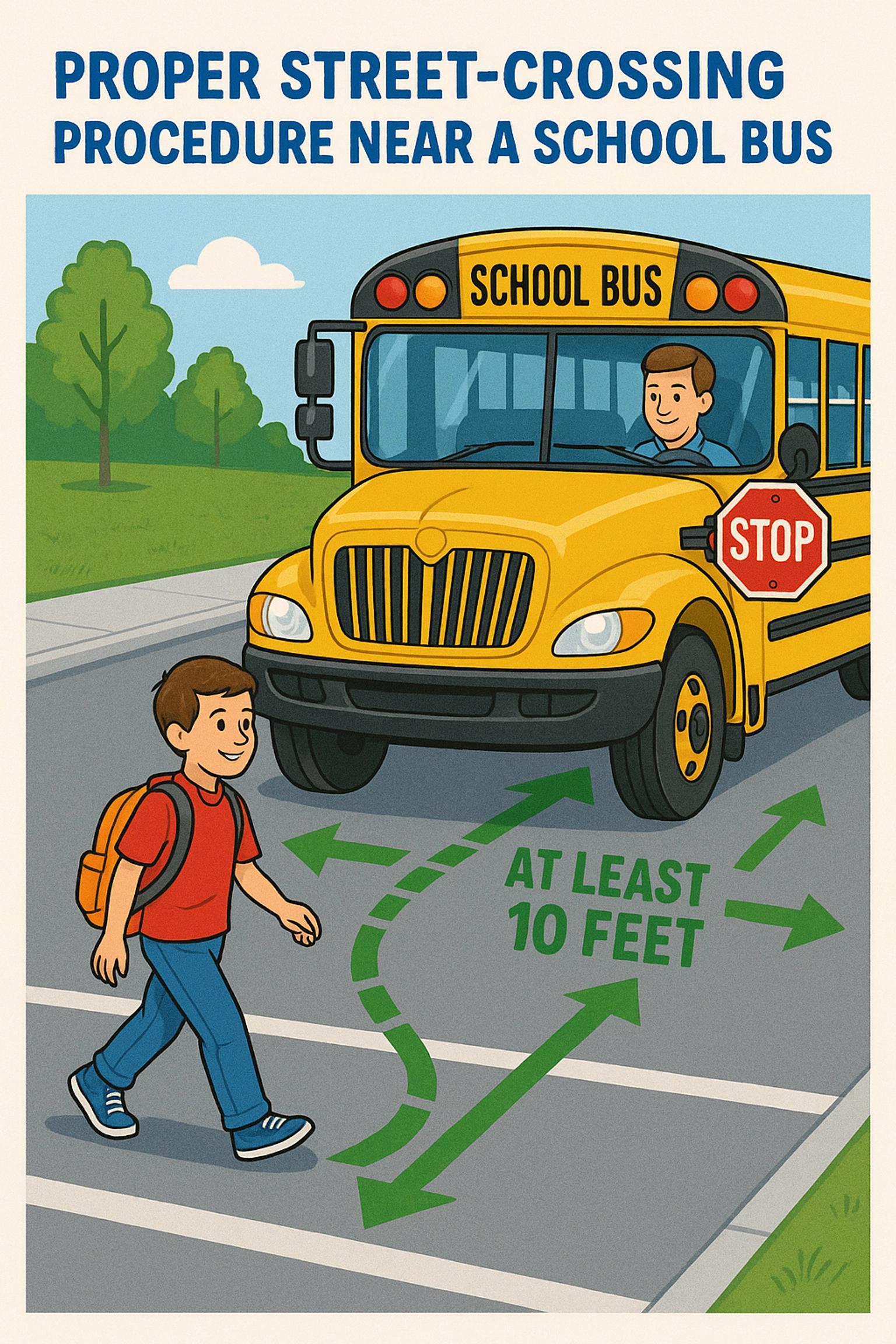
The danger zone around a school bus extends about 10 feet in every direction. That might not sound like much, but it's where most bus-related accidents happen. Think of it as an invisible force field that kids need to respect.
All Aboard: Getting On the Bus Safely
The moment that bus door swings open, it's showtime for safety. Here's how to make boarding smooth and secure.
The Boarding Checklist:
- Wait for the bus to come to a complete stop and the door to fully open
- Use the handrail when climbing the steps (those steps can be higher than they look!)
- Keep your eyes on the driver and make sure they can see you
- Move quickly but don't run: slipping on bus steps is more common than you'd think
- Go straight to your seat without stopping to chat with friends in the aisle
One thing that catches a lot of kids off-guard: bus drivers sit up pretty high, which means they have some serious blind spots. The area right in front of the bus is particularly tricky for drivers to see, so always make sure you're visible before stepping near the bus.
Bus Riding 101: The Do's and Don'ts
Once you're settled in your seat, the real journey begins. A school bus isn't just a moving classroom: it's a vehicle traveling at highway speeds with dozens of kids on board. Here are the golden rules that keep everyone safe:
The Must-Do List:
- Stay seated while the bus is moving (standing or walking around is a recipe for disaster)
- Keep your hands, arms, and head inside the windows at all times
- Use indoor voices: loud noises can distract the driver
- Keep backpacks and belongings out of the aisle
- Face forward in your seat
- Follow the bus driver's instructions immediately
The Never-Do List:
- Never throw anything inside the bus or out the windows
- Don't eat on the bus (choking hazards are real, plus cleanup is a nightmare)
- Avoid bringing glass containers or anything that could break
- Don't distract the driver with questions or conversation
- Never try to retrieve something you've dropped while the bus is moving
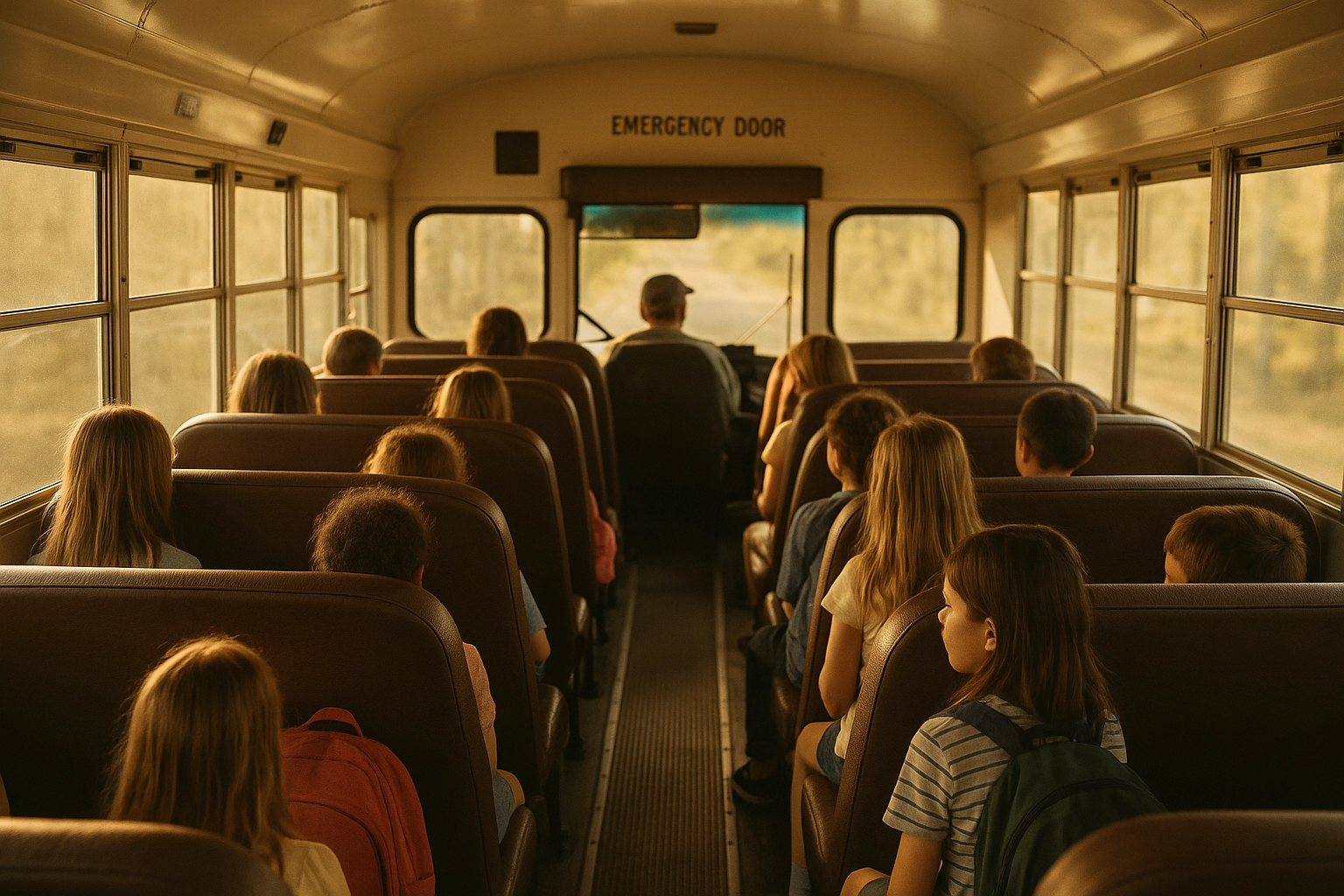
Think of your bus driver as a pilot: they need to concentrate on getting everyone to their destination safely. That means keeping the noise level down and avoiding anything that might break their focus.
The Grand Exit: Getting Off Safely
Getting off the bus safely is just as important as getting on. This is where many accidents happen because kids get excited about reaching their destination and forget to stay alert.
Step-by-Step Safe Exit:
- Stay seated until the bus comes to a complete stop
- Wait for the bus driver to open the door
- Gather all your belongings before standing up
- Exit in an orderly way: no pushing or shoving
- Move at least 10 feet away from the bus before doing anything else
If You Need to Cross the Street:
- Always cross in front of the bus, never behind it
- Walk at least 10 feet in front of the bus before starting to cross
- Make eye contact with the driver and wait for their signal
- Look both ways, even when the bus's stop sign is out
- Walk, don't run, across the street
The golden rule of street crossing: if you can't see the bus driver's face, they probably can't see you either.
Parent Power: How to Support Bus Safety
Parents, you play a huge role in bus safety, even when you're not on the bus. Here's how to set your kids up for success:
Before the School Year Starts:
- Practice walking to the bus stop and timing how long it takes
- Role-play different bus scenarios at home
- Review your school district's specific bus rules (they can vary!)
- Make sure your child knows what to do if they miss the bus
- Teach them how to communicate with the bus driver respectfully
Daily Safety Support:
- Check that backpacks are properly packed and zipped
- Ensure loose clothing won't get caught in doors or handrails
- Send kids off with enough time to get to the stop early
- Create a backup plan for days when the bus runs late
- Stay available by phone in case of emergencies
Communication is key. Make sure your child feels comfortable telling you about any problems or unsafe situations on the bus. Sometimes kids hesitate to "tattle," but safety concerns should always be reported to parents and school administrators.
Emergency Situations and Special Circumstances
Even with all the safety measures in place, emergencies can happen. Knowing how to respond can make all the difference.
Weather-Related Safety:
- In icy conditions, take extra time getting to and from the bus
- Wear appropriate footwear with good grip
- Be extra cautious around the bus when roads are slippery
- Allow extra time for bus routes during bad weather
If There's an Emergency on the Bus:
- Follow the bus driver's instructions immediately
- Know where the emergency exits are located
- Stay calm and help younger students if needed
- Never try to leave the bus unless instructed by the driver or emergency personnel
Special Needs Considerations:
- Students using wheelchairs or other mobility devices have specific boarding procedures
- Some buses have special safety equipment like harnesses or car seats for younger riders
- Communication between parents and transportation departments is crucial for special needs students
Building a Safety Community
School bus safety isn't a solo effort: it takes the entire community working together. Bus drivers undergo extensive training and background checks, but they can't do everything alone. Students, parents, teachers, and even other drivers on the road all play important roles.
Encourage your kids to look out for younger students and to speak up if they see unsafe behavior. Create a culture where following safety rules isn't "uncool": it's just the smart thing to do.
Quick Safety Reminders for the Whole Family:
- Practice makes perfect: review bus safety rules regularly, not just at the beginning of the school year
- Stay updated on your school district's transportation policies
- Build relationships with bus drivers and transportation staff
- Report safety concerns promptly to school administrators
- Model good behavior around school buses when driving in your community
Remember, that yellow school bus is carrying precious cargo: our kids. Every safety rule, every precaution, and every moment of attention helps ensure that all students arrive at school and return home safely every day.
The best part about school bus safety? Most of it just comes down to using common sense, following directions, and looking out for each other. When everyone does their part, that big yellow bus becomes exactly what it's designed to be: the safest way to get to school and back home again.
Comments
Post a Comment