The 12 Safety Personas: Why One Message Never Fits All
The 12 Safety Personas: Why One Message Never Fits All
![[HERO] The 12 Safety Personas: Why One Message Never Fits All](https://cdn.marblism.com/tviA22zm4CL.webp)
Part 8 of The Truth Series
Here's a scene I've watched play out a thousand times:
A safety manager stands in front of a crew of twelve people and delivers the exact same toolbox talk, in the exact same tone, with the exact same energy. Five people nod along. Three check their phones. Two are visibly annoyed. One's asking questions. And one just walked out to "grab something from the truck."
The safety manager thinks the problem is the message.
It's not.
The problem is the assumption that twelve different humans should all respond to safety the same way.
One-Size-Fits-All Humans Don't Exist
We don't expect everyone to like the same music. Or learn the same way. Or be motivated by the same rewards. We know people are different.
But when it comes to safety? We act like everyone should just "get it" if we say it loud enough or put it on a poster.
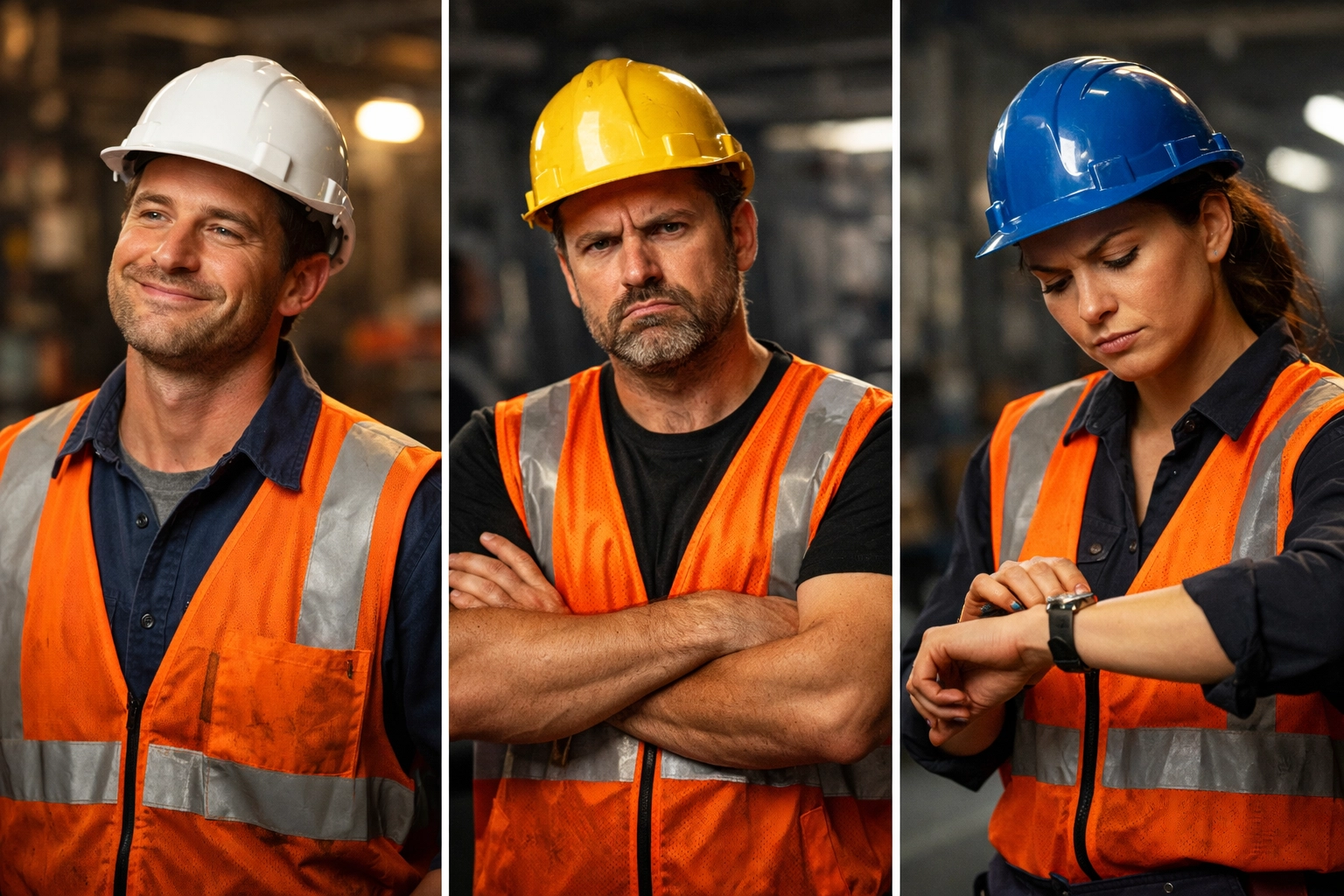
The truth is, the same safety message sounds like help to one person and hassle to another.
Tell someone to "slow down and double-check" and:
- One person hears: "Good reminder. I appreciate the support."
- Another hears: "You don't trust me to do my job."
- And another hears: "Great. More paperwork. More delays."
Same words. Completely different reactions.
That's not a training problem. That's a human problem. And it's why one-size-fits-all safety will always fall flat.
The 12 Safety Archetypes
So what's the fix?
Understanding that people aren't problems to control, they're personalities to work with.
That's where the 12 Safety Archetypes come in. These aren't labels or boxes to stuff people into. They're patterns. Ways of seeing how different people naturally think about risk, rules, relationships, and responsibility.
Here's the quick lineup:
- Guardian , The protector. Rules = care. Safety is personal.
- Achiever , The goal-chaser. Efficiency matters. Safety can't slow them down.
- Analyst , The data-lover. Show them the logic. They need the "why."
- Connector , The relationship-builder. Safety is about the team, not the task.
- Adventurer , The risk-taker. Boredom is dangerous. Variety keeps them engaged.
- Mentor , The teacher. They lead by example and want to pass on what they know.
- Visionary , The big-picture thinker. Safety has to connect to purpose.
- Enforcer , The rule-keeper. Black and white. No shortcuts.
- Harmonizer , The peacemaker. Conflict avoidance can be dangerous.
- Skeptic , The questioner. They don't trust "because I said so."
- Pragmatist , The realist. Show them what actually works, not theory.
- Stabilizer , The consistency-seeker. Change feels risky.
You don't need to memorize these yet. You just need to accept the premise:
Different people, different wiring.
Why This Matters More Than You Think
Let me be honest: most safety programs are designed for Guardians and Enforcers. People who naturally follow rules, care deeply about compliance, and see safety as non-negotiable.
That's maybe 20% of your workforce.
The other 80%? They're not "bad workers." They just don't experience safety the same way.
The Achiever isn't cutting corners because they're reckless, they're cutting corners because hitting the deadline feels like survival, and your safety message didn't account for that drive.
The Skeptic isn't being difficult when they push back on a new procedure, they're being honest. They need to understand the logic before they'll buy in. And if you shut them down, you lose their brain. (Which, by the way, is usually a pretty sharp one.)
The Harmonizer isn't going to speak up when they see something unsafe if it means causing tension. They'll stay quiet, smile, and hope it works out. Not because they don't care, because their wiring tells them that keeping the peace is care.
See the problem?
You can't change someone's archetype. You can't make an Adventurer into a Stabilizer or an Analyst into a Connector.
But you can change how you communicate with them.

What Happens When You Get It Right
When you start tailoring your approach to fit the person, not the policy, everything shifts.
The Achiever who used to blow past safety checks? Give them a role where safety is the goal, like leading a pre-shift huddle or mentoring a new hire. Suddenly, safety isn't slowing them down. It's something they can win at.
The Skeptic who questions everything? Stop seeing that as resistance. Start seeing it as free quality control. Let them poke holes in your procedures. If your safety plan can't survive a Skeptic's questions, it probably wasn't that solid to begin with.
The Harmonizer who won't speak up? Don't tell them to "just be more assertive." That's not how their brain works. Instead, create ways for them to raise concerns without direct confrontation, anonymous reporting, buddy checks, written observations. Give them a safer way to be safe.
This isn't about coddling people. It's about meeting them where they are so safety actually works.
The Real Shift
Here's what's wild: once you start thinking in archetypes, you can't unsee it.
You'll notice that the person who rolls their eyes at your PPE reminder isn't being a jerk, they're a Pragmatist who's heard it a hundred times and wants to know what's different today.
You'll notice that the person who always asks "but why?" isn't trying to waste time, they're an Analyst who genuinely needs the logic before they can move forward.
You'll notice that the quiet person in the back who never says anything might be a Stabilizer who's overwhelmed by constant changes, or a Harmonizer who doesn't feel safe speaking up, or a Visionary who's tuned out because your message didn't connect to the bigger picture.
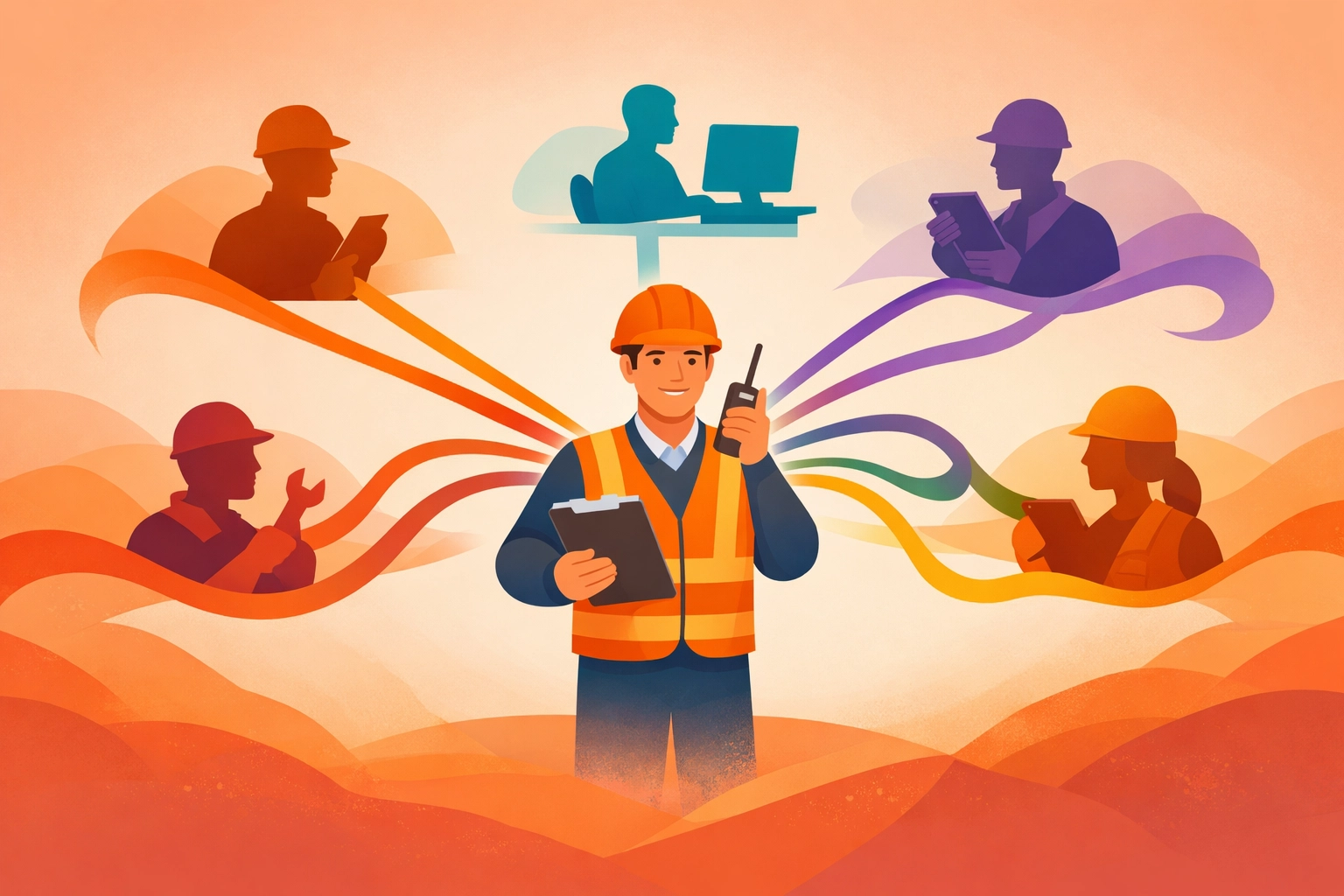
And once you see it, you can do something about it.
What This Isn't
Let me be super clear: this is not about excusing unsafe behavior.
It's not: "Oh, you're an Adventurer, so it's fine that you don't wear fall protection."
It's: "You're an Adventurer, so I know repetitive tasks make you zone out. Let's figure out how to keep this job engaging so you stay sharp."
It's not: "You're a Skeptic, so I guess you don't have to follow the rules."
It's: "You're a Skeptic, so I need to explain the 'why' behind this rule if I want you to actually buy in."
The standards don't change. The accountability doesn't change.
What changes is how you get there.
The Bottom Line
You've got twelve people on your crew. They're not twelve copies of the same person. They're twelve completely different humans with twelve completely different ways of thinking about risk, rules, and responsibility.
If you treat them all the same, you'll reach some of them. Maybe.
If you learn to spot the patterns: the Guardian who needs reassurance, the Enforcer who needs clear lines, the Connector who needs to feel like part of the team: you'll reach all of them.
Not because you're being soft. Because you're being smart.
One-size-fits-all safety is a myth. One-size-fits-all humans don't exist.
So stop pretending they do.
In the next post, we'll dig into what each of these archetypes actually looks like in real life: how to spot them, what drives them, and how to communicate in a way that actually lands.
Because everyone has the right to feel and be safe.


Comments
Post a Comment