Home Safety 101: Using Professional Hazard Spotting for Your Family
Home Safety 101: Using Professional Hazard Spotting for Your Family
![[HERO] Home Safety 101: Using Professional Hazard Spotting for Your Family](https://cdn.marblism.com/Uy3uCN8pu2O.webp)
My neighbor's kid broke his arm last Tuesday.
Not doing anything dangerous. Not climbing trees or skateboarding off homemade ramps. He tripped over a garden hose that had been lying in the same spot in their driveway for three weeks. Everyone in that family had stepped over it hundreds of times. Until the one time someone didn't.
Here's the thing: that hose was a precursor, not a hazard. And that difference? It's the entire reason I'm writing this post.
The Secret That Industrial Safety Has Known for Years
For the last three decades, I've been teaching workers at Amazon, chemical plants, and construction sites how to spot the tiny things that predict big injuries. We call it NISOS™ (Neurocognitive Intelligence Safety Observation System), but you don't need a fancy acronym to use it at home.
The core idea is this: most accidents don't just happen, they announce themselves first.
That garden hose didn't suddenly appear the morning of the accident. The wet bathroom floor that causes a fall? It's been slippery every morning after someone showers. The loose railing on the deck? It's been wiggling for months.
Industrial safety professionals are trained to spot these precursors, the little warning signs that something bad is coming. And guess what? You can do the same thing for your family.
What's a Precursor, Anyway?
A precursor is the thing that happens before the injury. It's the condition, behavior, or pattern that sets the stage for an accident.
Think of it like this:
- The hazard is the wet floor.
- The precursor is noticing that the bath mat never stays in place and water always pools by the tub.
- The hazard is the sharp knife.
- The precursor is realizing your kid always leaves it blade-up in the dish rack.
- The hazard is the busy parking lot at the sports club.
- The precursor is seeing that parents consistently let their kids run ahead toward the entrance while they're unloading gear from the car.
Spotting precursors gives you time to fix things before anyone gets hurt. That's the magic.
How to Train Your "Safety Eyes" (Without Being Paranoid)
Here's what I tell executives when I'm training their teams, and it works just as well at home: You're not looking for everything that could go wrong. You're looking for patterns that are already going wrong.
Let me be honest, I'm not asking you to bubble-wrap your house or never let your kids ride bikes. I'm asking you to notice the things that keep almost-happening.
Start with the "Near-Miss Journal"
For one week, keep a list on your phone of every time someone in your household says:
- "Whoa, almost tripped on that."
- "That was close."
- "We really need to fix that."
- "I keep meaning to move that."
Those statements are gold. They're your family's way of pointing out precursors without realizing it.
At the end of the week, look at your list. I guarantee you'll see patterns. And those patterns? Those are your priorities.
Real-Life Precursor Spotting: Room by Room
The Kitchen
What most people focus on: Sharp knives, hot stoves.
What precursor spotting reveals:
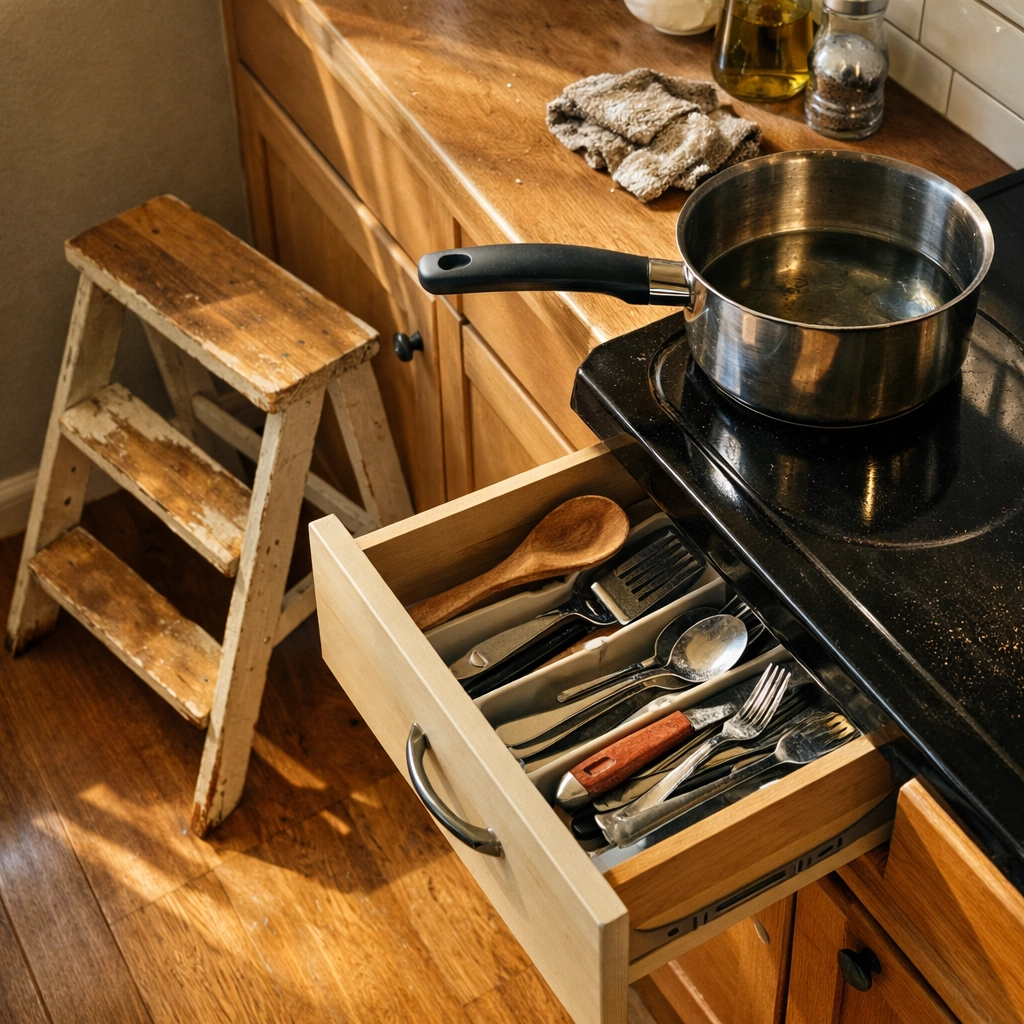
- The drawer that always sticks and makes you yank it hard (one day, that yank is going to send something flying: or hit someone standing behind you).
- The step stool that wobbles every time someone uses it to reach the top shelf.
- The pot handle that always faces out toward the walkway.
The fix: It's not about eliminating risk. It's about eliminating the repeat patterns that set up accidents. Turn pot handles inward. Replace the wobbly step stool. Fix the sticky drawer or rearrange what's in it so you don't need to wrestle it open five times a day.
The Bathroom
What most people focus on: Slip-and-fall hazards.
What precursor spotting reveals:
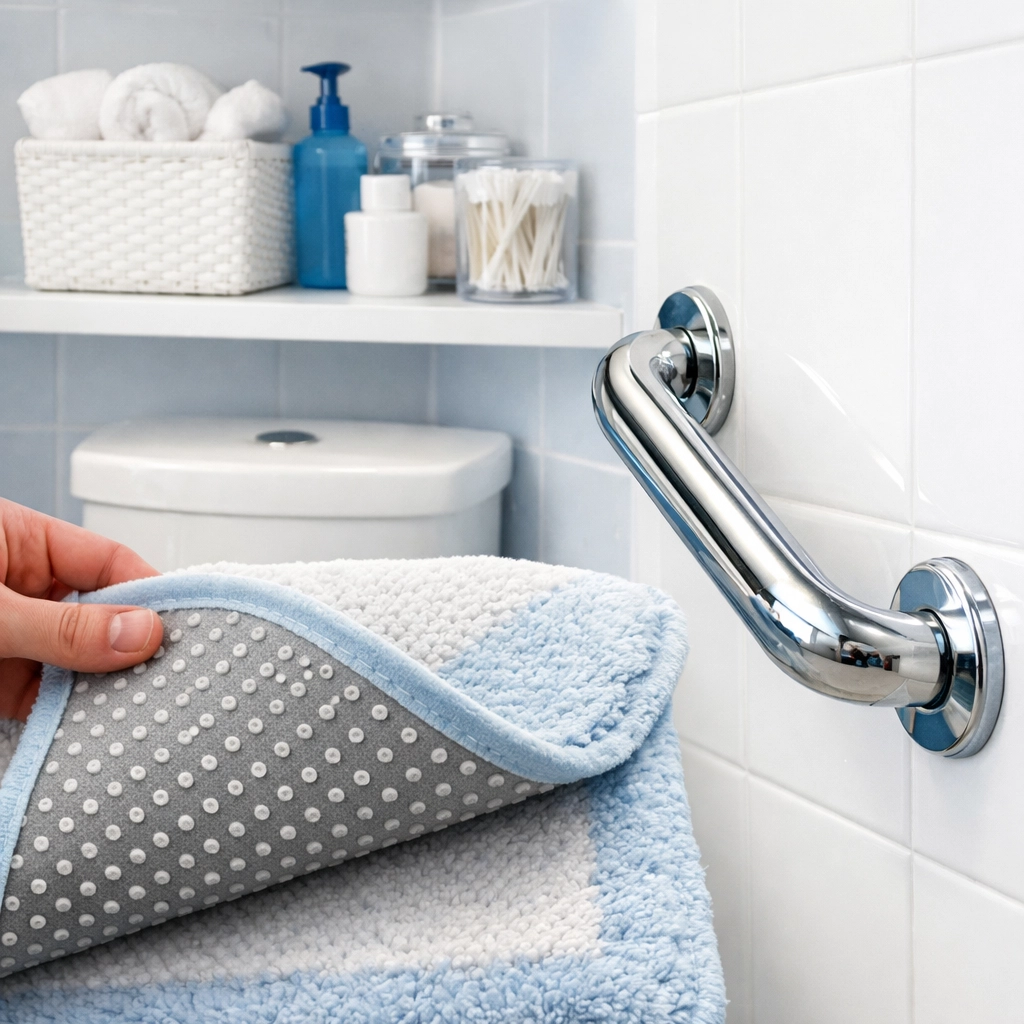
- The bath mat that slides every single time someone steps on it wet.
- The shelf above the toilet that's overloaded and tilting (I mean that literally: when it falls, someone's going to be sitting underneath it).
- The shower curtain that's always getting yanked down because someone grabs it for balance.
The fix: Non-slip backing for the mat. Clear the shelf or anchor it properly. Install a grab bar so people stop using the shower curtain as a safety device (because it's not).
The Garage and Driveway
What most people focus on: Power tools and chemical storage.
What precursor spotting reveals:
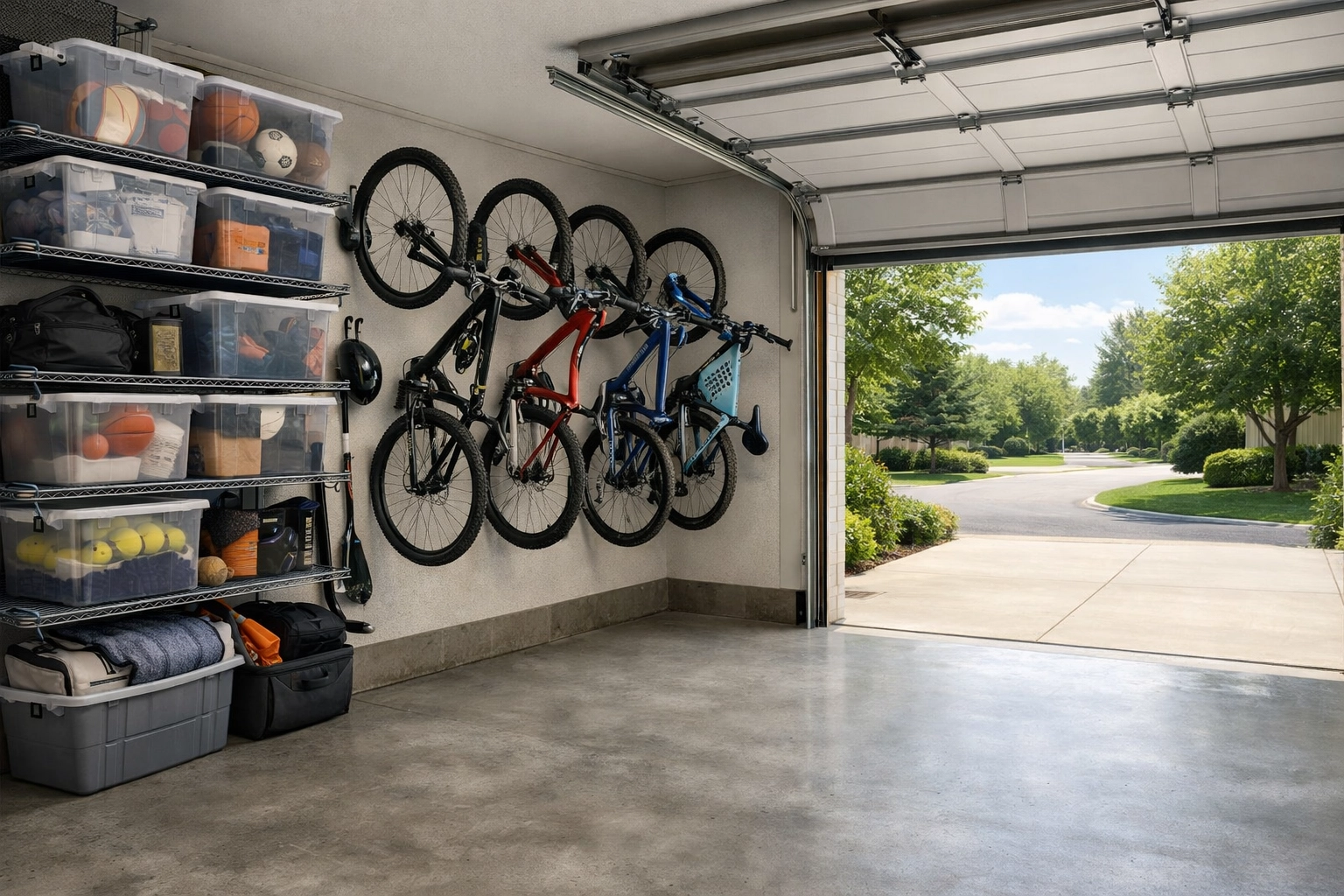
- The bikes that always fall over when someone walks past them.
- The oil stain on the driveway that gets slippery when it rains (and someone parks there every single day).
- The sports equipment piled near the door that everyone has to navigate around while carrying things.
The fix: Bike hooks on the wall. Degreaser and a scrub brush for the oil stain. A dedicated bin or shelf for sports gear so it's not a daily obstacle course.
The Sports Club, School Drop-Off, and Other "Public-Private" Spaces
Your family's safety doesn't stop at your front door. Some of the most preventable injuries happen in the spaces between home and work: the places we go routinely but don't think of as "ours."
At the Local Sports Club
Watch for these precursors:
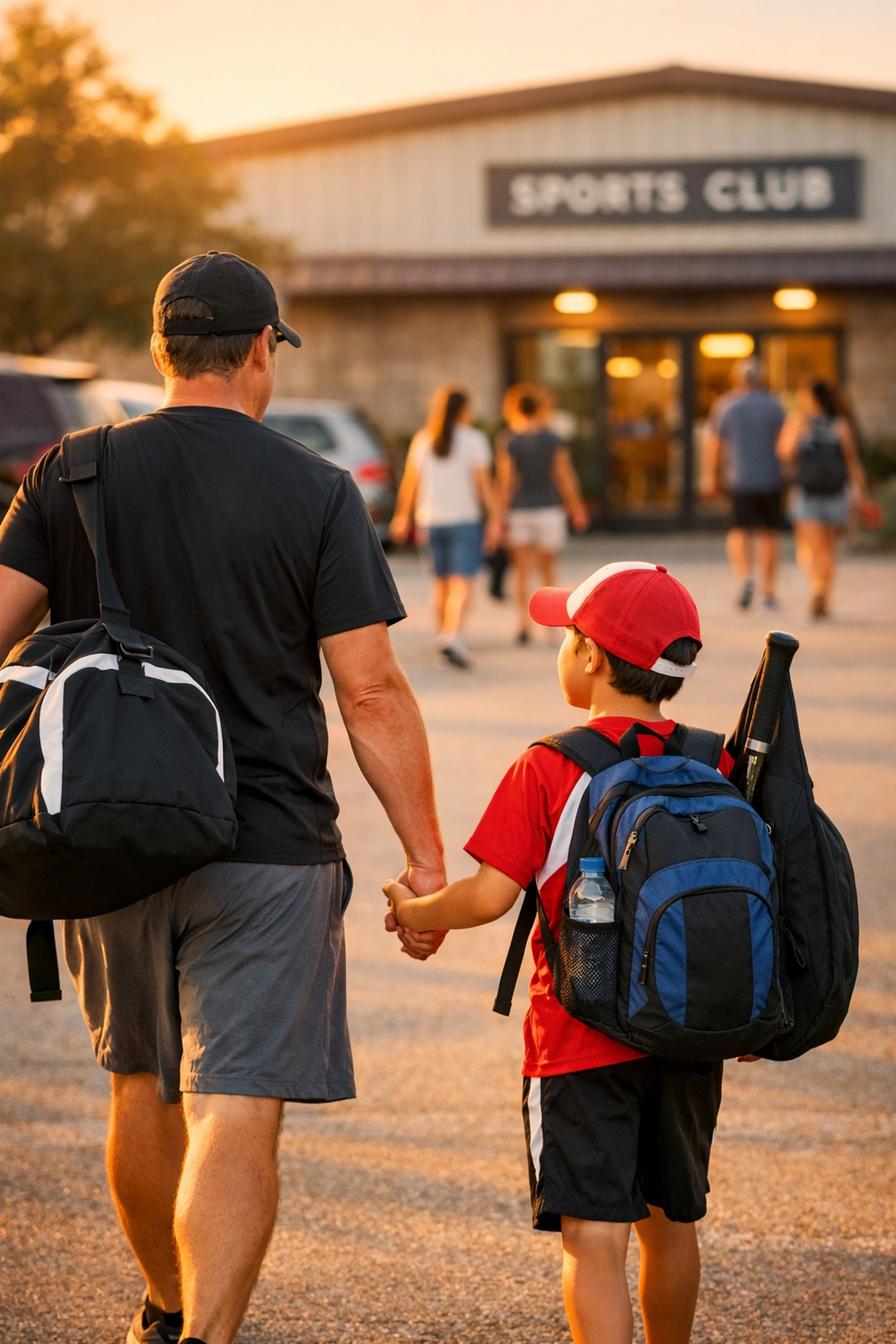
- Kids sprinting through the parking lot toward the entrance (every week, same pattern).
- Parents unloading gear with their backs to traffic.
- Water bottles and bags left in walkways near the bleachers (trip hazards that migrate every practice).
Your role: You're not the safety police, but you can protect your own family. Set a rule: "We walk from the car to the door, no exceptions." Teach your kids to look both ways even in a parking lot where they "know" the drivers.
And here's the community-focused part: if you notice a genuine hazard (broken pavement, a door that swings too fast, lighting that's out), mention it to the facility manager. You'd be surprised how often these things stay broken simply because nobody reported them.
School and Daycare Drop-Off
Precursors to watch:
- The rush-hour parking shuffle where everyone's trying to get in and out fast (and kids are darting between vehicles).
- The crosswalk that nobody actually stops at because "it's just the school parking lot."
Your role: Model the behavior you want. Stop fully at the crosswalk. Make eye contact with drivers before crossing. Your kids are watching, and they'll copy what you do more than what you say.
Teaching Kids to Be Precursor Spotters (Without Freaking Them Out)
One of the best things you can do is teach your kids to notice patterns: not to make them anxious, but to make them capable.
I taught my own kids a game when they were little: "What's going to happen next?"
We'd be at the playground, and I'd say, "See that kid climbing on the wet slide? What do you think is going to happen?" Not in a judgy way: just as an observation exercise. They learned to predict outcomes based on conditions.
Now they're teenagers, and they're the ones who point out the loose handrail or the bag left in the walkway. They're not paranoid. They're just observant. And that skill will keep them safer their entire lives.
The One-Week Precursor Challenge
Here's what I want you to do this week:
- Start your "Near-Miss Journal." Write down every close call, every "we should really fix that," every "watch out for that thing."
- Pick your top three repeat offenders. These are the precursors that keep showing up: the things your family trips over, steps around, or complains about most often.
- Fix one thing this weekend. Not all three. Just one. Because one fixed precursor is one prevented injury.
- Have a five-minute family conversation. Show your kids (or your partner, or your housemates) what you fixed and why. Make it a teaching moment: "This is how we take care of each other."
That's it. No massive home renovation required. No professional assessment needed (though if you have the budget and the need: especially if you have elderly family members living with you: a professional home safety assessment can be incredibly valuable). Just observation, prioritization, and action.
Why This Matters More Than You Think
Here's what I've learned after 30 years in safety work: injuries happen in patterns, not randomly. The garden hose in the driveway. The bath mat that slides. The pile of stuff by the door. These aren't one-time flukes. They're repeat precursors waiting for the day when someone's distracted, tired, or in a hurry.
You already have the skills to spot these patterns. You notice them every day: you just haven't been taught to think of them as precursors worth acting on.
Now you have. And the beautiful part? Once you start seeing them, you can't unsee them. Your brain will automatically start flagging the patterns. You'll become your family's quiet protector, fixing the small things before they become big things.
That's not paranoia. That's love in action.
Because everyone has the right to feel and be safe.


Comments
Post a Comment