The Enforcer: Consistency is a Safety Superpower
The Enforcer: Consistency is a Safety Superpower
![[HERO] The Enforcer: Consistency is a Safety Superpower](https://cdn.marblism.com/zju81iZ4Fyh.webp)
You know who The Enforcer is at your workplace.
They're the one who notices when someone skips a step. They follow the checklist every single time. They'll remind you, again, that PPE isn't optional. They might even physically block the forklift path if you try to cut through without looking.
Some people call them "the safety police." Others roll their eyes and mutter "rule follower" under their breath.
But here's what I know after 30 years in this field: Enforcers are the reason your incident rate isn't worse than it already is.
They are the archetype that holds the line when everyone else is tired, distracted, or in a hurry. And in safety, that consistency? That's not annoying. That's a superpower.
What Makes Someone an Enforcer?
Enforcers are wired for structure. They believe rules exist for a reason, and they take it personally when people ignore them. Not because they're controlling (though it can look that way), but because they see the direct line between shortcuts and consequences.
They're the warehouse lead who won't let the temp start without proper training, even when you're short-staffed. They're the nurse who insists on the double-check protocol every time, no exceptions. They're the foreman who shuts down the job site when they spot a rigging issue, even if it delays the pour.
Enforcers value:
- Clear expectations
- Accountability
- Predictability
- Follow-through
- Fairness (the rules apply to everyone, including management)
And when they're at their best? They create an environment where people actually feel safer, because the rules don't change mid-game.

The Superpower: Consistency Creates Psychological Safety
Here's the thing most people miss: consistency isn't just about compliance. It's about trust.
When your team knows what to expect, every time, they stop wasting mental energy on uncertainty. They're not wondering, "Will my boss care about this today, or only when corporate's visiting?" They're not guessing whether it's okay to speak up or if today's the day they'll get yelled at for slowing things down.
Research backs this up. Consistency transforms intention into evidence. People don't trust what you say. They trust what you do repeatedly.
When an Enforcer shows up the same way every day, same standards, same follow-through, same tone, it sends a message: This matters. You matter. And I'm not going to let anything slide that could hurt you.
That's psychological safety. And it's one of the strongest predictors of whether people will actually report hazards, admit mistakes, or ask for help before something goes sideways.
In practical terms, Enforcers:
- Make sure the pre-shift huddle happens every day, not just when there's time
- Correct unsafe behavior the first time they see it, not the fifth
- Hold everyone to the same standard, new hire or 20-year veteran
- Document incidents consistently so patterns actually get tracked
- Speak up even when it's awkward
The Shadow Side: When Rules Become Rigid
But let's be honest. Enforcers have a blind spot.
When consistency turns into rigidity, it stops working. And this is where Enforcers can accidentally damage the safety culture they're trying to protect.
The warning signs:
- Enforcing the letter of the rule while ignoring the spirit
- Punishing people for speaking up about gaps in the system
- Refusing to adapt procedures even when the work has changed
- Using compliance as a weapon instead of a tool
- Prioritizing looking good on paper over actual risk reduction
I've seen this play out in a chemical plant where the safety manager was so focused on hitting zero recordables that people stopped reporting injuries. They'd "walk it off" or go to urgent care off the clock rather than deal with the interrogation that came with an official report.
That's not safety. That's safety theater. And it's what happens when an Enforcer forgets that the goal isn't perfect paperwork, it's sending people home in one piece.
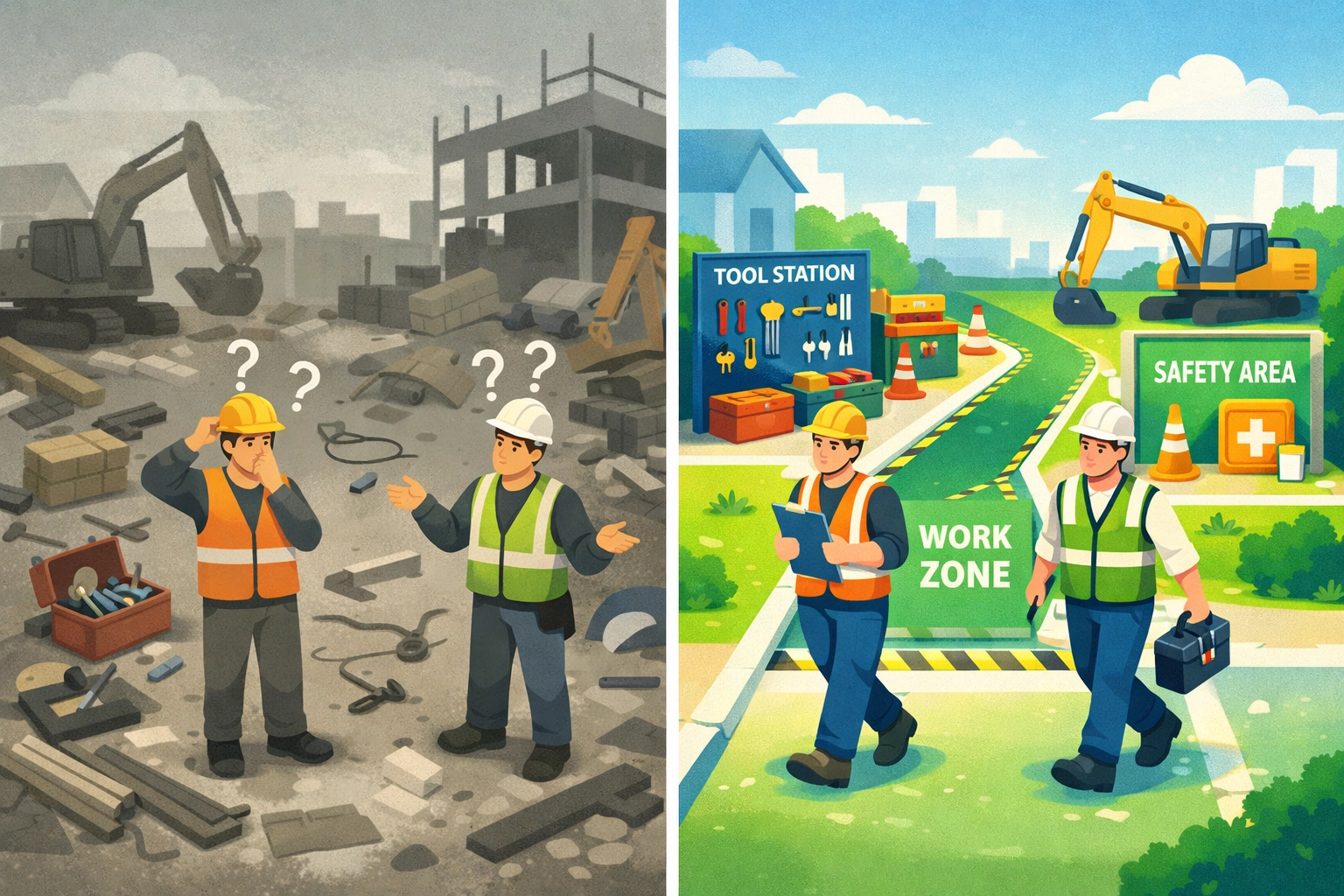
The Balance: Strong Standards + Human Flexibility
The best Enforcers understand something critical: rules are tools, not religion.
They hold the line on the non-negotiables (lockout/tagout, fall protection, confined space entry, etc.), but they stay curious about why people are cutting corners. They ask:
- "What's making it hard to follow this procedure?"
- "Is the rule outdated for how the work actually happens now?"
- "Are we solving the right problem, or just enforcing what's always been done?"
This is where Enforcers become safety leaders instead of safety cops.
A great example: I worked with a warehouse where the Enforcer on the leadership team noticed people weren't using the designated walkways. Instead of just writing people up, she spent a week walking the routes herself. Turns out, the "safe" path added 3 minutes to every trip, and the lighting was terrible. She didn't drop the rule, she fixed the path and the lighting, then enforced it.
That's consistency with context. That's the superpower fully activated.
If You're an Enforcer: Your Team Needs You (But Not Like That)
If you recognize yourself in this archetype, here's what I want you to know:
Your instinct to hold the line is valuable. Don't let anyone convince you that caring about rules makes you "too rigid" or "not a team player." In high-risk environments, someone needs to be the person who won't budge when it matters.
But, and this is important, check yourself on these questions:
- Am I enforcing for safety, or for control?
If someone breaks a rule and your first reaction is "they disrespected me," that's ego. If your first reaction is "they could've been hurt," that's safety. - Am I listening when people push back?
Not all pushback is resistance. Sometimes it's information. The temp who says "this doesn't make sense" might be seeing something you've gone numb to. - Am I making it easier to do the right thing?
Consistency works when the system supports it. If your procedures are outdated, confusing, or require workarounds, people will bypass them, and you'll be fighting a losing battle. - Am I protecting people, or protecting my metrics?
If you're more worried about your TRIR than the actual humans on your team, you've lost the plot. Metrics are lagging indicators. Culture is the leading one.

If You Work With an Enforcer: They're Not the Enemy
And if you're not an Enforcer, but you work with one, don't write them off as "difficult."
Yes, they can be a pain when you're trying to move fast. Yes, they'll call you out when you skip steps. But they're also the ones who notice patterns before they become incidents. They're the reason the new hire doesn't get thrown into a task they're not ready for. They're the person who will stand between you and a bad decision when everyone else is just trying to keep the line moving.
Here's how to work well with an Enforcer:
- Be consistent yourself. They trust people who do what they say they'll do.
- Don't ask them to look the other way. It won't work, and it'll damage the relationship.
- If you think a rule needs to change, bring data and a better solution: not just complaints.
- Acknowledge when they're right. Enforcers rarely get thanked for preventing the accidents that never happen.
The Bottom Line
Consistency is not boring. It's not bureaucratic. It's not "just following orders."
Consistency is how you build a culture where people trust that safety isn't a flavor of the month. It's how you prove: day after day, shift after shift: that the rules aren't just there to cover the company's liability. They're there because someone decided that people matter more than production targets.
Enforcers are the backbone of that culture. They're the ones who show up when it's inconvenient, who enforce when it's uncomfortable, and who refuse to let standards slip just because everyone's tired.
Are they perfect? No. Can they overdo it? Absolutely. But in a world where cutting corners is the default and "just this once" turns into a body bag, we need people who won't budge on what matters.
So if you're an Enforcer: keep holding the line. Just make sure you're holding it for the right reasons, with the right balance of structure and humanity.
And if you're leading a team: find your Enforcers. Empower them. Protect them when they make the unpopular call. And for the love of everything, don't punish them for doing exactly what you hired them to do.
Because everyone has the right to feel and be safe.


Comments
Post a Comment