The Guardian: Meeting Your Team's Unsung Hero
The Guardian: Meeting Your Team's Unsung Hero
![[HERO] The Guardian: Meeting Your Team's Unsung Hero](https://cdn.marblism.com/CPe42Q8Lb55.webp)
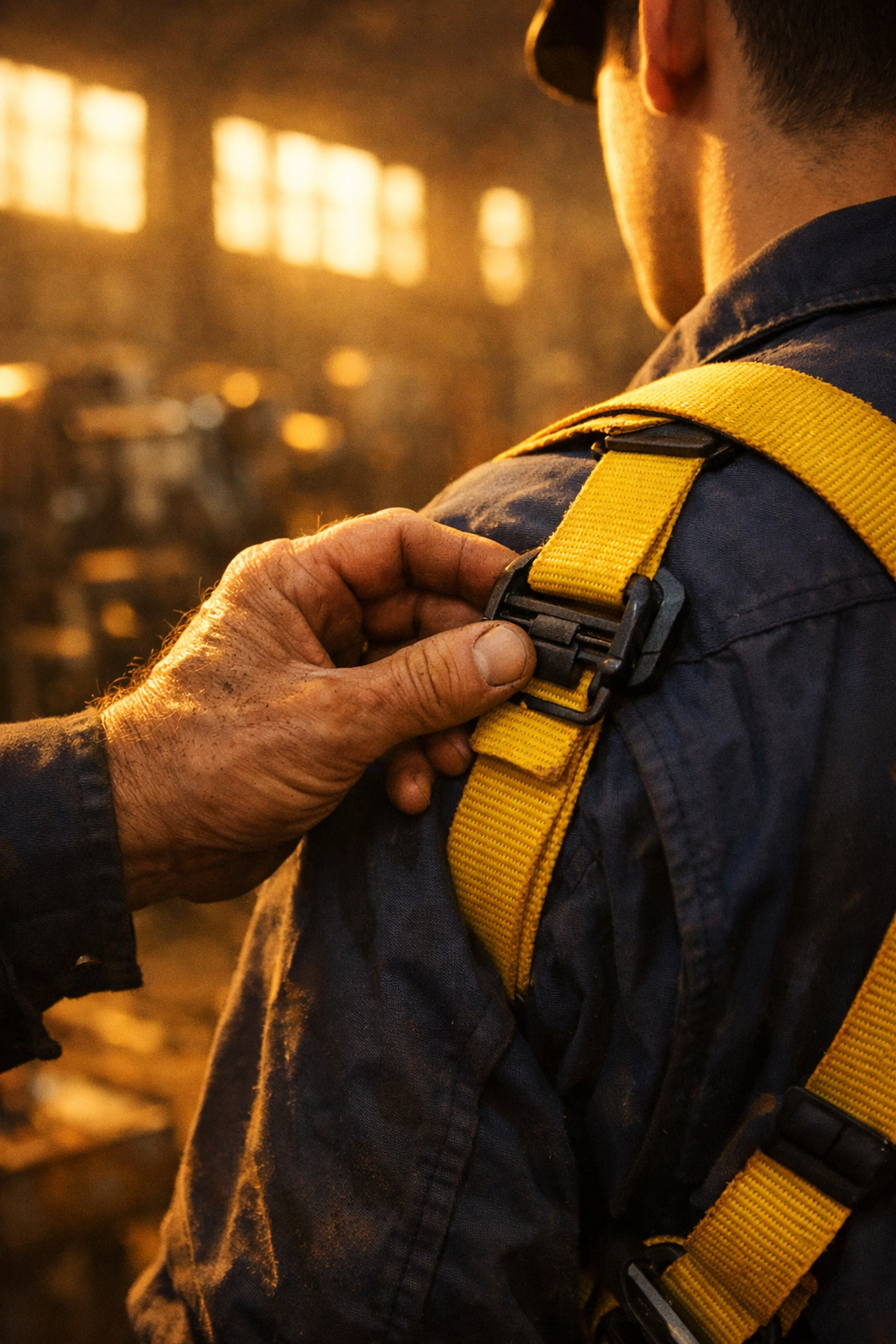
There's a guy on second shift who always checks the forklift even though someone else just drove it. She's the one who quietly adjusts the ladder before the new hire climbs it. He's the veteran who walks past a spill three times a day until someone finally cleans it up: then mentions it in the safety meeting.
You probably work with this person. You might even be this person.
This is The Guardian. And if you run a small business, lead a team, or manage any group of humans trying not to get hurt at work, you need to understand this archetype. Not because they're loud. Not because they demand attention. But because they're already keeping your people safe: whether you've noticed it or not.
Who Is The Guardian?
The Guardian is the person whose internal alarm system never turns off. They're wired to notice risk and protect others. It's not a role they chose; it's how they're built.
While the Achiever is focused on hitting production targets and the Analyst is calculating probabilities, the Guardian is scanning the room thinking, "Who's in danger right now? What could go wrong? How do I keep my people safe?"
Their core motivation isn't compliance. It's not impressing management. It's not even personal safety, though they'll protect themselves too. It's protection of the tribe. The crew. The team. The people they've worked alongside for years: or even just met last week.
In psychological terms, Guardians have an extremely high relatedness need. They feel responsible for their people. And when something bad happens to someone on their watch? That hits them harder than any write-up ever could.
How To Spot A Guardian
Guardians don't usually announce themselves. They're not the ones giving safety speeches or running the committee. They operate quietly, almost instinctively. But once you know what to look for, they're everywhere.
Here's what a Guardian looks like in the wild:
They watch the new people. Not in a creepy way: in a protective way. When a new employee starts, the Guardian is the one who shows them the safe way to do things. Not the official way in the manual. The actually safe way that prevents the injuries the manual doesn't mention.
They fix things before they're officially broken. That wobbly cart? The Guardian already put a tag on it. The frayed cord? They unplugged it and left a note. They're not waiting for permission or a work order: they're acting on their protective instinct.
They speak up for others. If someone is being pressured to skip a step or cut a corner, the Guardian is often the one who says, "Hold on. Let's do this right." They're not trying to be difficult. They're trying to keep someone from getting hurt.
They feel betrayed when safety promises aren't kept. Remember that case study from the manufacturing plant where fixing a nine-year-old lighting request changed everything? Guardians are the ones who remember that lighting request was made nine years ago. They catalogued every promise that was broken. They're not holding grudges: they're protecting themselves from hoping again.
They're often the informal safety conscience of the team. No title. No official authority. But everyone knows: if you're about to do something sketchy, that person is going to notice. And probably say something.

Why Every Small Business Needs A Guardian
In a Fortune 500 company with a safety department, training programs, and formal observation systems, you can sometimes get by without recognizing your Guardians. You've got structure and systems doing some of the work.
In a small business? The Guardian might be the only thing standing between "we've been lucky" and "we just had our first serious injury."
Here's what Guardians do for you: whether you realize it or not:
They prevent the accidents you never hear about. The injuries that didn't happen because someone moved the box, fixed the hazard, or stopped the unsafe shortcut. You can't measure what didn't go wrong. But the Guardian just saved you workers' comp costs, lost time, and the nightmare of explaining to someone's family why they got hurt at your company.
They train your new employees in the real safety culture. Not the poster on the wall. The actual norms of how things get done. If your Guardian is engaged and empowered, new people learn to work safely. If your Guardian is burned out or ignored, new people learn to take shortcuts.
They tell you the truth. While others might nod along in the safety meeting and then do whatever they were going to do anyway, Guardians will tell you when your new procedure won't work in the real world. They're not trying to sabotage your plan: they're trying to keep people from getting hurt when your plan meets reality.
They build trust. Workers trust Guardians because they know the Guardian actually cares. When a Guardian says, "This new approach is worth trying," people listen. When they say, "This is corporate nonsense," people believe that too. Their credibility is earned through years of genuine protective behavior.
How To Engage A Guardian (Without Destroying Them)
Here's where most organizations mess this up. They finally notice the Guardian, realize this person has influence, and immediately try to formalize it. They make them the safety committee chair. Or the observation program lead. Or the peer coach.
And the Guardian burns out within six months.
Why? Because you just turned their natural protective instinct into a bureaucratic obligation. You took something they did from the heart and made it a checkbox exercise.
Here's what actually works:
Honor what they're already doing. Don't tell them to start doing safety differently. Acknowledge that they've been doing it all along. "You already look out for your crew every shift. We're building a system around what you've been doing naturally for twenty years."
That framing: from an actual case study that worked: respects their identity instead of threatening it. You're not saying they need to change. You're saying you finally caught up to what they've known all along.
Give them resources, not restrictions. Guardians don't need more rules. They need the authority to fix things. The ability to get that broken equipment repaired. The power to stop work without political consequences. Resources to address the hazards they've been worried about.
Protect them from retaliation. The Guardian who speaks up about a shortcut is often putting themselves at social risk. If you want them to keep speaking up, you need to make sure nothing bad happens to them for doing it. This isn't just about formal policy: it's about cultural protection. The Guardian needs to know you have their back.
Don't make them enforce. Guardians protect; they don't punish. If you try to turn a Guardian into an Enforcer, you'll break the trust they've built with their crew. Let them warn, advise, and support. Let someone else handle discipline.
Keep the promises you make to them. Remember that historical betrayal layer of resistance we talked about in the manual? Guardians remember every broken promise. If you tell them you'll fix something, fix it. If you say you'll follow up, follow up. Consistency builds their trust. Broken promises destroy it.
What Happens When You Ignore Your Guardian
Let me be blunt: ignoring your Guardian doesn't just lose you one person's engagement. It sends a message to the entire team about whether safety is real or theater.
When the Guardian stops speaking up, it's not because the hazards went away. It's because they learned that speaking up doesn't matter. And everyone else learns that lesson too.
When the Guardian burns out and leaves: or worse, stays but stops caring: you lose your most credible safety voice. The person who could have convinced the Skeptic to try the new approach. The person who was quietly preventing injuries you never had to deal with.
You can replace an employee. You can hire someone with the same technical skills. But you can't hire twenty years of earned credibility and protective instinct. That's built, not bought.
The Guardian In Your Organization
So here's your homework: Look around your team. Who's your Guardian?
They might not be obvious. They're probably not the person with "Safety" in their title. They're the one who's been quietly keeping people safe while everyone else was focused on productivity, deadlines, or politics.
Once you spot them, the question is simple: Are you supporting them or exhausting them?
Are you giving them the resources to do what they're already trying to do? Or are you adding bureaucratic weight to their natural protective instinct until it collapses?
Are you protecting them when they speak up? Or are you creating an environment where speaking up has consequences?
The Guardian didn't choose this role. They're just built this way. But whether they thrive or burn out: that's on you.
Because everyone has the right to feel and be safe.


Comments
Post a Comment