The Paper Cut Fallacy: Why Minor Injuries Don't Predict Fatalities
The Paper Cut Fallacy: Why Minor Injuries Don't Predict Fatalities
![[HERO] The Paper Cut Fallacy: Why Minor Injuries Don't Predict Fatalities](https://cdn.marblism.com/5YCrbnx6OGW.webp)
I sat in a conference room last month with a safety director who was genuinely proud of his team's progress. "We've reduced our total recordable injury rate by 22% this year," he told me, pulling up a dashboard of green arrows and declining trend lines. "We're doing Band-Aid tracking, slip-and-fall campaigns, ergonomic assessments. The numbers are finally moving in the right direction."
Then I asked him the question I always ask: "How many of those injuries could have killed someone?"
Long pause.
"Well, none of them. But if we reduce all injuries, we'll reduce fatalities too, right?"
Wrong.
That assumption: that preventing paper cuts and twisted ankles will somehow prevent someone from being crushed by a forklift or electrocuted: is what I call the Paper Cut Fallacy. And it's killing people.

The Data That Changes Everything
The Campbell Institute, the research arm of the National Safety Council, spent years studying serious injury and fatality events across multiple industries. What they found should fundamentally change how every organization approaches safety.
Here's the headline: 90.5% of SIF-potential events involved known, classifiable high-energy hazard categories.
Read that again. Nine out of ten fatal or life-altering injuries come from hazards we already know about. Electrical energy. Kinetic energy from moving vehicles or equipment. Potential energy from heights. Thermal energy. Chemical energy. These aren't mystery events. They're predictable interactions between workers and sources of energy capable of causing death or permanent disability.
If the hazard categories are known and the conditions are identifiable, then why are we spending the majority of our safety resources tracking minor injuries that have nothing to do with these hazards?
Different Causes, Different Solutions
Here's the thing most safety programs get wrong: they assume all injuries exist on the same spectrum. A paper cut is just a less severe version of a laceration, which is just a less severe version of a traumatic amputation, right?
No.
Minor injuries and fatalities arise from completely different causal pathways. Someone gets a paper cut because they reached for a file quickly without thinking. Someone loses their hand in a machine because a lockout procedure failed, or wasn't followed, or didn't exist in the first place. These are not related events.
The paper cut happened because of a momentary lapse in attention during a low-risk task. The amputation happened because a person intersected with a high-energy hazard without adequate protection. One involves nuisance-level energy. The other involves energy sufficient to overcome the structural integrity of human tissue in fractions of a second.

Let me be honest: I've investigated more than 50 workplace fatalities. Not one of them would have been prevented by better Band-Aid tracking. Not one of them was predicted by a rising rate of minor injuries in the months leading up to the event.
The worker who fell 40 feet through an unguarded roof opening didn't have a pattern of minor slips and trips on his record. The maintenance technician who was electrocuted didn't have a history of small shocks or near-misses. The operator who was crushed between a truck and a loading dock didn't have prior minor vehicle incidents.
They died because they intersected with a high-energy hazard at exactly the wrong moment, in exactly the wrong way.
The Intersection That Matters
Don Martin and the team at DEKRA developed a framework that cuts through all the noise. It's almost too simple:
Exposure = Hazard × Worker Intersection
A high-energy hazard that never intersects with a worker cannot produce an injury. A worker who never comes near a high-energy hazard isn't at serious risk. The intervention opportunity: the place where prevention actually happens: is at the intersection.
Think about it practically. You have a 10,000-pound forklift operating in your warehouse. That's the hazard. It has enough kinetic energy to crush a human being. That energy exists whether anyone is around or not. The forklift sitting parked in the corner overnight isn't dangerous to anyone.
But when a worker steps into the travel path, now you have an intersection. That's the moment of exposure. That's when the risk becomes real.

Most safety programs try to eliminate all hazards, which is impossible and exhausting, or they try to modify all worker behaviors, which creates compliance theater and resentment. The smarter approach is to focus on reducing the intersections between workers and the specific hazards that can kill them.
This means asking different questions:
- Where do our people actually come into contact with high-energy sources?
- How often does that contact happen?
- What conditions are present when contact occurs?
- How can we reduce the frequency, duration, or intensity of those intersections?
A warehouse worker who walks through the facility twice a day to get supplies has far less exposure than a worker who spends eight hours on the floor dodging forklifts. Same hazard. Different intersection frequency. Different risk level.
What This Means for Your Program
If you're tracking total recordable injury rates as your primary safety metric, you're measuring the wrong thing. TRIR tells you about minor events. It doesn't tell you anything about fatality risk.
I'm not saying stop tracking minor injuries completely. But stop pretending that reducing them is the same thing as preventing deaths.
Instead, start by answering this question: What are the high-energy hazards in your operation?
Make a list. Be specific. Not "working at heights": that's too vague. List the actual locations where people work above fall distance without adequate protection. Not "vehicle operations": list the specific intersections where mobile equipment and pedestrians occupy the same space. Not "electrical work": list the energized systems people interact with and under what circumstances.
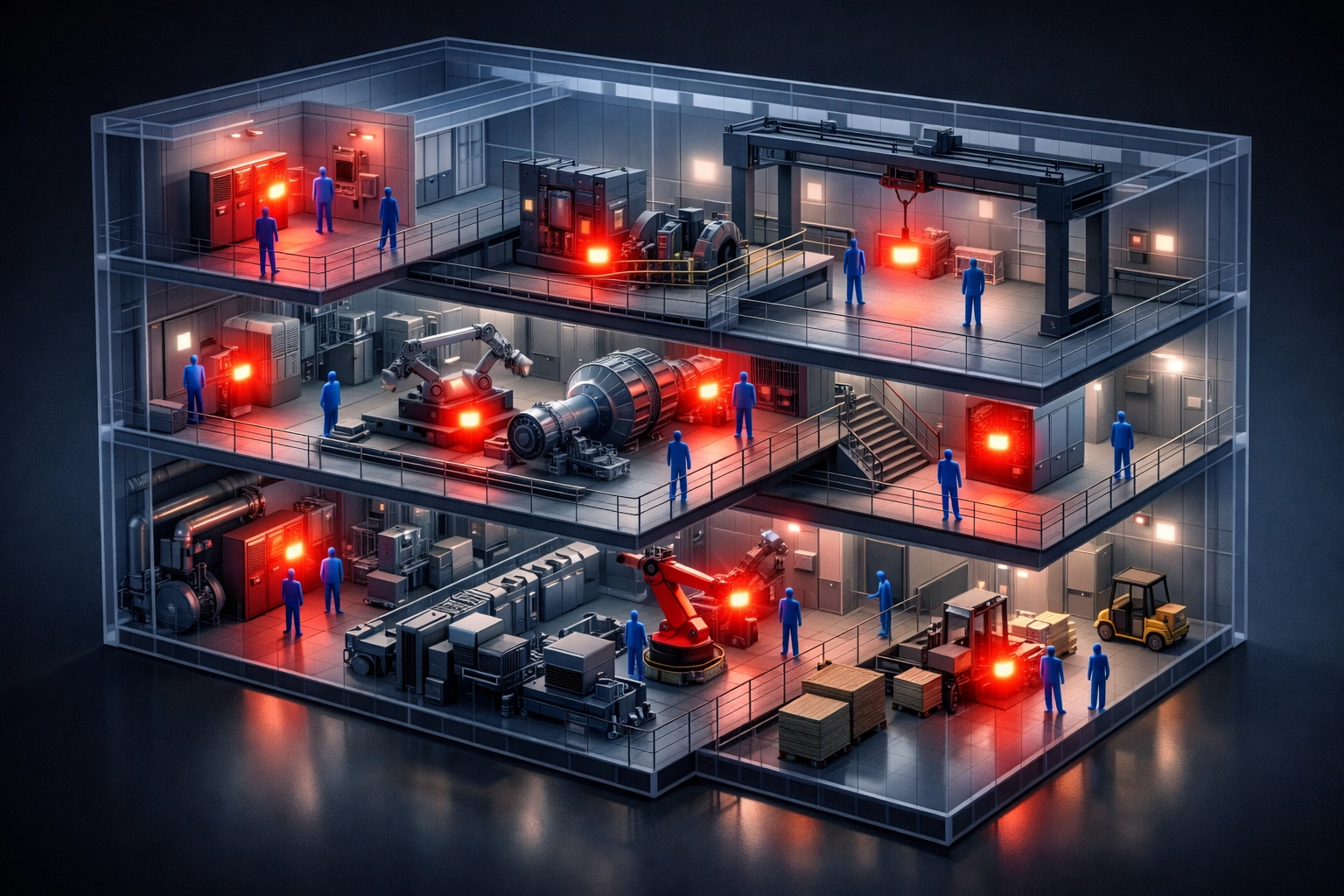
Once you have that list, you can map where workers actually intersect with those hazards. Not where they might theoretically intersect. Where they actually do, in their daily work.
That's your prevention opportunity.
A client in manufacturing did this exercise and discovered that 73% of their high-energy exposure occurred during a single four-hour maintenance window each week. Not spread across 40 hours of production. Concentrated in four hours when machines were being serviced, guards were removed, and energy sources were supposed to be locked out.
They redesigned their entire safety focus around those four hours. They didn't get rid of their slip-and-fall program or their ergonomics initiative, but they stopped pretending those programs would prevent a fatality. They put their serious resources: their best people, their most intensive training, their highest level of supervision: on the windows when workers and high-energy hazards actually occupied the same space.
Their fatality risk dropped. Their TRIR stayed about the same, because they stopped obsessing over it.
Stop Counting Paper Cuts
If your organization tracks first aid cases as a leading indicator of serious risk, you're operating under the Paper Cut Fallacy. You're assuming that the path to preventing deaths runs through preventing every minor bump and scrape.
It doesn't.
The path to preventing deaths runs through understanding where people and lethal energy sources intersect, and then systematically reducing those intersections or hardening the protections at the point of contact.
This isn't about caring less about minor injuries. It's about caring more about keeping people alive.
Because everyone has the right to feel and be safe.


Comments
Post a Comment