Why We Actually Hate Safety Programs (And How to Fix It)
Why We Actually Hate Safety Programs (And How to Fix It)
![[HERO] Why We Actually Hate Safety Programs (And How to Fix It)](https://cdn.marblism.com/-MDxwaOOGFT.webp)
You know that feeling when your supervisor walks up with a clipboard and a fresh stack of new procedures? That instant tension in your chest? Yeah, we need to talk about that.
Here's the thing: you probably don't actually hate safety. You hate being told what to do like you're five years old and can't be trusted to tie your own boots.
There's a name for what you're feeling. It's called reactance, and it's not a character flaw, it's a hardwired human response to having your freedom threatened. A psychologist named Jack Brehm figured this out back in 1966, and it explains why the harder someone pushes you to change, the more you want to dig your heels in and do the exact opposite.
It's not about the safety gear. It's not about the procedure. It's about being treated like a cog in a machine instead of a human with a brain.
The Push-Back Reflex
Let me paint you a picture. You've been doing your job for fifteen years. You know the equipment. You know the hazards. You've figured out workarounds for the stuff that doesn't make sense, and you've quietly corrected the mistakes in procedures that were written by someone who's never actually done your job.
Then one day, management rolls out a new safety initiative. There's a big meeting. PowerPoint slides. Buzzwords. They tell you that starting Monday, everything changes. No discussion. No "what do you think?" Just: "This is how it's going to be."
Your first thought isn't "wow, they really care about my safety." Your first thought is probably closer to "here we go again."
And then you feel guilty for thinking that, because you're not anti-safety. You've seen people get hurt. You don't want to be the guy who gets injured or: worse: the guy who watches someone else get injured because you didn't speak up.

But the resentment is still there, sitting heavy in your gut. That's reactance. That's your brain detecting a threat to your autonomy and firing up the resistance engines.
You're Not Wrong to Be Skeptical
Let's be honest: you've probably been through this before. Seven safety programs in ten years. Each one launched with big promises. Each one quietly abandoned eighteen months later when the next shiny initiative comes along.
You learned to survive change programs by waiting them out. Nod. Smile. Keep your head down. In six months, everyone will forget about it and you can go back to the way things were.
That's not laziness. That's pattern recognition. You've been burned before, and your brain is doing exactly what it should do: protecting you from wasting energy on something that's going to disappear anyway.
The research backs you up. Workers who've experienced repeated failed initiatives develop what's called "historical betrayal": a completely rational distrust based on actual experience. It's not a cognitive bias that needs to be fixed. It's earned skepticism, and it's a reasonable response to being lied to.
The Real Problem (It's Not You)
Here's what nobody wants to admit: the problem isn't that you're resistant to safety. The problem is that most safety programs are designed to control you, not protect you.
Think about how these things usually roll out:
- Management decides what needs to change
- Someone writes a policy
- You're told to follow it
- If you don't, there are consequences
Notice what's missing? Your input. Your expertise. Any acknowledgment that you might know something about how the work actually gets done.
When safety becomes a top-down mandate, it doesn't feel like care: it feels like surveillance. It feels like management found another tool to micromanage you, and they're wrapping it in safety language so you can't push back without looking like you don't care about getting hurt.

But you do care. You care about going home in one piece. You care about your crew. You care about not being the person who causes an accident.
What you don't care about is being told that the way you've been doing your job for two decades is suddenly wrong, and here's a new procedure written by someone who's never picked up your tools.
Your Skeptic Brain Is Actually a Superpower
Here's where this gets interesting.
That voice in your head that says "this is BS" when management rolls out another initiative? That's not the enemy of safety. That's your critical thinking doing exactly what it's supposed to do.
The workers who survive in high-risk environments aren't the ones who blindly follow every rule. They're the ones who question things. Who ask "why?" Who notice when a procedure doesn't match reality. Who speak up when something doesn't make sense.
Your skepticism is valuable. The problem is that most organizations treat skepticism like a problem to be overcome instead of a resource to be leveraged.
In the facilities where safety actually works: not the places with pretty posters but the places where people genuinely look out for each other: skeptics aren't fought. They're recruited. Their critical eye is pointed at the actual hazards instead of wasted fighting pointless procedures.
What Actually Works
So what's the fix? How do you get past the resistance and actually build something that matters?
First, management has to stop pushing and start listening. Before they write another policy, they need to ask: "What are we getting wrong? What's not working? What would you change?"
And then: here's the hard part: they need to actually do something with that feedback. Not six months from now. Not after it goes through five approval layers. Now.
You know what builds trust faster than any safety speech? Fixing the nine-year-old lighting request. Replacing the broken equipment that everyone's been working around. Following through on the small stuff that's been ignored for years.
When management demonstrates that they'll actually listen and act, the resistance drops. Not because you suddenly became compliant, but because you're not fighting to maintain autonomy anymore: you have it.
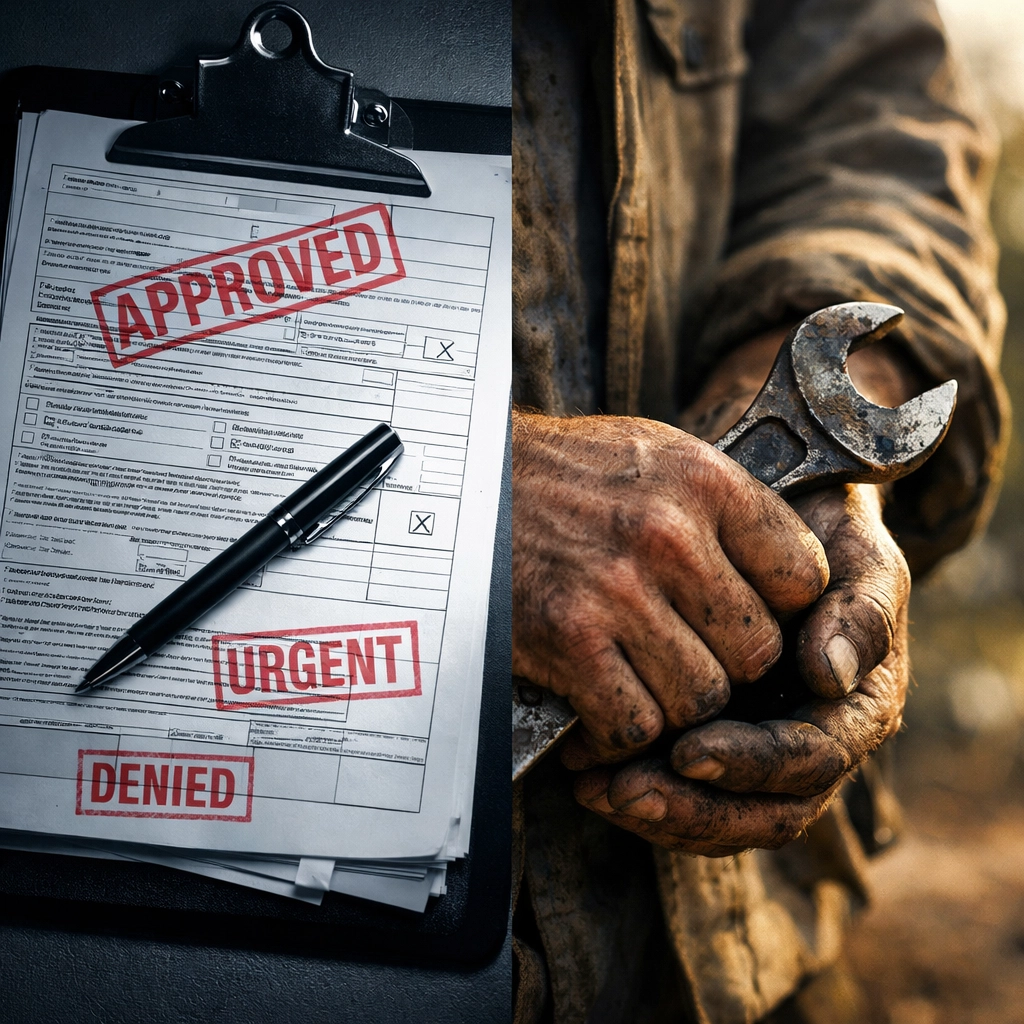
Second, stop treating safety like a compliance checklist. Safety isn't about following rules. It's about making sure everyone goes home.
That means your expertise matters. Your workarounds might actually be smarter than the official procedure. Your concerns about a new piece of equipment aren't "resistance to change": they're field intelligence that should be driving decisions.
Third, give people choices. When you have autonomy, you stop fighting. Let teams figure out how to implement safety improvements in a way that makes sense for their work. Set the outcome: no one gets hurt: but let them own the process.
The Hard Truth
Here's what I need you to hear: your resistance isn't the problem. It's a symptom. It's your brain telling you that something is off about how this is being done.
But here's the other truth: if you stay stuck in resistance mode, people get hurt. Maybe not today. Maybe not this month. But eventually, someone on your crew is going to have a bad day, and you're going to wish you'd spoken up.
The way forward isn't to stop being skeptical. It's to use that skepticism constructively. Ask the hard questions. Demand real answers. Push back on the BS. But also engage with the stuff that actually matters.
When management says "we're implementing a new observation program," your skeptic brain should ask:
- Who wrote this? Did they actually do the job?
- What problem is this solving?
- Did anyone ask us what we think?
- What happens to the observations we submit?
- Is this actually about safety, or is this about generating reports?
Those are good questions. Questions that should be answered before anything gets rolled out.
But if the answers are solid: if there's genuine thought and genuine care behind the program: don't resist just because it's a change. Resistance for its own sake doesn't protect you. It just burns energy you could be using to actually make things safer.
Your Move
You don't have to trust management's next safety initiative. You don't have to believe the promises. You don't even have to be optimistic.
What you can do is put it on trial. Evaluate it. Judge it by results, not by speeches. Give it ninety days and see if anything actually changes.
If it's more of the same: more paperwork, no follow-through, no real change: then you were right to be skeptical, and you can go back to waiting it out.
But if it's different: if they actually listen, if they actually fix things, if they treat you like an expert instead of a problem: then maybe, just maybe, it's worth engaging.
Your skeptic brain isn't the enemy. It's your protection. Use it.
Because everyone has the right to feel and be safe.


Comments
Post a Comment