The 'Us vs. Them' Wall in Safety
The 'Us vs. Them' Wall in Safety
![[HERO] The 'Us vs. Them' Wall in Safety](https://cdn.marblism.com/Q8NXkBuT1Np.webp)
I watched a safety manager spend twenty minutes explaining a new fall protection procedure to a crew of ironworkers. He had data. He had photos. He had a PowerPoint. When he finished, one of the guys nodded, said "sounds good," and the second the manager walked away, they went right back to doing it the old way.
The manager was frustrated. "They just don't care about safety."
Here's the thing: they cared. They just didn't care what he had to say.
That's not stubbornness. That's not ignorance. That's tribal psychology, and it's one of the biggest invisible walls in workplace safety.
The Brain Doesn't Care About Your Org Chart
Your brain is wired to sort people into two groups: us and them. It happens automatically. It happens fast. And it happens whether you realize it or not.
Social Identity Theory shows us that humans don't just prefer their in-group: they derive self-esteem and behavioral guidance from it. When someone from your tribe gives you advice, your brain processes it as valuable information. When someone from outside your tribe gives you the exact same advice, your brain processes it as a threat to your identity.
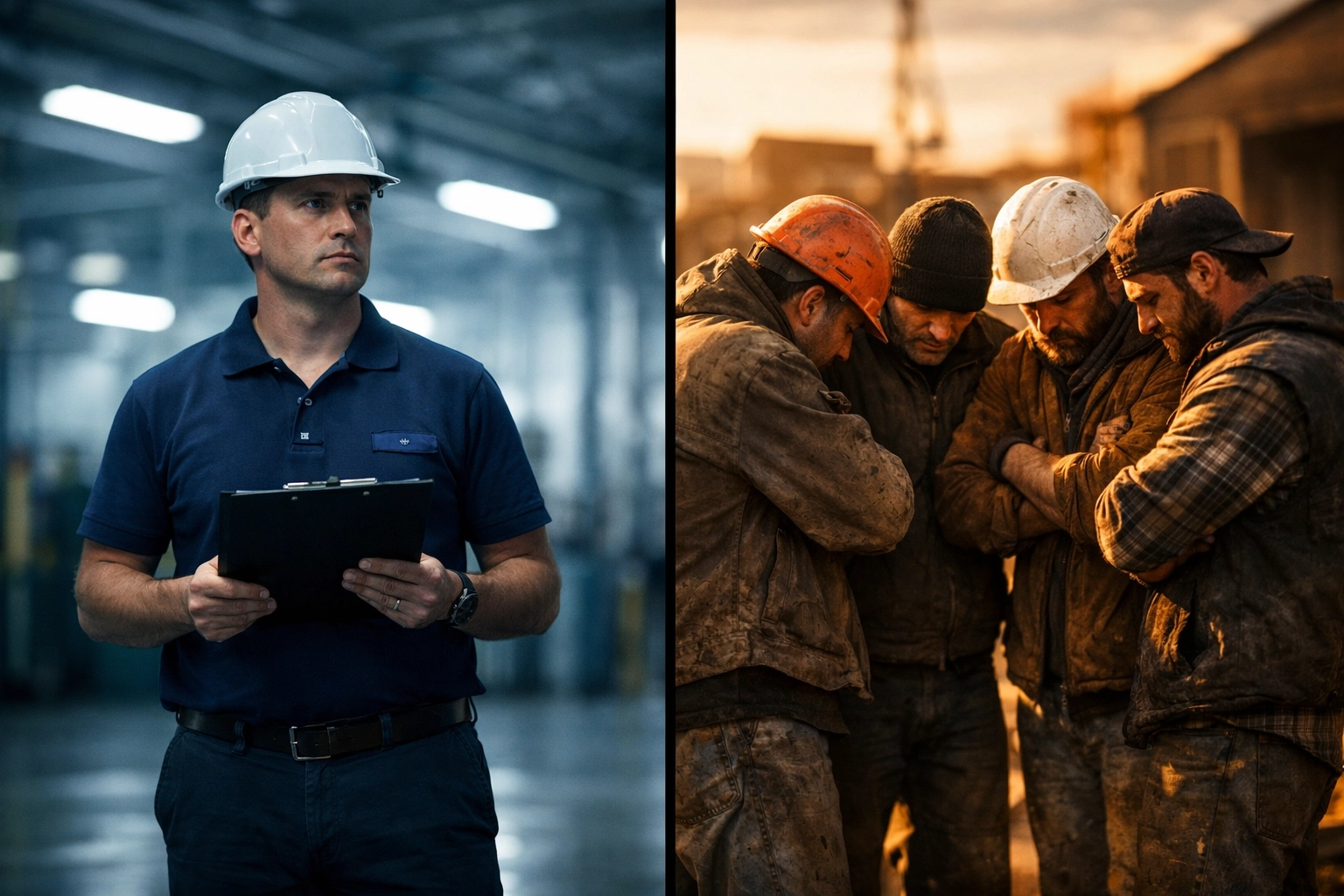
In a lot of workplaces: especially unionized environments, manufacturing plants, warehouses, construction sites: there's a clear line between "management" and "the people doing the actual work." Corporate safety and frontline workers often occupy completely different tribes.
When a safety initiative comes from the wrong tribe, it doesn't matter how good the content is. The resistance isn't cognitive. It's tribal.
The worker isn't rejecting the safety procedure. He's rejecting you.
Why Safety Coaching Conversations Fall Apart
Let me be honest: most safety leadership training focuses on what to say. But in tribal dynamics, who says it matters more than the words themselves.
I've seen brilliant safety programs fail because they were delivered by someone wearing a corporate badge in a room full of people wearing steel-toed boots. The content was perfect. The delivery was respectful. But the message came from the out-group, so it landed like a directive, not a conversation.
Here's what happens in the worker's brain:
- "This person doesn't do my job."
- "This person doesn't understand what I deal with."
- "This person is here to check a box, not to help me."
- "This person gets paid whether I get hurt or not."
None of that might be true. But perception is reality. And if the perception is that you're not part of their group, your safety message won't stick.
The Real Cost of the Divide
This isn't just about hurt feelings or workplace tension. The "us vs. them" wall has real consequences for workplace safety culture:
Workers stop reporting hazards. If you don't trust that the person receiving the report actually cares, why bother? You're just creating paperwork for yourself.
Near-misses go underground. Nobody wants to admit a mistake to someone they see as the enemy. So incidents that could have been learning opportunities just... disappear.
Stop-work authority becomes theoretical. A worker might have the right to stop unsafe work, but if they don't trust that the organization will back them up when it costs production time, that right is meaningless.
Compliance becomes performative. People follow the rules when they're being watched and do whatever they want when they're not. That's not safety. That's theater.
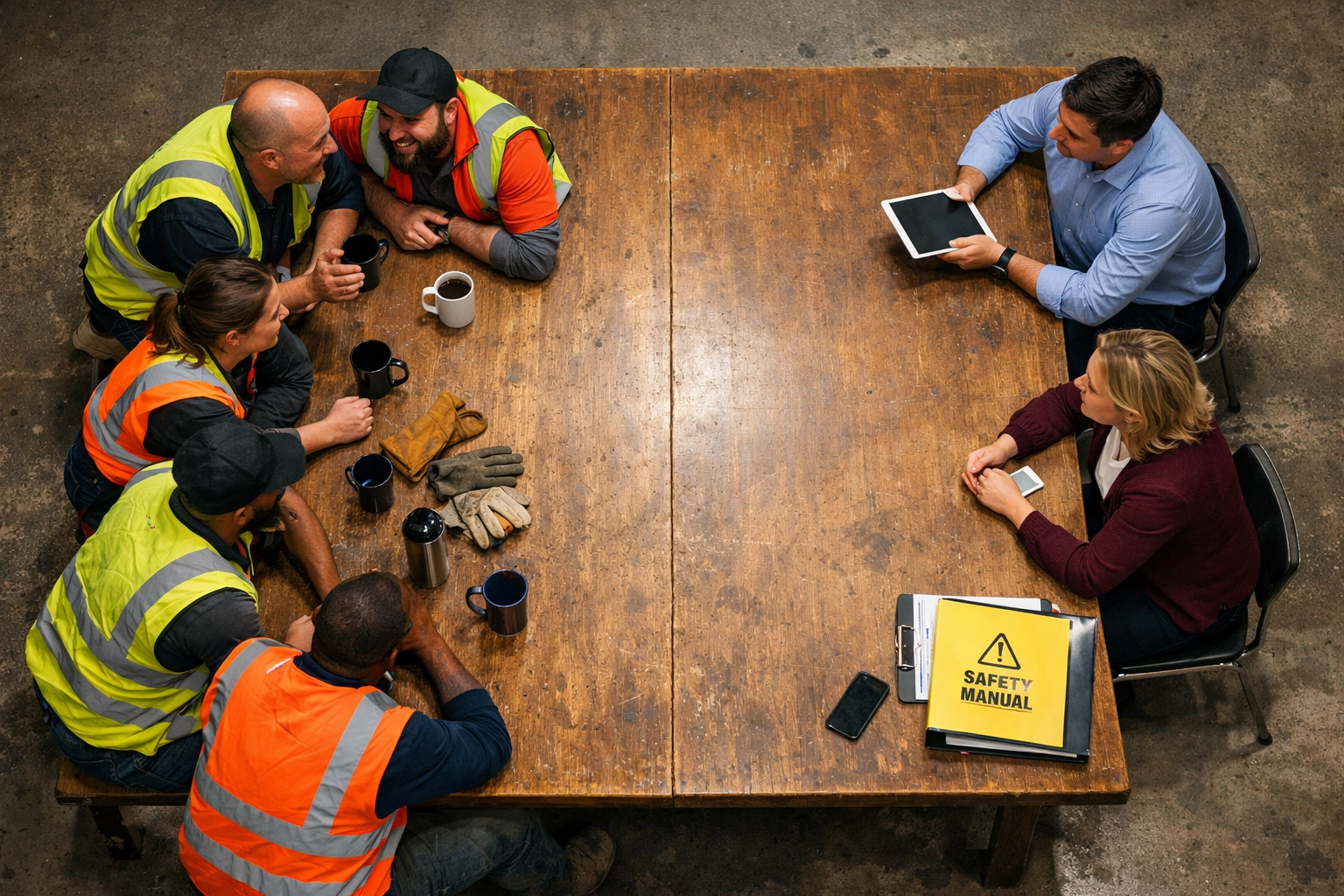
The data backs this up. Research shows that managers in divided workplaces spend more time managing conflict than actually addressing safety issues. Meanwhile, workers become protective of information instead of transparent, which is the exact opposite of what you need in a high-risk environment.
You Can't Fix Tribal Dynamics With a Poster
I've seen organizations try to solve this problem with slogans. "We're all one team!" "Safety is everyone's responsibility!" They put it on posters, send out emails, maybe throw a pizza party.
Workers see right through it.
You can't talk your way out of a trust problem. You can't mandate your way out of a tribal divide. And you definitely can't fix it with a catchy tagline and free lunch.
What actually works is understanding that the divide exists for a reason, and then doing the hard work to bridge it.
How to Actually Break Down the Wall
Stop talking to workers. Start talking with them.
The fastest way to stay in the out-group is to treat workers like recipients of your wisdom instead of co-creators of safety solutions. If your safety program is something you do to people instead of something you build with people, you've already lost.
Find the influencers in the in-group: the people who others actually listen to: and bring them in early. Not as token representatives. As genuine partners. Let them shape the message. Let them identify the problems. Let them own the solutions.
When the crew hears a safety message from someone they trust, someone who does their job, someone who's part of their tribe, it's not a corporate mandate anymore. It's peer guidance. And peer guidance works.
Show up in a way that builds credibility, not authority.
Workers don't care that you have a title or a certification. They care whether you understand their world and whether you actually give a damn about their welfare.
This means spending time on the floor. Listening more than you talk. Asking questions instead of giving speeches. Showing genuine curiosity about the challenges they face instead of showing up with pre-packaged solutions.
It also means being honest about trade-offs. Don't pretend safety is always easy or convenient. Don't act like production pressures don't exist. Workers know better. When you acknowledge the tension between safety and productivity instead of pretending it's not there, you build trust.
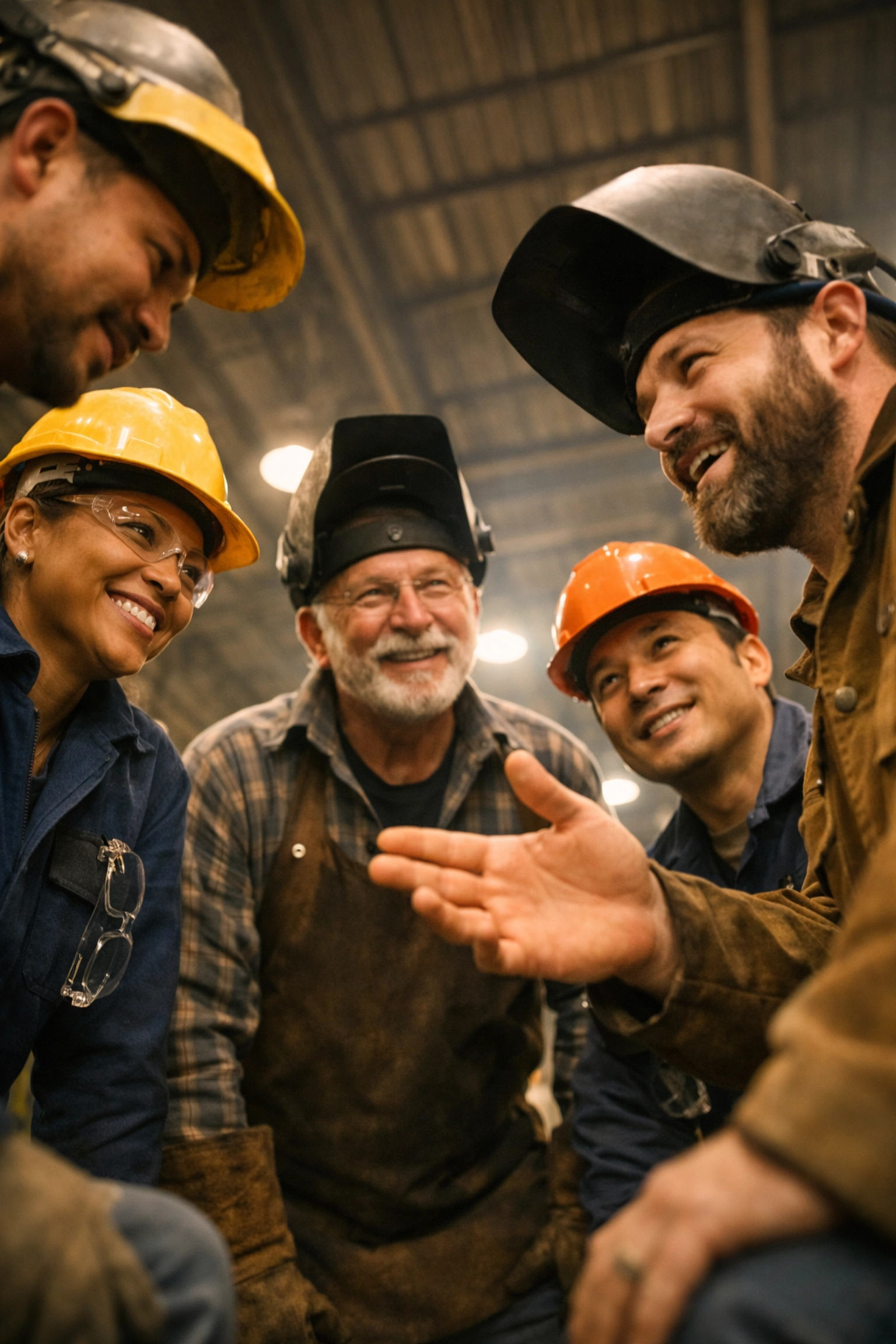
Find the shared goal that makes the divide irrelevant.
The tribal instinct is strong, but it's not absolute. Research shows that when people from different groups work together on a common goal, the negative perceptions start to shift.
In safety, that common goal is obvious: everyone wants to go home in the same condition they showed up. Nobody wants to see a coworker get hurt. Nobody wants to be the person who causes an injury.
When safety coaching conversations focus on that shared goal instead of compliance metrics or regulatory requirements, you're not management talking to labor anymore. You're humans talking to humans about something that matters to all of you.
The PERSONA Approach to Tribal Dynamics
This is where understanding safety archetypes becomes critical.
Not everyone in the in-group has the same influence. The Connector archetype is often the social hub: the person everyone talks to, the one who sets the tone for the team. The Pragmatist is the voice of credibility: if they say something makes sense, others believe it. The Skeptic might be the gatekeeper: if you can win them over, others will follow.
If you're trying to break through the tribal wall, you need to identify who these people are and recruit them first. Not as your spokespeople. As your partners.
When a Connector brings a safety message to their crew, it's not corporate talking. It's one of them talking. That's the difference between compliance and buy-in.
This Takes Time, and That's Okay
You're not going to fix tribal dynamics with one good meeting or one inclusive initiative. Trust is built in small moments over time. Showing up consistently. Following through on commitments. Treating people like experts in their own experience.
But here's what I've seen: when organizations do this work, the change is real. Workers stop seeing safety as something imposed on them and start seeing it as something they own. Reporting goes up. Near-misses become learning opportunities. People actually use stop-work authority because they trust they'll be supported.
The wall doesn't just come down. It gets replaced with something better: collaboration.
Because everyone has the right to feel and be safe.


Comments
Post a Comment