Backyard BBQ Safety: How to Grill Without the Thrills (of Disaster)
Backyard BBQ Safety: How to Grill Without the Thrills (of Disaster)
Summer's calling, and you know what that means – time to fire up the grill! But before you start dreaming about perfectly charred burgers and those Instagram-worthy grill marks, let's talk about keeping your BBQ adventures safe and sound. Because nobody wants their backyard party to turn into a fire department visit!
Every year, over 22,000 people end up in emergency rooms due to grilling accidents. That's a lot of ruined barbecues and some seriously unhappy campers. But here's the good news: most of these accidents are totally preventable with a little know-how and preparation.
Location, Location, Location (And We Don't Mean Real Estate!)
Think of your grill like a tiny dragon – it needs space to breathe and shouldn't be kept indoors. Never, ever use your grill inside your house, garage, or even on that cute covered porch. We know it seems tempting when the weather's not perfect, but grills produce carbon monoxide, and that's not something you want building up in enclosed spaces.
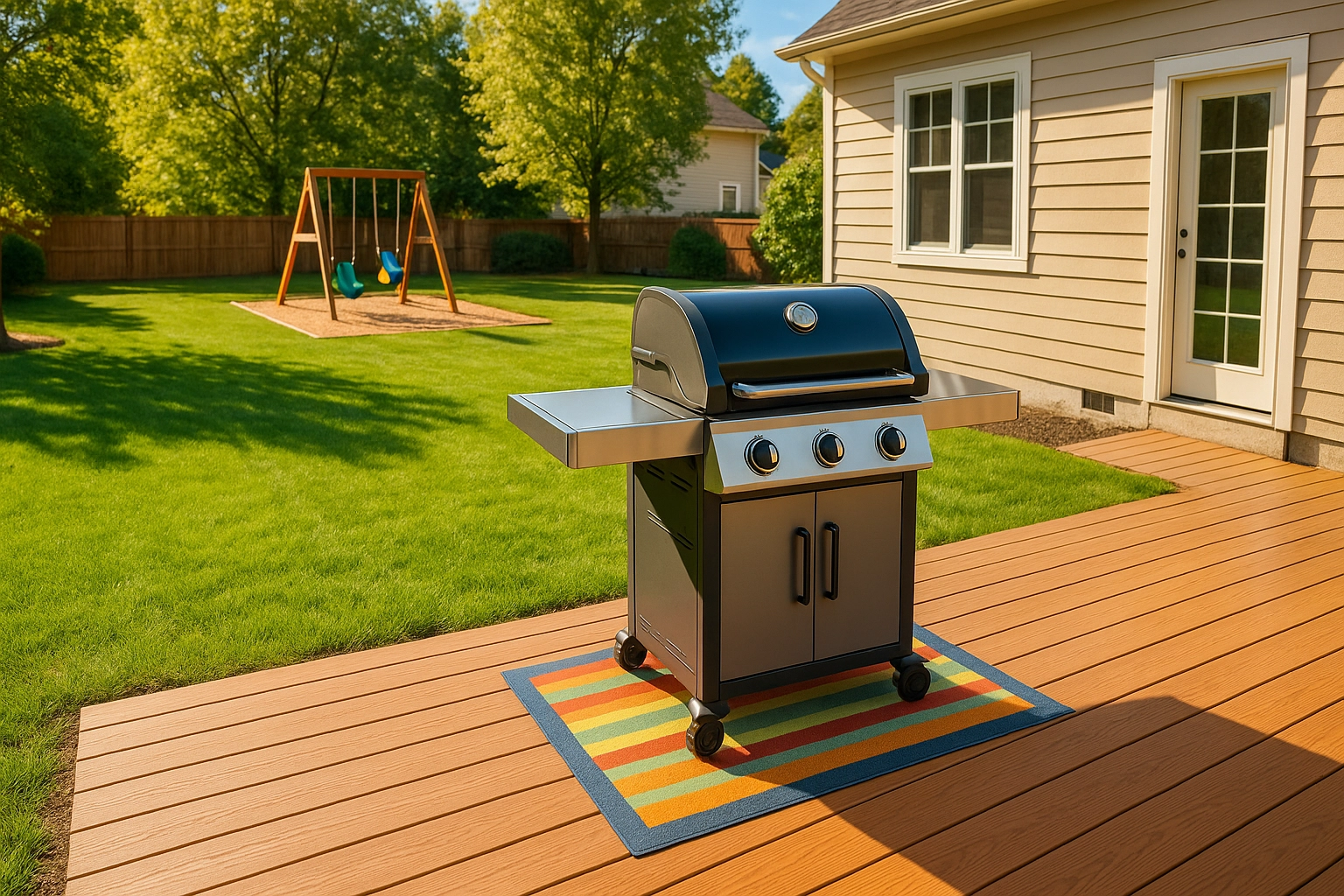
Your grill needs a solid 10 feet of personal space from your house, deck railings, trees, or anything else that might catch fire. Picture it like this: if you stretched your arms out and spun around your grill like a helicopter, nothing should be within reach. This includes those low-hanging tree branches that always seem to sneak up on you!
Quick Setup Checklist:
- ✅ Grill is outside (not in garage, balcony, or indoors)
- ✅ 10+ feet from house and structures
- ✅ On flat, stable ground (no slopes!)
- ✅ Clear of overhanging branches
- ✅ Away from high-traffic areas where kids and pets play
Pre-Game Equipment Check (Because Nobody Likes Surprises)
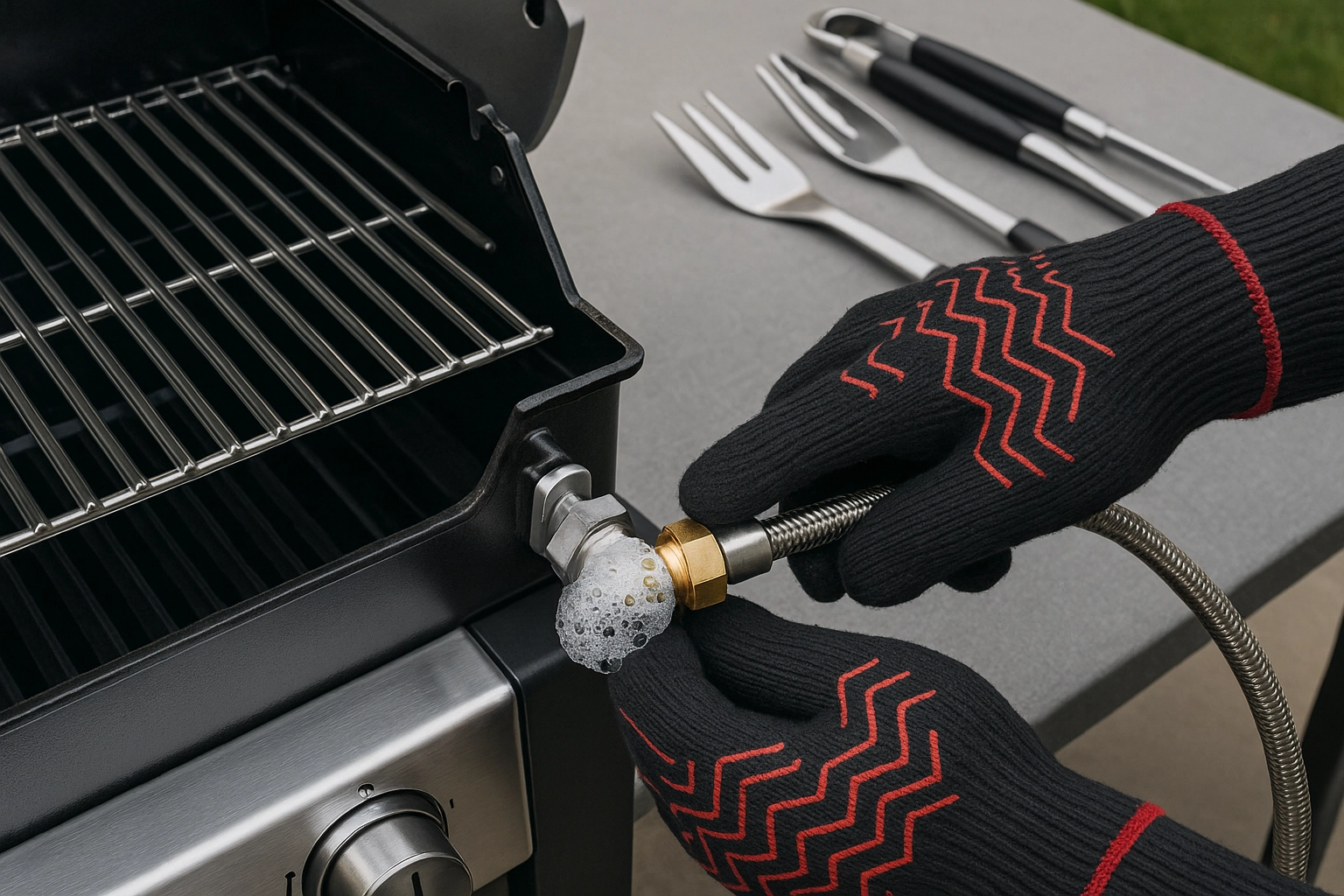
Before you even think about lighting that grill, it's inspection time! For gas grills, grab some soapy water and dab it on all the gas connections. If you see bubbles forming, that's gas escaping – and that's definitely not what we want. It's like a science experiment, but way more important!
Keep your grill cleaner than your teenager's room (which, let's be honest, isn't setting the bar too high). Built-up grease is like kindling for dangerous flare-ups. Clean out those drip trays and scrub that cooking surface. Your taste buds and your safety will thank you.
If you're team charcoal, make sure those coals from last time are completely cold before disposing of them. Hot coals can stay hot for hours, sometimes even overnight. Always dump them in a metal container, never plastic or cardboard.
Dress Code: Safety Meets Style
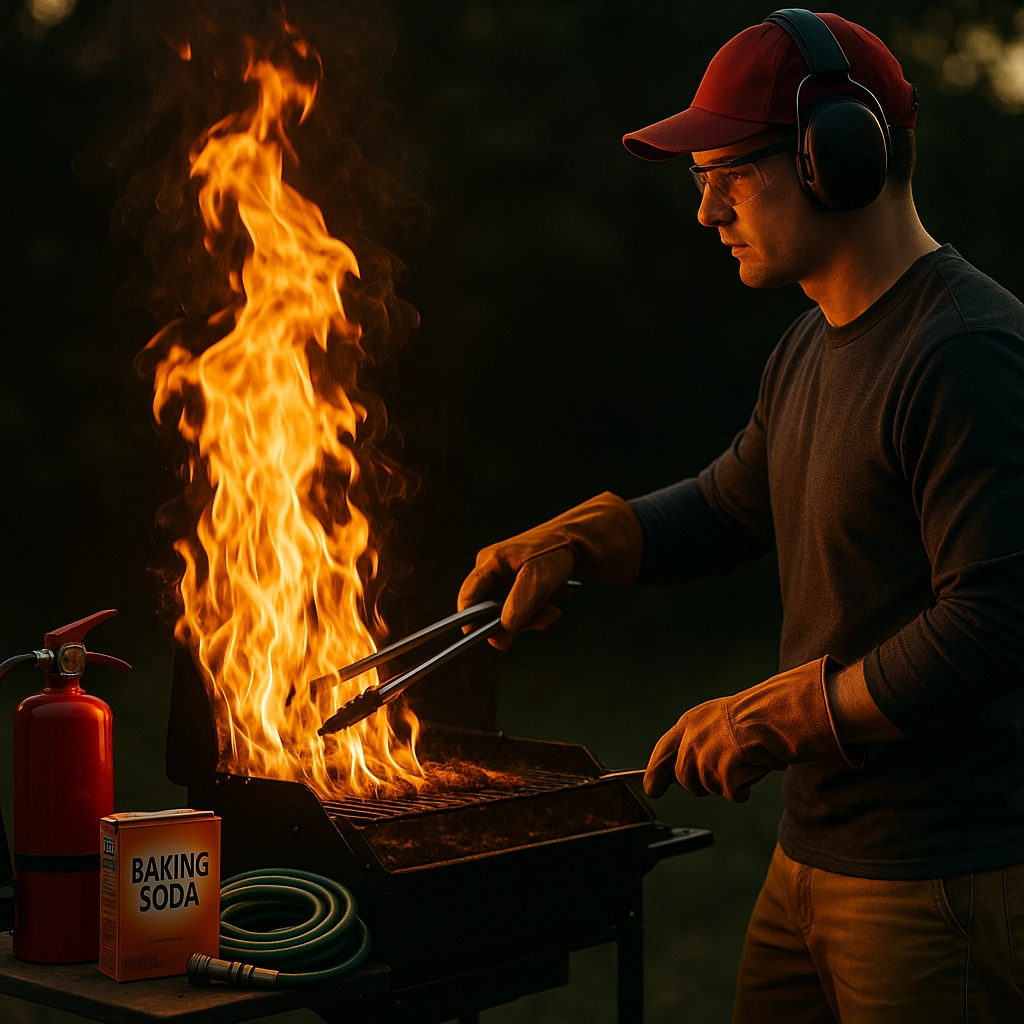
Your BBQ outfit matters more than you might think! Those flowy shirts and loose apron strings might look great in cooking shows, but they're basically fire magnets around a hot grill. Stick to close-fitting clothes and invest in some flame-retardant mitts – they're like superhero gloves for grilling!
Long-handled tools are your best friends here. They keep your hands and arms safely away from the heat while you flip, turn, and move food around. Think of them as extenders that give you superpowers to handle hot food without getting burned.
The Kid and Pet Zone
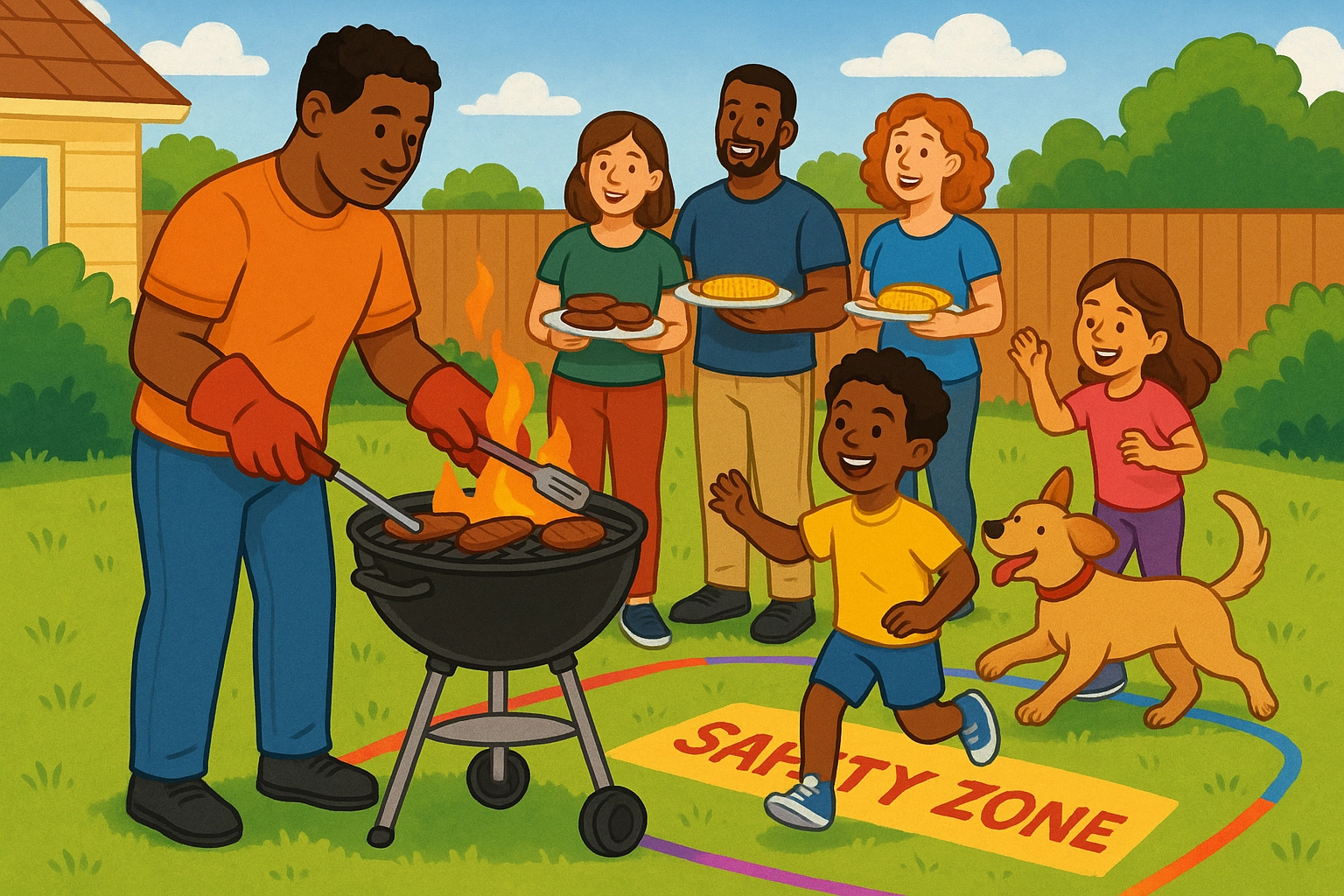
Here's where we need to get serious for a hot minute. Kids and pets are naturally curious, and grills are naturally dangerous – that's not a great combination. Create an imaginary (or real!) safety zone around your grill where little ones and furry friends just can't go while you're cooking.
This isn't about being mean; it's about keeping everyone safe. One accidental bump into a hot grill can cause serious burns. If you're having a party, consider assigning a "safety buddy" to keep an eye on the kids while you focus on grilling duties.
Stay Alert, Stay Safe (Skip That Third Beer!)
We get it – BBQs and cold drinks go together like peanut butter and jelly. But when you're the one handling fire and sharp tools, it's better to save the celebrating for after the cooking is done. Clear thinking and quick reflexes are your best safety equipment.
Never leave your grill unattended. We know you want to mingle with your guests, but fires can go from manageable to dangerous in seconds. If you absolutely must step away, ask someone responsible to watch the grill, or better yet, turn it off completely.
Flare-Up Management (AKA Taming the Beast)
Flare-ups happen – it's just part of grilling life. But how you handle them makes all the difference. When flames start dancing higher than expected, don't panic! Move your food to a cooler part of the grill, spread out your coals if using charcoal, or adjust your gas settings to reduce the heat.
Emergency Response Kit:
- Fire extinguisher (and know how to use it!)
- Garden hose or bucket of sand
- Baking soda for grease fires
- Cell phone to call for help if needed
Never use water directly on a grease fire – it can cause the burning grease to splatter and spread the fire. Think of grease fires like that friend who gets more dramatic when you give them attention – sometimes the best approach is to cut off their fuel source instead.
Food Safety: Because Nobody Wants a Side of Food Poisoning
Great BBQ safety goes beyond just fire prevention – you've got to think about food safety too. Use separate plates and utensils for raw and cooked foods. Think of it like this: raw meat plates are the "before" and cooked meat plates are the "after" – never let them mix!
Keep cold foods cold until it's their turn on the grill. That means keeping them in the fridge or a cooler with ice until you're ready to cook. And invest in a good meat thermometer – it takes the guesswork out of knowing when your food is safe to eat.
Safe Internal Temperatures:
- Chicken: 165°F
- Beef, pork, lamb: 145°F
- Ground meats: 160°F
- Fish: 145°F
The Cool-Down Process
Your BBQ safety job isn't done when the last burger comes off the grill. Gas grills should be turned off at both the grill and the propane tank. For charcoal grills, those coals need to be completely extinguished with water, then stirred and doused again. They should be stone cold before you even think about walking away.
Let your grill cool completely before covering it or moving it. Hot surfaces can cause burns hours after cooking, and covered grills can trap heat and create fire hazards.
Making Safety Fun for the Whole Family
Turn safety into a game! Have kids help create the "safety zone" around the grill with chalk or rope. Let them be the "safety inspectors" who check that the area is clear of toys and obstacles. When kids feel involved in safety planning, they're more likely to follow the rules.
Create a family BBQ safety song or chant – it might sound silly, but kids remember songs way better than lectures. Something like "Ten feet clear, safety gear, never leave the grill alone here!" (Okay, maybe you can write better lyrics, but you get the idea!)
Your Summer Safety Promise
BBQ safety doesn't have to be scary or complicated – it just takes a little planning and attention. By following these simple guidelines, you're not just preventing accidents; you're creating a foundation for years of amazing outdoor cooking memories.
Remember, the goal isn't to scare you away from grilling – it's to help you grill confidently and safely. When you know what you're doing and you're prepared for potential problems, you can actually relax and enjoy the experience more.
So fire up that grill, gather your family and friends, and create some delicious memories. Just do it safely, because the best BBQ stories are the ones where everyone goes home happy, healthy, and already planning the next cookout!


Comments
Post a Comment