Safe and Independent: Supporting the Seniors in Your Family
Safe and Independent: Supporting the Seniors in Your Family
![[HERO] Safe and Independent: Supporting the Seniors in Your Family](https://cdn.marblism.com/inRWCjyQg7c.webp)
Here's the thing nobody tells you about getting older: it sneaks up on everyone. Your dad, who used to rewire the whole house without batting an eye, now struggles to reach the cereal on the top shelf. Your grandmother, who raised six kids and never asked for help with anything, is suddenly hesitant about the stairs after dark.
And here's what makes it even harder , they don't want you to notice. Independence isn't just a preference for seniors; it's identity. It's dignity. It's proof they're still them.
So how do you keep the people you love safe without making them feel like children? How do you spot hazards they've lived with for decades without coming across like you're trying to take over their lives?
Let me be honest: there's no perfect answer. But there are practical, respectful ways to help them stay independent and safe. It starts with understanding that elder safety isn't about bubble-wrapping their world , it's about removing the barriers that threaten their ability to stay in control of it.
The Real Enemy: Falls
Let's talk about the biggest threat first. Falls aren't just accidents for older adults , they're life-changers. A broken hip at seventy isn't the same as a sprained ankle at thirty. Recovery is longer, complications are more common, and the fear that comes afterward can be paralyzing.
The tricky part? Most fall hazards are invisible to the people living with them every day. That throw rug your mom has had for twenty years? It's now a tripping hazard. The electrical cord running across the hallway? Didn't used to be a problem. The dim lighting in the bathroom? Never bothered anyone before.
This is where you come in , not as the safety police, but as a second set of eyes.
Start With the Walkways
Walk through their home like you're seeing it for the first time. Not with judgment, but with curiosity. Where are the obstacles? What's in the path between the bedroom and the bathroom at 2 a.m.?
Clear the clutter. Magazines, shoes, pet toys , anything that lives on the floor needs a new home. This isn't about being neat; it's about creating clear paths through every room.
Deal with the rugs. I know, those rugs have memories attached. But loose rugs and area rugs without non-slip backing are responsible for thousands of falls every year. Secure them with rug tape, swap them for non-slip versions, or , and I know this is hard , remove them entirely.
Tame the cords. Electrical cords, phone chargers, lamp cables , get them off the floor and out of walkways. Use cord organizers, tape them along baseboards, or rearrange furniture so outlets are easier to reach.
Here's the key: frame these changes as making their home easier to navigate, not safer (even though that's exactly what you're doing). Nobody wants to feel like their home is being turned into a hospital ward.
Light Up the Path
Vision changes as we age. What used to be "good enough" lighting at fifty becomes genuinely dangerous at seventy-five. Shadows hide obstacles. Dim hallways make it hard to see where you're stepping.
Add light switches at both ends of stairways. If they have to walk down a dark staircase to turn on the light at the bottom, that's a problem waiting to happen.
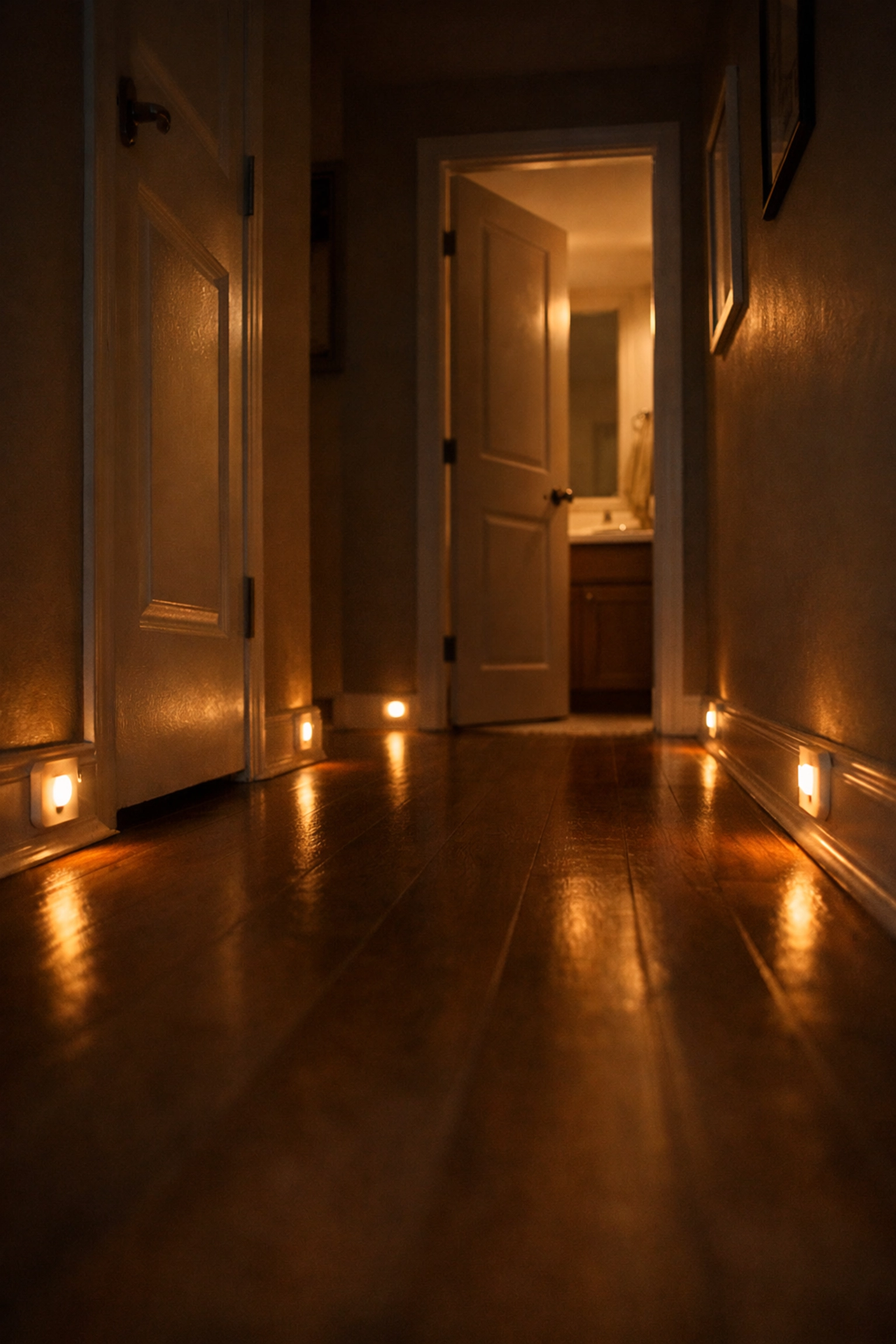
Install motion-sensor night lights. In hallways, bathrooms, and bedrooms. This is non-negotiable for nighttime bathroom trips , nobody should be stumbling around in the dark at 3 a.m.
Increase wattage where it matters. Staircases, bathrooms, kitchens , these spaces need bright, clear lighting. Swap out dim bulbs for brighter ones (LED bulbs are great because they last longer and don't get hot).
Add contrast. Light switches should be easy to see. Put colored tape on the edges of steps if they're hard to distinguish. Small visual cues make a massive difference.
Bathroom Safety (Without the Institutional Vibe)
Bathrooms are ground zero for falls. Wet surfaces, hard edges, and the need to balance while getting in and out of the tub create a perfect storm of risk.
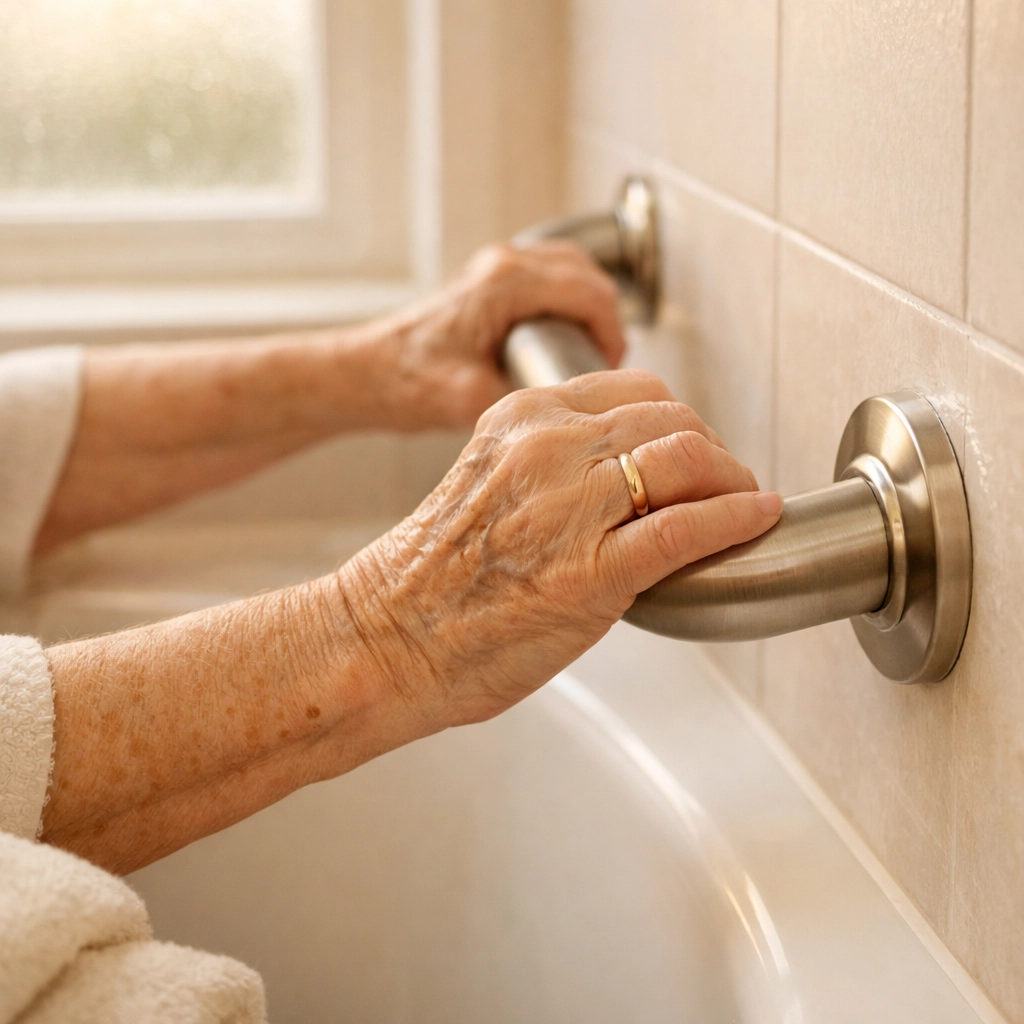
Install grab bars. Not the industrial-looking kind if you can help it , there are actually stylish options now that look like towel bars. Put them near the toilet, inside the shower or tub, and anywhere else your loved one needs support.
Get non-slip mats. Inside the shower, outside the tub, in front of the sink. Water + tile = ice rink.
Consider a raised toilet seat. If getting up and down is becoming difficult, this simple change can make a huge difference in confidence and safety.
Keep essentials within reach. Soap, shampoo, towels , nothing should require stretching, bending, or balancing to access.
The Kitchen Conversation
Kitchens come with their own set of challenges. Burns, cuts, slips, and the risk of leaving appliances on unattended all become more common as cognition and mobility change.
Reorganize for accessibility. Heavy pots and pans shouldn't be stored in bottom cabinets if bending down is hard. Frequently used items should be at waist or eye level. This is a good excuse to go through everything together , donate what's no longer needed, keep what matters.
Upgrade to auto-shutoff appliances. Kettles, stovetops, coffee makers , modern versions often come with automatic shutoff features that prevent fires if something gets left on.
Add non-slip mats in front of the sink. Spills happen. Water happens. Mats catch both before they become a hazard.
Simplify where possible. If your mom used to cook elaborate meals but is now struggling with multi-step recipes, suggest a meal delivery service or pre-prepped ingredients. It's not about taking away her independence , it's about giving her the freedom to enjoy cooking without the stress.
Emergency Preparedness: The Stuff Nobody Wants to Talk About
What happens if they fall and can't get up? What if there's a fire and they can't move quickly? What if they have a medical emergency and can't reach the phone?
These are uncomfortable questions, but ignoring them doesn't make them go away.
Medical alert systems. Wearable devices with emergency buttons are no longer clunky or embarrassing. Modern options are discreet, waterproof (so they can be worn in the shower), and connect to 24/7 monitoring services.
Keep emergency info accessible. Medical conditions, medications, doctor contact information, and emergency contacts should be posted somewhere obvious , on the fridge, by the phone, saved in their cell phone.
Install smoke and carbon monoxide detectors. Test them monthly. Change batteries annually. This is basic, but it's often overlooked.
Create a communication plan. Daily check-ins, whether by phone or in person. Not hovering , just a predictable routine so you know they're okay and they know you're paying attention.
The Balance Between Helping and Hovering
Here's where it gets tricky. You want them to be safe, but you don't want to take away their autonomy. You want to help, but you don't want to make them feel helpless.
Ask before assuming. "Hey, I noticed the lighting in the hallway is pretty dim. Would it help if we added a few brighter bulbs?" is better than just showing up with new light fixtures and installing them yourself.
Involve them in decisions. Let them choose the grab bars, pick out the night lights, decide where things should go. This is still their home.
Frame changes positively. "This will make it easier to move around" sounds better than "This will prevent you from falling." Same goal, different tone.
Offer help without judgment. "Can I help you carry that?" is fine. "You shouldn't be lifting that : let me do it" feels condescending.
Check In, But Don't Helicopter
Regular visits and phone calls aren't just about safety : they're about connection. Isolation is a real risk for seniors, and loneliness accelerates cognitive decline.
Make check-ins part of the routine. Daily phone calls. Weekly visits. Help with tasks that are genuinely hard : changing light bulbs, reorganizing high shelves, dealing with heavy grocery bags.
But also just... be present. Ask about their day. Tell them about yours. Bring their grandkids over. Keep them connected to the world outside their front door.
You're Not Taking Away : You're Making Space
Here's what I want you to remember: helping your aging loved ones stay safe isn't about wrapping them in bubble wrap or treating them like they're fragile. It's about removing the obstacles that make independence harder.
It's about making sure they can keep living in the home they love, doing the things they enjoy, without unnecessary risks lurking in the background.
It's about honoring their dignity while protecting their safety.
And it's about showing them that asking for help : or accepting it : isn't a sign of weakness. It's proof that they're loved.
Because everyone has the right to feel and be safe.


Comments
Post a Comment